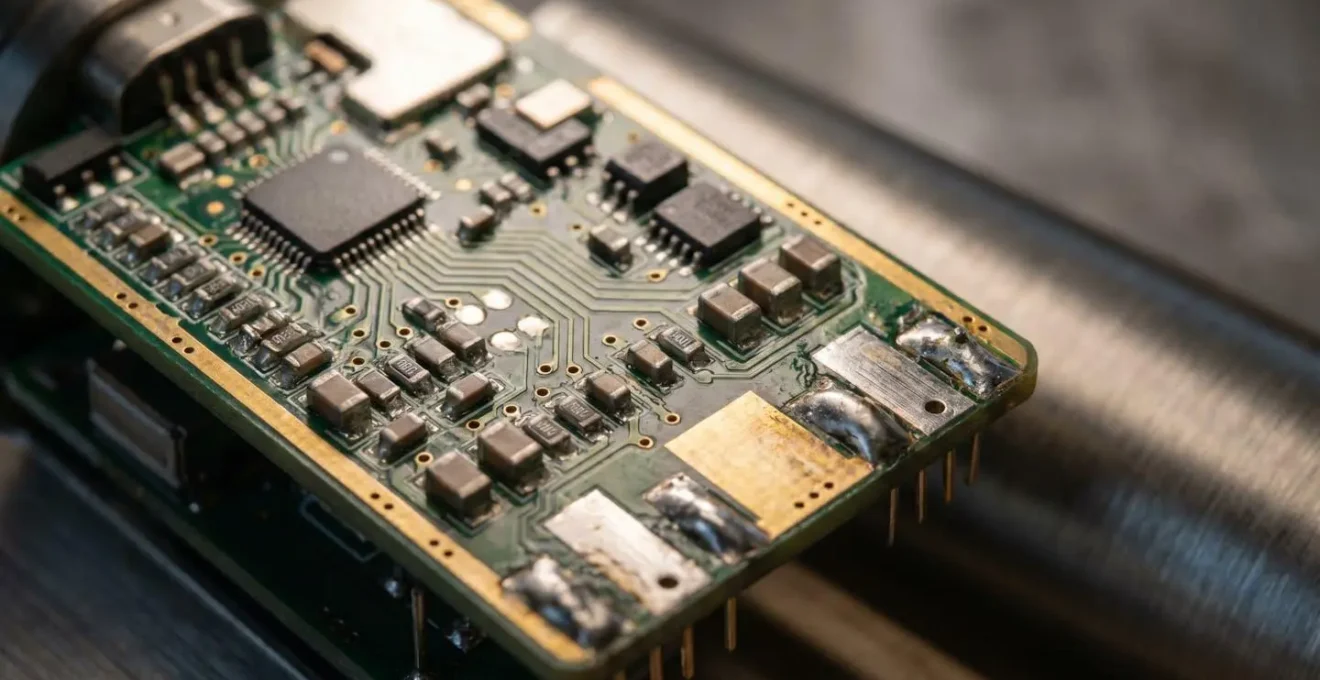
The most important safety feature of your vape is the one you mistake for a failure: when it shuts down unexpectedly, it’s doing its job perfectly.
- Modern vape mods are designed with multiple, redundant safety circuits that actively monitor for dangerous conditions like short circuits.
- An “Atomizer Short” error isn’t a sign the device is broken; it’s a sign the device has successfully prevented a battery failure.
Recommendation: Instead of fearing these errors, learn to interpret them. This guide will teach you how to test, maintain, and understand your vape’s safety systems like an engineer.
It’s a story many UK vapers have heard or experienced: a friend’s vape suddenly just… stops. No lights, no power, nothing. The immediate thought is often frustration – “it’s broken.” But what if that’s the wrong way to look at it? What if that sudden shutdown wasn’t a failure, but a success? In the world of electrical engineering, we have a term for this: a “controlled failure.” It’s a system intentionally designed to break in a safe, predictable way to prevent a much more dangerous, catastrophic failure – like a fire.
The conversation around vape safety is often dominated by scary headlines and basic advice like “don’t carry loose batteries.” While this is crucial, it misses the more empowering truth. Modern regulated mods are not simple battery tubes; they are sophisticated pocket computers packed with safety features. The problem is, most users are never taught what these features are, how they work, or how to verify they’re still functioning correctly. We treat our mods like disposable lighters when we should be treating them like the advanced electronics they are.
This is where we shift perspective. This guide is not about listing rules. It’s about demystifying the technology in your hand. We will move beyond the headlines and into the chipset. You’ll learn why your mod shuts down, how to install coils without triggering alarms, and how to perform simple diagnostic checks. By the end, you won’t just be a user; you’ll be an informed operator, capable of ensuring your own safety through understanding.
To provide a clear and structured path to this understanding, this guide is broken down into key engineering and maintenance principles. We’ll start with the theory behind your mod’s ‘brain’ and progressively move into practical, hands-on checks you can perform to ensure its long-term safety and performance.
Summary: Why Your Vape Fails Safely, An Engineer’s Guide
- Why Modern Mods Shut Down in 0.1 Seconds When Detecting a Short?
- How to Install Coils Without Triggering the “Short Circuit” Error Message?
- Which 3 Safety Tests Should You Run When Unboxing a New Mod?
- The 4 Warning Signs Your Mod’s Safety Features Are No Longer Working
- When to Test Your Mod’s Safety Features: A Monthly 5-Minute Checklist
- The Pocket Mistake That Causes 90% of Vape Battery Explosions in the UK
- The £5 Charger Mistake That Causes 80% of Vape Battery Fires
- Why Does Your Vape Battery Die After 3 Months When It Should Last 2 Years?
Why Modern Mods Shut Down in 0.1 Seconds When Detecting a Short?
When your friend’s mod died, it wasn’t a random event. It was a decision, made in a fraction of a second by its internal microprocessor. This chip’s primary job, beyond letting you adjust wattage, is real-time monitoring of the electrical circuit. It constantly measures the resistance of your atomizer coil. A normal coil might have a resistance of 0.5 ohms. A “short circuit” is when something creates an unintended path for electricity with virtually zero resistance – like a loose piece of wire touching the atomizer’s base.
From the battery’s perspective, this is a command to release all its energy at once. In an unregulated, purely mechanical device, this can lead to the battery overheating violently, venting gas, and in a worst-case scenario, igniting. However, your regulated mod is designed to see this coming. When the chip detects a resistance that is dangerously low (a fault condition), it triggers a protection protocol. It instantly cuts power from the battery to the 510 connector, often within 0.1 seconds. The “Atomizer Short” message on the screen isn’t a bug; it’s a diagnostic report telling you it just saved your battery’s life (and potentially your pocket).
This is the principle of “controlled failure” in action. The system has chosen the safest outcome: to stop functioning rather than to function dangerously. Understanding this reframes the experience entirely. The device didn’t fail you; it protected you. The real question then becomes, what causes these shorts, and how can you prevent the conditions that force your mod to intervene?
How to Install Coils Without Triggering the “Short Circuit” Error Message?
The most common time a vaper will encounter a short circuit is during the installation of a new coil, especially in a rebuildable atomizer (RDA/RTA). A tiny, stray piece of wire, a coil leg touching the chamber wall, or wraps touching each other can all create the exact fault condition the mod is designed to detect. The goal is to build with the precision of a watchmaker to ensure perfect circuit integrity from the start.
The key is a methodical approach. After installing and tightening your coil, but before wicking, you must perform a series of checks. First, trim the coil legs as flush as possible to the posts to prevent them from making contact with any other metal part. Then, place the top cap on and check for clearance. The coil should not be touching the inner wall or ceiling of the chamber. A common mistake is using coils that are too large in diameter for the atomizer, leading to inevitable contact.
Next comes the crucial “pulsing” stage. At a very low wattage (15-20W), gently fire the mod in short bursts. The coil should glow evenly from the inside out. If you see any “hot spots” or legs glowing before the main coil, this indicates a micro-short. As shown below, this is the time to use ceramic-tipped tweezers (which are non-conductive) to gently strum and adjust the coil wraps. This process resolves any wraps that are touching and causing a short.
Once the coil glows perfectly, your final check is with an ohm meter or the mod itself. The resistance should be stable and match the expected value for your coil. If it’s jumping around or reading drastically lower than anticipated, you still have a short. This meticulous process isn’t about being tedious; it’s about building a stable and safe circuit from the ground up, so your mod’s safety features never have to be a vaper’s first line of defence.
Your action plan: Post-Installation Coil Safety Inspection
- Use an ohm meter to verify coil resistance before firing – ensure readings match expected values.
- Check that coil legs are not touching any part of the atomizer except the posts to avoid short circuits.
- Pulse the coil at low wattage and use ceramic tweezers to strum wraps, revealing any micro-shorts as the coil heats and expands.
- Inspect the build deck with a macro lens or magnifying glass for stray metal clippings from trimmed coil legs.
- Confirm coil resistance remains stable after initial firing and does not fluctuate.
Which 3 Safety Tests Should You Run When Unboxing a New Mod?
Trusting a manufacturer’s claims is one thing; verifying them is what an engineer does. When you receive a new mod, you have a perfect opportunity to confirm its core safety features are operational before you even make it your daily device. These three simple, non-destructive tests take less than two minutes and will give you immense peace of mind. They require no special equipment, just the mod itself.
Before you begin, ensure no batteries are in the mod. First, conduct a physical inspection. Check the 510 connector, the part where you screw in your tank. The center pin should be spring-loaded and move freely when gently pressed. Shake the mod; you shouldn’t hear any internal rattles, which could indicate loose components. Finally, test the battery door or latch. It should close securely and without any play. A loose battery door can lead to a loss of connection or, in a fall, cause the batteries to be ejected.
Once you’ve installed known-good batteries, you can perform the software checks:
- Test 1 – 10-Second Over-Fire Protection: With an atomizer attached, press and hold the fire button for a full 12 seconds. The mod must automatically stop firing at or around the 10-second mark. This confirms its overtime protection, designed to prevent overheating and accidental firing in a pocket or bag, is working.
- Test 2 – No Atomizer Integrity Check: Remove the atomizer completely. Now, press the fire button. The device must refuse to send power and should display an error message like “Check Atomizer” or “No Atomizer.” This critical test proves the mod can recognize when no proper load is attached, preventing it from firing into an open circuit.
Passing these three tests—physical inspection, over-fire, and no atomizer check—establishes a baseline of safety. It confirms the physical construction is sound and two of the most critical software safeties are functioning as designed. It’s a foundational ritual that should be performed on every new piece of hardware.
The 4 Warning Signs Your Mod’s Safety Features Are No Longer Working
A mod’s safety features are not infallible. E-liquid ingress, physical drops, and simple component wear can degrade their performance over time. The key is to recognize the early warning signs of a failing chipset before it leads to a critical incident. Think of these as your mod’s “check engine light.” Ignoring them is a significant risk. If you observe any of these symptoms, it is imperative to stop using the device immediately and have it inspected or replaced.
The most common and subtle sign is a jumping resistance reading. If your mod, with a coil you know should be 0.35Ω, suddenly reads 0.50Ω, then 0.30Ω, without you touching anything, it’s a major red flag. This indicates a failing 510 connection or an issue with the internal reader. An inaccurate resistance reading means the chip is making safety calculations based on bad data, rendering features like overheat and short-circuit protection unreliable. This is confirmed by an analysis of common atomizer error causes.
Other, more dramatic signs include:
- Auto-Firing: The device activates without the fire button being pressed. This is an extremely dangerous fault, often caused by e-liquid seeping onto the main circuit board. It essentially bypasses all user control and safety cutoffs.
- Screen Glitches During Firing: If the display flickers, freezes, or goes blank specifically when you press the fire button, it can signal that the processor is under extreme stress. This stress can compromise its ability to perform real-time fault monitoring.
- Idle Heat Generation: Your mod feels warm to the touch even when it has been sitting unused for a while. This signals a potential internal short or a parasitic power drain, which is slowly and unsafely depleting your batteries.
These four signs are not minor quirks. They are direct indicators that the complex systems designed to protect you are compromised. Continuing to use a device exhibiting these behaviours is a gamble, as you can no longer trust it to perform a controlled failure when needed.
When to Test Your Mod’s Safety Features: A Monthly 5-Minute Checklist
Verifying your mod’s safety features isn’t a one-time event. It’s part of a regular maintenance schedule that ensures the device remains as safe as the day you bought it. A simple, five-minute check once a month is all it takes to maintain confidence in your hardware. This routine is less about finding problems and more about confirming their absence, turning safety from a worry into a habit.
Start with the physical and software checks. Re-perform the 10-second over-fire protection test. Does it still cut off as expected? Actuate all the buttons—fire, up, and down. Do they feel crisp, or are they becoming sticky or mushy? Stickiness can be an early sign of e-liquid getting inside. Give the mod a firm shake. Are there any new rattles that weren’t there before? This could indicate a component has come loose internally, which could lead to a short.
The most critical part of monthly maintenance is cleaning. Over time, tiny amounts of e-liquid and condensation can seep into the 510 connector, where it oxidizes and creates a layer of grime. This grime can interfere with accurate resistance readings. Using a cotton swab and a small amount of high-percentage isopropyl alcohol, carefully clean the threads and the center pin of the 510 connector. This simple action ensures a clean electrical connection, which is fundamental to the mod’s ability to monitor the circuit correctly.
Finally, whenever you remove your batteries for charging, take five seconds to inspect the internal battery contacts within the mod. Look for any black spots, which can indicate arcing, or any green/blue corrosion. If you see any, clean them gently with an alcohol-moistened swab. Maintaining clean contacts is essential for efficient and safe power transfer.
The Pocket Mistake That Causes 90% of Vape Battery Explosions in the UK
We’ve focused on the mod’s intelligence, but no amount of engineering can protect a battery from a “hard short” outside the device. This is the scenario that generates the most frightening headlines, and it’s almost entirely preventable. The single most dangerous mistake a vaper can make is carrying a spare 18650, 20700, or 21700 battery loose in a pocket or bag.
Imagine your pocket contains a single vape battery and your house keys. The metal keys create a bridge between the battery’s positive and negative terminals. This is a direct, unregulated short circuit. There is no chip to cut the power in 0.1 seconds. The battery is instructed to discharge its entire stored energy instantly through the keys. The chemical reaction inside the battery goes into overdrive, a process called thermal runaway. It generates immense heat and pressure far faster than the battery’s built-in vents can handle. This is the cause of the violent “explosions” reported in the news, and comprehensive data analysis shows that these incidents are overwhelmingly linked to improper transport, not failure during use.
The solution is ridiculously simple and cheap: always use a plastic battery case. These cases cost less than a pound and completely isolate the battery, making it physically impossible for external metal objects to cause a short. It is a non-negotiable piece of equipment for any vaper who carries spare batteries. The same logic applies to the battery’s “wrap” – the thin plastic sleeve covering the metal can. If this wrap is torn or damaged, exposing the metal can underneath (which is the negative terminal), the entire side of the battery can cause a short. Re-wrapping batteries is an essential skill, and new wraps are extremely inexpensive. There is no excuse for carrying a battery with a compromised wrap.
The £5 Charger Mistake That Causes 80% of Vape Battery Fires
After improper transport, the second most common cause of battery incidents is improper charging. The convenience of a USB port on the side of a mod has led many to believe that it’s the intended way to charge their batteries. While many modern mods have improved their onboard charging circuits, they are a compromise, not an ideal solution. Relying solely on the mod’s USB port, or worse, using a cheap, unsuitable charger, is a significant risk.
The main issue is balance and monitoring. When you charge two or more batteries in a mod via USB, the circuit often struggles to charge them perfectly evenly. Over time, this creates an imbalance where one battery is consistently over-stressed, leading to a shorter lifespan and increased risk. Furthermore, a mod’s primary function is vaping, not charging. Its charging features are often less sophisticated than those in a dedicated external charger. As a battery safety expert from a leading UK retailer notes, the approach should be one of caution. According to an Ecigone battery safety guide:
It is usually safe on modern regulated devices, but an external charger is still better for balance and longevity.
– Battery safety expert, Ecigone battery safety guide
A quality external charger from a reputable brand like Nitecore, Xtar, or Efest is a critical investment. These smart chargers monitor each battery individually, use a CC/CV (Constant Current/Constant Voltage) algorithm to charge cells safely and efficiently, and will terminate the charge correctly when the battery reaches 4.2V. They provide a far more controlled and safer charging environment. The “£5 charger mistake” refers to using a cheap, unbranded charger, or a powerful phone/tablet charger, which may not have the correct charging profile and can overcharge the batteries, leading to thermal runaway. Investing £15-£25 in a dedicated, quality external charger is one of the most important safety purchases you can make.
To remember
- A vape mod shutting down with an error is a sign of a successful safety intervention, not a failure.
- Regular, simple tests on a new and used mod can verify its core safety features are still functional.
- The greatest risks (pocket shorts, bad charging) happen outside the mod itself and are entirely preventable with cheap accessories like battery cases and external chargers.
Why Does Your Vape Battery Die After 3 Months When It Should Last 2 Years?
Beyond the immediate safety concerns, understanding battery care is key to both safety and performance. A common complaint is a battery that seems to lose its capacity and die prematurely. A quality 18650 battery should handle 300-500 charge cycles, which for most users is one to two years of life. If yours is failing after just a few months, it’s almost certainly due to preventable user habits that are stressing the cell’s chemistry.
The single biggest killer of batteries in a multi-battery mod is imbalance. You must marry your batteries. This means using a dedicated pair or set that are bought together, always used together, and always charged together. Never mix an old battery with a new one, or batteries of different brands. An older battery will have a higher internal resistance and lower capacity, forcing the newer, stronger battery to work harder and discharge faster, creating a dangerous imbalance that will rapidly degrade both cells.
Another key to longevity is managing the charge window. Constantly charging to a full 4.2V and discharging until the mod’s cutoff (around 3.2V) puts maximum stress on the lithium-ion chemistry. For maximum lifespan, it’s better to operate within an 80/20 charge window—charging up to around 4.0V and swapping them out when they reach 3.4V. While less convenient, this can significantly increase the number of cycles a battery can endure. Finally, using a dedicated external charger is non-negotiable for longevity. Advanced chargers can even measure a battery’s Internal Resistance (IR). Monitoring IR is the a professional way to know exactly when a battery is reaching the end of its safe operational life, allowing you to retire it before it fails.
You are now equipped with an engineer’s perspective on vape safety. You understand that a shutdown is a success, that you can verify your mod’s protections, and that the biggest dangers lie in how you handle your batteries outside the device. By transforming your approach from passive use to active, informed maintenance, you move from a position of uncertainty to one of control. Apply this knowledge, make the small investments in cases and chargers, and treat your device with the respect its technology deserves.