The £2 price difference between standard and premium e-liquid isn’t just marketing; it’s the cost of a verifiable supply chain designed to eliminate specific, known contaminants like industrial solvents.
- Pharmaceutical-grade requires minimum purity levels (e.g., ≥99.7%) confirmed by batch-specific lab reports (Certificates of Analysis).
- “Food-safe” flavourings are not automatically “inhalation-safe,” as safety designations for ingestion do not apply when heated and vaped.
Recommendation: Demand to see the Certificate of Analysis (CoA) for your e-liquid. If a brand cannot provide it, you are paying for a marketing promise, not a verified process.
As a quality-conscious vaper in the UK, you’ve likely stood in a shop or browsed online and seen two seemingly identical bottles of e-liquid. One is £10, the other is £12. The more expensive one boasts “pharmaceutical-grade ingredients.” The immediate question is, is that extra £2 a genuine marker of safety, or is it just clever marketing? Many will say it’s simply “purer” or “safer,” but these are vague terms. As an ingredient sourcing specialist, I can tell you the reality is far more technical and significant.
The price difference has almost nothing to do with the liquid itself and everything to do with the cost of process, documentation, and verification. It’s the difference between a manufacturer simply buying a barrel of “Propylene Glycol” and one who invests in a specific batch of USP-grade Propylene Glycol with a unique batch number, a full chain of custody, and a Certificate of Analysis (CoA) proving it is free from specific, named industrial contaminants. This isn’t just about peace of mind; it’s about mitigating known risks that are invisible to the naked eye.
This article will not just tell you that pharmaceutical-grade is better. It will show you precisely *why* it costs more by examining the supply chain of each core ingredient. We will dissect the impurities in cheap base liquids, explain the crucial difference between food-grade and inhalation-safe components, and most importantly, equip you with the knowledge to verify these claims for yourself. This is your guide to moving beyond the marketing labels and understanding the real substance of quality.
To navigate this complex topic, we will break down each component of e-liquid quality, from base ingredients to final verification. This structured approach will give you a clear understanding of what truly constitutes a premium, safe product.
Summary: Why Pharmaceutical-Grade E-Liquid Is Worth a Closer Look
- What Impurities Exist in Non-Pharmaceutical PG and Do They Matter?
- USP-Grade vs Food-Grade Nicotine: Which Is Safer for Inhalation?
- Which UK E-Liquid Brands Actually Prove Pharmaceutical-Grade Ingredient Sourcing?
- Are Food-Safe Flavourings Actually Safe to Inhale When Heated?
- Why Paying £2 More for Pharmaceutical-Grade E-Liquid Is Worth the Investment?
- What Does “Pharmaceutical-Grade” Actually Mean for E-Liquid Ingredients?
- The Syringe Mistake That Contaminates 500ml of E-Liquid With Off-Flavours
- How Do You Know Your E-Liquid Doesn’t Contain Harmful Contaminants?
What Impurities Exist in Non-Pharmaceutical PG and Do They Matter?
Let’s begin with the primary carrier in most e-liquids: Propylene Glycol (PG). On a chemical level, industrial-grade PG and pharmaceutical-grade PG might appear similar. The crucial difference lies not in the PG itself, but in the process impurities left behind during manufacturing. Industrial PG is produced for applications like antifreeze or solvents, where a 95% purity is often sufficient. The remaining 5% can contain residual chemicals from the production process, including ethylene glycol (EG) and diethylene glycol (DEG).
These are not benign substances. In fact, multiple studies have revealed that cheap, mass-market vapes have been found to contain diethylene glycol, a known poisonous industrial solvent. While present in small amounts, the risk of cumulative exposure through daily inhalation is a significant concern that the pharmaceutical-grade standard is specifically designed to eliminate. Researchers have even developed highly sensitive methods to detect these toxins in vape products.
A study on glycol contamination used advanced spectrometry to quantify these risks, establishing that glycerin-based products can indeed be contaminated with toxic EG and DEG. They proposed a maximum residue safety limit of 0.1% w/w for these contaminants—a standard that industrial-grade products are not required to meet or test for. This is the first and most fundamental reason for the price difference: you are paying for a multi-stage purification process that removes these specific, harmful impurities, followed by testing that verifies their absence.
USP-Grade vs Food-Grade Nicotine: Which Is Safer for Inhalation?
While propylene glycol quality is about removing harmful leftovers from manufacturing, the challenge with nicotine is different. It concerns both initial purity and subsequent chemical stability. The term “food-grade” is often used but is largely meaningless for nicotine, as it’s not a foodstuff. The relevant distinction is between unverified-purity nicotine and that which meets a pharmacopoeial standard, such as USP (United States Pharmacopeia).
This standard is exceptionally strict. For instance, pharmaceutical standards mandate that USP-grade nicotine has a purity of at least 99.5%. This high level of purity is not just for show; it directly impacts the nicotine’s stability. Lower-purity nicotine contains more related alkaloids and other organic compounds that act as catalysts for oxidation. As the product development team at Chemnovatic, a major chemical supplier, notes, this has tangible consequences: “Low-purity nicotine oxidizes much faster, turning brown and producing degradation byproducts that are not well-studied for inhalation.”
This rapid degradation is more than a cosmetic issue of the liquid turning brown. It represents a chemical change creating new, unknown compounds that you then inhale. Paying for USP-grade nicotine is paying for a product that is not only purer at the start but is also chemically stable, ensuring the product you vape on day 30 is the same as it was on day 1.
As you can see in the comparison, the difference is stark. The crystal-clear pharmaceutical-grade liquid remains pristine, while the lower-purity alternative has already begun to degrade into an amber-brown state, its chemical composition actively changing. This visual evidence underscores the importance of a stable starting material for any product intended for inhalation.
Which UK E-Liquid Brands Actually Prove Pharmaceutical-Grade Ingredient Sourcing?
Understanding the technical specifications of pharmaceutical-grade ingredients is one thing. The real challenge for a UK consumer is verifying which brands genuinely adhere to these standards, versus those that simply use the term as a marketing buzzword. True quality is demonstrated through transparency and a verifiable chain of custody.
A prime example of this in the UK is Totally Wicked. Their process isn’t a secret; it’s a selling point. They have a documented system where every single batch of PG and VG from their UK suppliers is held in quarantine until their in-house analytical laboratory validates its purity. This includes using validated GC-MS techniques to perform their own independent verification, even after receiving a Certificate of Analysis from the supplier. This multi-layered checking is what “pharmaceutical-grade” looks like in practice. It’s a system of trust, but verify.
This level of rigour isn’t universal. For you, the discerning vaper, this means you must become an active investigator. You have the right to ask for proof. A reputable company that invests in this level of quality control will be proud to share it. If a brand’s customer service team is evasive or cannot provide a batch-specific CoA, it’s a major red flag. It suggests their quality claim may only be skin deep.
Your Checklist for Verifying E-Liquid Purity
- Request the Safety Data Sheet (SDS) and any product certificates from the supplier before you commit to a purchase.
- Verify the CAS (Chemical Abstracts Service) number on the documentation to confirm the substance’s true chemical identity; this number cannot be falsified.
- Look for batch-specific Certificates of Analysis (CoAs) that show a purity percentage, ideally above 99.7% for base ingredients.
- Check that key contaminants, particularly diethylene glycol, are explicitly marked as ‘ND’ (Not Detected) on the CoA.
- Look for evidence of ISO 9001 or ISO 22000 certification for the manufacturing facilities, which indicates a commitment to quality management systems.
- Ask about supply chain traceability, confirming if ingredients are linked to reputable primary chemical manufacturers like Dow, BASF, or LyondellBasell.
Are Food-Safe Flavourings Actually Safe to Inhale When Heated?
We’ve established the importance of pure base liquids, but the final ingredient—flavouring—introduces a unique and often misunderstood risk. Many brands advertise their use of “food-grade” or “food-safe” flavourings, implying a high standard of safety. However, this is one of the most misleading claims in the industry.
The core of the issue is the difference between ingestion (eating) and inhalation (vaping). A flavour compound may be perfectly safe to pass through your digestive system, but its chemical nature can change dramatically when aerosolized and heated. The safety certifications for food flavourings do not account for this thermal degradation or the effects of absorption through the lungs. A classic example is diacetyl, a buttery-flavoured compound infamous for its link to “popcorn lung” when inhaled by factory workers.
Crucially, as regulatory experts confirm, the FDA classifies diacetyl as ‘Generally Recognized as Safe’ (GRAS), but this designation applies only to its use in food for ingestion, not for inhalation. A responsible e-liquid manufacturer understands this distinction. They will not only source flavourings from reputable suppliers but will specifically test their final e-liquid mixture (post-heating) to ensure that harmful compounds like diacetyl, acetyl propionyl, and acetoin are not present. This extra step of inhalation-specific testing is a critical, and costly, layer of quality assurance that cheap manufacturing often skips.
Why Paying £2 More for Pharmaceutical-Grade E-Liquid Is Worth the Investment?
We now return to our original question, armed with a deeper understanding of the supply chain. Why does that bottle of e-liquid cost £12 instead of £10? The answer is clear: you are not paying for a more expensive liquid; you are paying for a more expensive *process*. This process is built on verification, documentation, and a manufacturing philosophy that prioritizes safety over cost-cutting.
Each step we’ve discussed adds cost. Sourcing from a verified USP/EP-compliant chemical manufacturer is more expensive than buying from a general distributor. Performing independent GC-MS testing on every batch requires a significant investment in lab equipment and skilled personnel. Maintaining full batch traceability and an auditable paper trail adds administrative overhead. As industry-leading manufacturers confirm, each nicotine solution that meets or exceeds USP standards comes with a unique identification number and a corresponding Certificate of Analysis, a feature that is a cost of doing business at this level.
The table below breaks down the stark operational differences between producing industrial-grade PG and its pharmaceutical-grade counterpart. It clearly illustrates that the higher price is a direct result of the extensive measures required for purification, quality control, and regulatory compliance.
| Cost Component | Industrial-Grade PG | Pharmaceutical-Grade PG (USP/EP) |
|---|---|---|
| Purification Process | Single-stage crude output | Multiple stages including fractional distillation and filtration |
| Manufacturing Environment | Standard industrial facility | Pharmaceutical-level controlled conditions |
| Quality Control Testing | Basic composition verification | Extensive third-party batch-specific testing for impurities |
| Regulatory Compliance | Industrial standards only | USP/EP monograph requirements, ISO certification |
| Supply Chain Documentation | Minimal traceability | Full batch traceability to verified suppliers |
| Typical Purity Level | 95-98% | ≥99.7% |
| Approved Applications | Antifreeze, industrial solvents | Medical nebulizers, inhalers, pharmaceutical formulations |
What Does “Pharmaceutical-Grade” Actually Mean for E-Liquid Ingredients?
At this point, we’ve used the term “pharmaceutical-grade” extensively. But to be a truly informed consumer, it’s vital to understand its precise definition. This is not a marketing term; it is a legal and technical standard. An ingredient is designated as pharmaceutical grade when it meets the stringent requirements set out in a pharmacopoeia.
A pharmacopoeia is a book of standards, published by a regulatory authority, that defines the identity, purity, and quality of medicines and their ingredients. The most globally recognized are the USP (United States Pharmacopeia) and the EP (European Pharmacopoeia). For a vaper in the UK, the BP (British Pharmacopoeia) is also highly relevant. As the SuperNic Pharmaceutical Standards Team clarifies:
Pharmaceutical grade nicotine refers to nicotine that meets strict pharmacopoeial standards for purity, consistency, and documentation. These standards are defined by recognized authorities, primarily the United States Pharmacopeia and the European Pharmacopoeia.
– SuperNic Pharmaceutical Standards Team, Understanding USP and EP Nicotine Standards: What Buyers Must Know
For a product to be sold as “BP Grade,” for example, it must prove its compliance. According to UK pharmaceutical chemical suppliers, BP grade chemicals must conform to the standards set by the British Pharmacopoeia in terms of purity and lack of contaminants. Crucially, they must be supplied with a Certificate of Analysis (CoA) that explicitly shows they have been tested and confirmed to meet those required standards. Therefore, “pharmaceutical-grade” is not a vague promise of quality; it is a claim of adherence to a specific, published, and verifiable monograph that can be audited.
The Syringe Mistake That Contaminates 500ml of E-Liquid With Off-Flavours
Adherence to pharmaceutical standards extends beyond sourcing pure raw materials. It permeates the entire manufacturing process, where the primary goal is the prevention of contamination. A seemingly minor error, like using the same syringe to measure different flavour concentrates, can have a cascading effect, contaminating an entire batch with unwanted off-flavours and chemical residues.
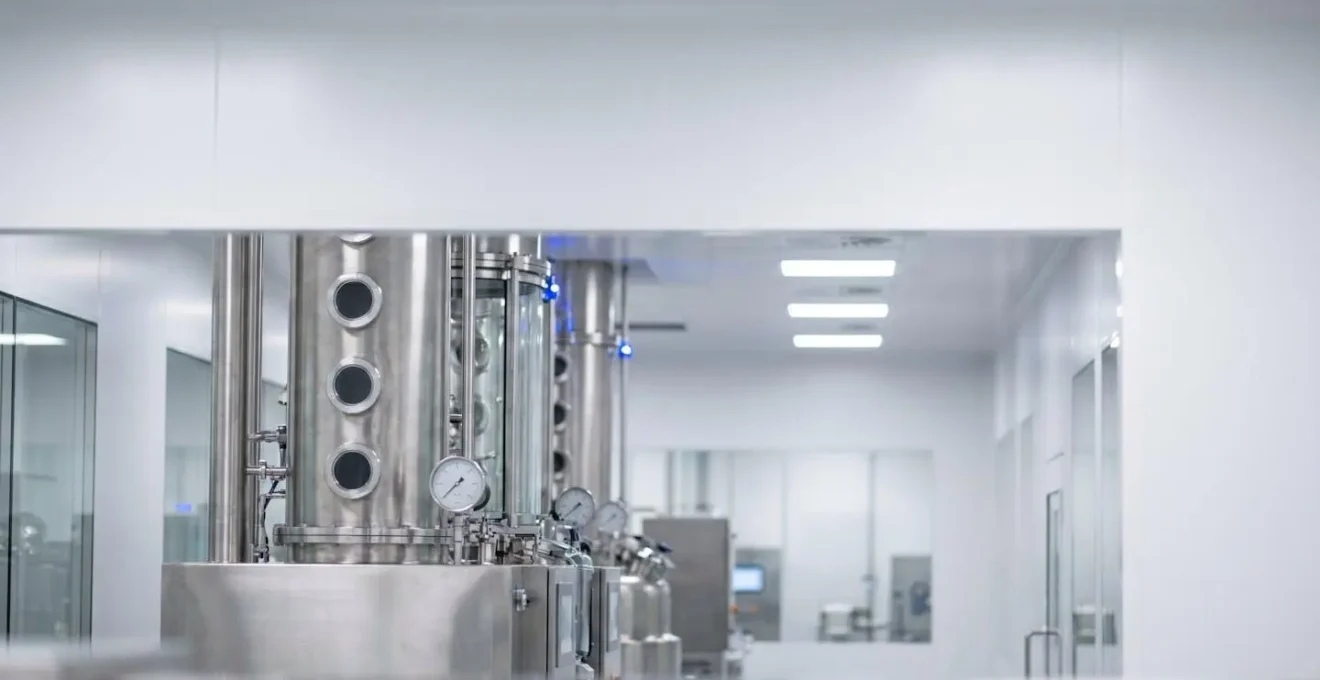
Professional manufacturers mitigate this risk through rigorous protocols. A look at an ISO 9001 certified facility like Xyfil in the UK reveals the extent of these measures. They operate within ISO-7 clean rooms and follow Good Manufacturing Practices (GMP), which include using dedicated equipment for different substances, implementing strict cleaning and sterilization protocols between batches, and controlling the environment to prevent airborne contaminants. While a DIY mixer’s mistake might ruin one bottle, a similar mistake in a factory without these controls could compromise thousands.
This principle also applies to the equipment itself. Using non-pharmaceutical grade plastics or tools can introduce contaminants through leaching. As toxicological research demonstrates, glycerin-containing products can be contaminated with toxins like EG and DEG, not just from the raw material itself but potentially from being stored in or processed with improper materials. Professional cleanroom operations ensure that every surface, tube, and vessel that touches the e-liquid is made from inert, non-leaching, pharmaceutical-grade materials, eliminating another potential vector of contamination.
Key Takeaways
- The price difference between industrial and pharma-grade ingredients is due to multi-stage purification, extensive QC testing, and full supply chain traceability.
- “Food-safe” does not mean “inhalation-safe.” Responsible brands conduct specific tests to screen for harmful compounds formed during heating.
- True quality is proven by documentation, specifically batch-specific Certificates of Analysis (CoAs) that you, the consumer, can request and verify.
How Do You Know Your E-Liquid Doesn’t Contain Harmful Contaminants?
After exploring the complexities of sourcing, purity, and manufacturing, the path to certainty becomes clearer. You know your e-liquid is free from harmful contaminants not by trusting a label, but by verifying the process behind it. The foundation of this trust is transparency.
A trustworthy brand builds its reputation on a verifiable chain of evidence. This starts with traceable, pharmaceutical-grade ingredients and is maintained through an ISO-certified manufacturing process in a cleanroom environment. The final, non-negotiable piece of proof is the third-party, batch-specific Certificate of Analysis. This document is your guarantee, transforming a brand’s marketing claim into a scientific fact.
Building a reliable supply chain takes time and commitment. For example, as leading UK manufacturers report, some have partnered with a single UK-based pharmaceutical-grade nicotine supplier for over 7 years to establish consistent standards. This long-term relationship ensures reliability and a deep understanding of the material’s properties, which translates directly to the quality and safety of the final product you inhale. This is the hidden value in that extra £2—an investment in a stable, proven, and transparent supply chain.
Now, when you stand before a shelf of e-liquids, you are equipped with the right questions. Your next step is not to blindly pay more, but to actively engage with your chosen brand. Ask for the CoA. Inquire about their manufacturing standards. Your purchase is a vote for the kind of industry you want: one built on transparency and verifiable safety.