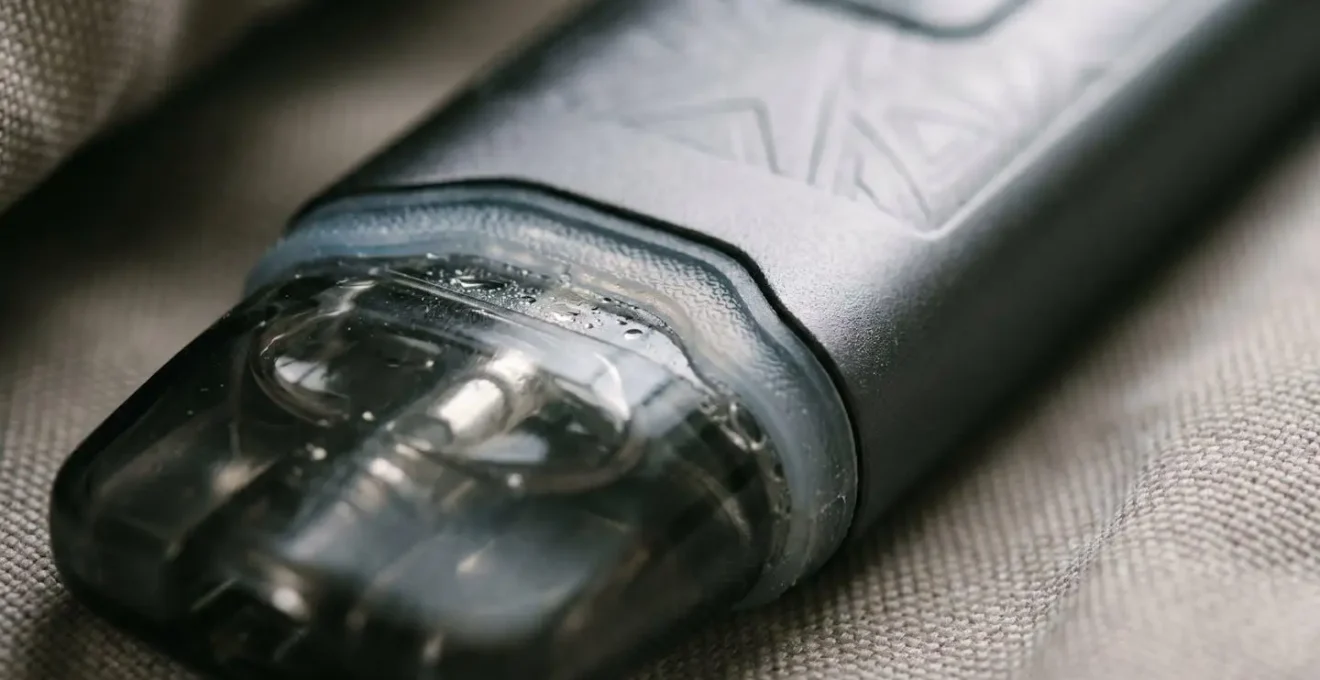
In summary:
- Vape leaks during travel are not random; they are caused by a predictable combination of air pressure changes, e-liquid temperature, and how full your pod is.
- Preventing leaks requires a proactive system: partially fill your pod, inspect its seals, and always store it detached from the battery in a sealed bag.
- Understanding UK airport security rules for liquids and batteries, plus post-Brexit EU customs limits on nicotine strength, is essential for a delay-free journey.
The familiar, sinking feeling of reaching into your pocket or carry-on after a flight, only to find a sticky, e-liquid-coated mess where your vape used to be. For any UK commuter or regular traveller who vapes, this scenario is frustratingly common. You’ve probably heard the standard advice: don’t fill your pod to the top, keep it upright, or just throw it in a plastic bag and hope for the best. Yet, despite your best efforts, the leaks persist, turning a reliable device into a travel liability.
The problem is that this generic advice only addresses the symptoms, not the root cause. A plastic bag is a containment strategy, not a prevention method. The real solution lies in understanding the interconnected physics at play. The constant changes in altitude on a plane, or even the subtle pressure shifts on a high-speed train, create a ‘perfect storm’ inside your pocket pod. It’s a battle between air pressure, temperature, liquid viscosity, and the mechanical integrity of your device.
But what if the key wasn’t just reacting to leaks, but proactively engineering your vape kit for travel? This guide moves beyond the platitudes. We will deconstruct exactly why your pod fails during transit and provide a robust system for maintaining its integrity. By understanding the ‘why’ behind the leak, you can finally master the ‘how’ of preventing it. We’ll cover the science, the correct packing protocol for UK airports, and the crucial battery and e-liquid rules you need to know, transforming you from a frustrated victim into a prepared, leak-free traveller.
This article breaks down everything you need to know to ensure your vape is as ready for travel as you are. Explore the sections below to pinpoint the cause of your issues and implement the solutions for good.
Summary: Your Guide to a Leak-Free Vaping Journey
- Why Air Pressure Changes at Altitude Make Your Pod Leak E-Liquid?
- Which Pod Systems Have Pressure Equalization Valves for Air Travel?
- How to Pack Your Vape Kit to Clear UK Airport Security Without Delays?
- Why You Cannot Check Vape Batteries and What Happens if You Try?
- How Much E-Liquid Can You Legally Bring Into EU Countries After Brexit?
- Why Does Your Vape Leak on Aeroplanes but Never at Home?
- 200mAh or 400mAh Pod: Which Size Balances Pocketability With Capacity?
- Why Does Your Pocket Pod Run Out of Battery by Lunchtime?
Why Air Pressure Changes at Altitude Make Your Pod Leak E-Liquid?
The primary culprit behind in-flight vape leaks is basic physics, specifically the principle known as Boyle’s Law. While you’re sitting comfortably, commercial aircraft cabins are pressurized to simulate an altitude of 6,000 to 8,000 feet. At this height, the surrounding air pressure is significantly lower than at ground level. This pressure drop is what causes the air trapped inside your vape pod to expand. Every pod, unless completely full to the point of overflowing, contains a small air bubble.
As the plane ascends and cabin pressure decreases, this trapped air bubble expands, creating internal overpressure within the pod. This is the same reason a bag of crisps inflates during a flight. The expanding air needs to go somewhere, and it exerts force on the e-liquid, pushing it out through the paths of least resistance. These are typically the silicone seals around the coil or the cotton wicks themselves. The entire process creates a slow, steady push that forces liquid out, resulting in the dreaded leak.
During descent, the opposite occurs. Cabin pressure increases, compressing the air bubble inside the pod and creating negative pressure, or a vacuum effect. This can suck excess e-liquid from the tank into the central atomizer chamber and coil. You may not notice an immediate leak, but this is what causes that unpleasant gurgling sound or ‘spitback’ of hot liquid on your first puff after landing. Understanding these pressure dynamics is the first step to mastering travel-proof vaping.
Which Pod Systems Have Pressure Equalization Valves for Air Travel?
While it would be ideal, the reality is that very few, if any, commercially available pod systems are designed with dedicated pressure equalization valves specifically for air travel. The market prioritizes simplicity, cost-effectiveness, and pocketability over niche features for flight. Therefore, rather than searching for a ‘magic’ leak-proof device, the smarter strategy is to focus on maintaining the system integrity of the device you already own. A well-maintained pod, prepared correctly, will outperform a poorly packed ‘travel-proof’ one every time.
The key is proactive prevention. Before you even think about packing, you must ensure your pod is in optimal condition to withstand the pressure dynamics of travel. This involves a simple but crucial integrity check. By creating an environment where pressure has a safe way to equalize, you control the system instead of letting it control you.
The most effective preparation involves a few key steps. Following this sequence transforms your standard pod into a travel-ready one:
- Control the Air Buffer: When filling your pod, only fill it to about 80-90% of its capacity. This leaves a larger air bubble that can expand and contract without forcing liquid out.
- Inspect the Seals: Carefully check all silicone seals and O-rings for any signs of wear, tearing, or deformation. These are the weakest points; a compromised seal is a guaranteed leak. Replace the pod or coil if any damage is found.
- Check for Micro-Cracks: Examine the plastic body of the pod, especially around the base and seams. Even a hairline crack can become a major leak point under pressure.
- Ensure a Secure Connection: Make sure the pod sits flush and tight against the battery contacts. A loose connection can create a pathway for liquid to escape.
- Isolate and Contain: Most importantly, always detach the pod from the battery and store it separately in a small, sealed plastic bag. This not only contains any minor leaks but also protects your device’s battery contacts from e-liquid damage.
How to Pack Your Vape Kit to Clear UK Airport Security Without Delays?
Navigating UK airport security with a vape kit can be a source of anxiety, but it doesn’t have to be. The key to a smooth, delay-free experience is preparation and transparency. Airport security staff are trained to identify specific items, and a well-organized kit that adheres to the rules minimizes scrutiny and gets you through faster. The two golden rules are simple: liquids go in the clear bag, and batteries go in your carry-on.
All e-liquids are subject to the same restrictions as other toiletries. According to UK security regulations, each container must hold a maximum of 100ml, and all containers must fit comfortably inside a single, transparent, resealable plastic bag of no more than 1-litre in capacity. This applies to both pre-filled pods and bottles of e-liquid. Do not try to hide them; place the bag in the security tray alongside your other belongings. This also applies to disposable vapes, which contain liquid and a battery and must be treated accordingly.
Your device and any spare batteries must be in your hand luggage, never in your checked baggage, due to fire safety regulations. When packing, place your vape and batteries near the top of your bag for easy access, as you may be asked to present them. A confident, prepared traveller is a low-risk traveller. Hiding your kit suggests you have something to hide, inviting unwanted attention and delays.
Your Action Plan: UK Airport Security Vaping Protocol
- Liquid Logistics: Place all e-liquid bottles (100ml or smaller) and pre-filled pods into a single, 1-litre clear resealable plastic bag with your other liquids.
- Device & Battery Placement: Pack your vape device and all spare batteries in your main carry-on bag, positioned near the top for quick access if requested.
- Power Down: Ensure all devices are completely turned off (or locked, if they have that function) to prevent accidental activation during transit.
- Battery Safety: Keep any spare lithium-ion batteries in protective cases or their original packaging. If you don’t have cases, place electrical tape over the terminals to prevent short-circuits.
- Verbal Rehearsal: Be ready with a brief, clear explanation for security staff: “This is my personal e-cigarette and its spare batteries, packed according to regulations.” Confidence reduces friction.
- Tray Presentation: Present your vape device in the security tray with other large electronics like your phone and laptop. Do not bury it in your bag.
Why You Cannot Check Vape Batteries and What Happens if You Try?
The rule is absolute and non-negotiable across all airlines globally: you cannot pack any vape device containing a lithium-ion battery, or any spare lithium-ion batteries, in your checked hold luggage. This isn’t an arbitrary rule from the airlines; it’s a critical fire safety regulation mandated by international aviation authorities. Lithium-ion batteries, if damaged or short-circuited in the unpressurized, inaccessible cargo hold, can enter a state called ‘thermal runaway,’ leading to an intense fire that is extremely difficult to extinguish.
The International Air Transport Association (IATA), which sets global standards for airline safety, is unequivocal in its guidance. This is not a suggestion, but a requirement for passenger safety. As their official documentation states:
Electronic cigarettes including e-cigars, e-pipes and other personal vaporizers containing batteries for personal use must be in carry-on baggage only.
– IATA (International Air Transport Association), IATA Guidance Document for Passengers Travelling with Lithium Batteries
Attempting to bypass this rule, whether intentionally or by mistake, will lead to significant disruption to your travel plans. Modern airport baggage scanners are designed to detect lithium batteries. If a device is found in your checked bag, it triggers a security alert. The best-case scenario is a long delay; the worst is missing your flight and having your property confiscated. The process is predictable and stressful:
- The scanner flags your bag, and it’s diverted for manual inspection.
- An announcement is made over the airport’s public address system, calling you back to the check-in or a security area.
- You will be escorted by security personnel to a secure room to open your luggage in their presence.
- The vape device will be identified and immediately confiscated. You will not get it back.
- This entire process can take a significant amount of time, easily causing you to miss your flight. In some cases, you may also face administrative penalties for violating safety regulations.
How Much E-Liquid Can You Legally Bring Into EU Countries After Brexit?
For UK travellers heading to the EU, it’s crucial to understand that there are two separate sets of rules governing e-liquids: airline security regulations for transport and customs regulations for personal importation. Confusing the two is a common mistake. Airline security is concerned with flight safety, while customs is concerned with taxes, duties, and compliance with local laws, such as the EU Tobacco Products Directive (TPD).
The TPD is the key piece of legislation here. It sets a strict limit on the nicotine concentration of any e-liquid that can be legally sold or brought into the EU for personal use. The directive mandates a 20mg/ml maximum nicotine concentration. This means that while you might legally buy a 50mg/ml nicotine salt e-liquid in a non-EU country, attempting to bring it into an EU member state is illegal and it could be confiscated by customs officials upon arrival. For UK vapers who use high-strength liquids, this is a critical post-Brexit consideration.
The distinction between the volume allowed by airlines and the limits imposed by customs can be confusing. The following table breaks down the different rules and where they are enforced, helping you stay compliant at every stage of your journey.
| Regulation Type | Limit Applies To | Volume Restriction | Nicotine Strength Limit | Enforcement Point |
|---|---|---|---|---|
| Airline Security (Hand Luggage) | Carry-on liquids screening | 100ml per bottle, 1-litre total bag | No restriction (transport only) | Airport security checkpoint |
| Airline Security (Checked Luggage) | Hold baggage liquids | No volume limit (but devices banned) | No restriction (transport only) | Check-in baggage screening |
| EU Customs (Personal Import) | Goods entering EU customs territory | Typically 1-2 litres for personal use | 20mg/ml maximum (EU law) | Customs border control upon arrival |
| EU Customs (Commercial Import) | Goods for resale | Requires commercial documentation | 20mg/ml maximum (EU law) | Customs declaration and duty payment |
Why Does Your Vape Leak on Aeroplanes but Never at Home?
If your device performs flawlessly in your daily life but consistently fails during air travel, it’s because a flight creates a ‘perfect storm’ of conditions that work together to force e-liquid out. The change in air pressure is the main trigger, but it’s rarely the sole cause. Two other critical factors, heat and liquid volume, converge with the pressure drop to guarantee a leak. Understanding this trifecta of failure is the key to preventing it.
First, consider the thermal dynamics. The e-liquid in your pod has a certain viscosity (thickness). Heat thins this liquid, making it more mobile and prone to seeping through small gaps. A fully charged battery, especially if used just before boarding, generates warmth that transfers to the pod, reducing the e-liquid’s viscosity. Secondly, a completely full tank leaves the smallest possible air bubble, meaning that when this tiny bubble expands due to the pressure drop, it exerts the maximum possible force on the liquid, as there’s no empty space to absorb the expansion.
When these three factors align—low cabin pressure, heat-thinned liquid, and a full tank—a leak becomes almost inevitable. The expanding air, pushing against runny liquid in a confined space, will force its way out. Furthermore, user error can compound the problem. Taking a draw from your vape during active ascent or descent creates a powerful vacuum effect. This sudden suction pulls a large amount of the now-thin e-liquid into the coil chamber, flooding it and guaranteeing gurgling, spitback, or a leak when you next use it. This combination of environmental and usage factors explains why the same trusty device can betray you at 30,000 feet.
200mAh or 400mAh Pod: Which Size Balances Pocketability With Capacity?
For a traveller, choosing the right pod system involves a delicate trade-off between size, weight, and battery life. While a large battery (500mAh+) might seem appealing for its long life, it often comes with the drawback of a bulkier device and, more importantly, a longer charging time. For a commuter or someone on a layover, the ability to get a significant charge in a short period is far more valuable than all-day capacity. This is where smaller, fast-charging pods shine.
A useful rule of thumb for battery performance is that you can expect approximately 75-100 MTL (mouth-to-lung) puffs per 100mAh of battery capacity. This means a compact 200mAh pod can deliver 150-200 puffs, while a 400mAh pod offers 300-400 puffs. However, the raw capacity (mAh) is only half the story. The charging technology is the other critical component. Modern pods using a USB-C fast-charging port can often reach 80% charge in just 15-30 minutes, making them incredibly practical for a quick top-up at an airport café. In contrast, older devices with Micro-USB ports can take over an hour for a full charge, a luxury travellers rarely have.
A 350-400mAh pod with USB-C charging often represents the sweet spot for travel. It’s small enough to be pocketable, provides enough capacity to last through a flight or a day of commuting, and can be rapidly recharged during a brief stop. A smaller 200mAh device is even more portable but may require more frequent top-ups, making it ideal for short trips where ultra-light packing is the priority.
| Battery Capacity | Typical Charge Port | Full Charge Time | Estimated MTL Puffs | Travel Practicality Score |
|---|---|---|---|---|
| 200-300mAh | USB-C (fast charge) | 15-20 minutes (0-80%) | 150-300 puffs | High (quick top-ups during layovers) |
| 350-400mAh | USB-C (fast charge) | 25-35 minutes (0-80%) | 300-400 puffs | Very High (balance of speed and capacity) |
| 400-500mAh | Micro-USB (standard) | 60-75 minutes (full) | 400-500 puffs | Medium (long charge limits convenience) |
| 500mAh+ | Micro-USB (standard) | 90+ minutes (full) | 500+ puffs | Low for travel (impractical charge duration) |
Key takeaways
- Leaks are caused by a ‘perfect storm’ of pressure differential from altitude, battery heat thinning the e-liquid, and a full tank leaving no room for air expansion.
- Proactive preparation, including only partially filling your pod, inspecting seals for integrity, and storing the pod and battery separately, is far more effective than reactive fixes.
- For UK travellers, knowing the separate and distinct rules for liquids (100ml bag rule) and batteries (carry-on only) at airport security, plus post-Brexit EU customs limits (20mg/ml nicotine), is essential for a smooth journey.
Why Does Your Pocket Pod Run Out of Battery by Lunchtime?
It’s a common frustration: you leave the house with a fully charged pod, but by midday, the battery is already dead. While heavy use is an obvious factor, the more likely culprits are often hidden sources of battery drain and environmental conditions that silently sap your device’s power. Identifying these “vampire drains” and other factors is crucial for ensuring your device lasts when you need it most, especially during a long travel day.
Many modern pods feature auto-draw sensors that activate when you inhale. While convenient, these sensors are in a constant low-power standby mode, continuously drawing a small amount of current. Similarly, pulsing or glowing LED indicator lights, even when the device isn’t in use, contribute to this parasitic drain. Leaving the device powered on, even if unused, keeps the internal circuitry active and slowly depletes the battery throughout the day. These small drains accumulate, significantly shortening the effective battery life.
Environmental factors also play a major role. Lithium-ion batteries are chemically less efficient in the cold. On a chilly day, a battery’s effective capacity can be temporarily reduced by 20-30%. If you’re a commuter travelling on a cold winter morning, your pod’s battery is working at a significant disadvantage before you even take your first puff. Your usage habits, such as chain vaping or taking long, deep inhales, also draw far more power than short, spaced-out puffs, further accelerating battery depletion.
Your Checklist: Identifying Hidden Battery Drains
- Vampire Drain 1 (Auto-Draw): Recognize that auto-draw sensors are always in standby, consuming a small but steady current (0.5-2mA) even when the device is idle.
- Vampire Drain 2 (LEDs): Check if your device’s LED indicator lights pulse, glow, or remain dimly lit during standby, as this drains 1-3mA per hour.
- Circuit Status: Actively power off your device completely when not in use for extended periods, rather than just leaving it in standby, to break the circuit connection.
- Environmental Factor (Cold): Be aware that in temperatures below 15°C (59°F), your battery’s chemical efficiency can drop significantly, temporarily reducing its total capacity.
- Usage Factor (Pacing): Avoid “chain vaping” (taking puffs with less than 30 seconds in between), which prevents the coil from cooling and demands sustained high power output.
- Usage Factor (Inhale Style): Understand that long, direct-to-lung (DTL) inhales draw 3 to 4 times more power from the battery than short, mouth-to-lung (MTL) puffs.
By understanding the complete system—from the physics of pressure and heat to the specifics of battery chemistry and international regulations—you can transform your vaping experience during travel. A reliable device is an essential part of a smooth journey. Apply these principles on your next trip to take control of your kit and ensure a clean, reliable, and stress-free experience from departure to arrival.