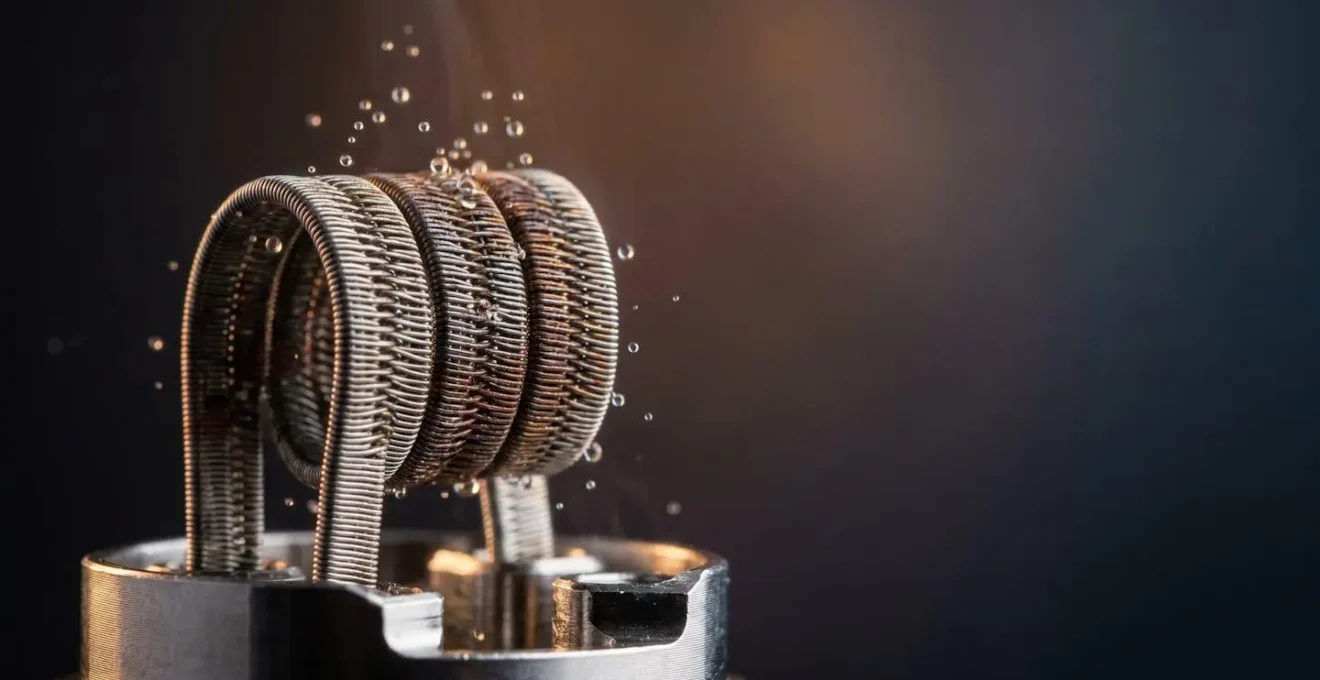
Contrary to popular belief, the ‘perfect wattage’ isn’t a single number; it’s a dynamic setting that depends on the specific chemical makeup of your e-liquid’s flavour molecules.
- Higher wattages can destroy delicate flavour compounds through a process called thermal degradation, making them taste muted or harsh.
- Different flavour types—fruits, desserts, menthols—require different heat levels to properly vaporize and express their full, intended profile.
Recommendation: Stop searching for one ‘best’ wattage and start learning to calibrate your power settings to the specific e-liquid and coil you’re using for a consistently superior flavour experience.
You’ve found the perfect e-liquid. The first few puffs are a revelation of flavour—a complex blend of rich vanilla, sharp citrus, or cooling menthol. But then you adjust the power, chasing a bigger cloud, and suddenly the magic is gone. That vibrant flavour is now a muted, bland shadow of its former self, or worse, has become harsh and burnt. This is a frustratingly common experience for vapers in the UK and beyond. The instinct is often to blame the e-liquid or the coil, but the answer usually lies in that simple wattage adjustment.
Most advice simply tells you to “stay within the recommended range” on your coil or to “start low and go up.” While not incorrect, this advice misses the crucial point. Wattage isn’t just a volume knob for vapour; it’s a precision control for a complex chemical reaction. Every flavour compound in your e-liquid has a specific temperature at which it best expresses itself—its volatilization point. Pushing the power too high doesn’t just create more vapour; it can fundamentally alter or destroy these delicate molecules.
This guide moves beyond the generic tips. We’re going to delve into the sensory science of the power-flavour relationship. You will learn to think like a flavour chemist, understanding not just *what* wattage to use, but *why*. We will explore the science of thermal degradation, discover how to perform diagnostic tests to find the true sweet spot for any coil, and uncover why different flavour profiles demand entirely different heat signatures. By mastering the thermal science of taste, you’ll transform your mod from a simple battery into a precision flavour instrument.
This article breaks down the complex relationship between power and taste into clear, actionable steps. Explore the topics below to take control of your vaping experience.
Summary: Understanding the Power-Flavour Connection in Vaping
- Why Turning Up Wattage Makes Some Flavours Disappear Completely?
- How to Find the Perfect Wattage for Your 0.5 Ohm Coil in 3 Test Puffs?
- Why Dessert Flavours Need 15W More Than Menthols for Best Results?
- The First-Puff Wattage Mistake That Destroys New Coils Before They’re Broken In
- When to Use Your Mod’s Preset Memory to Store 3 Different Wattage Profiles?
- How to Set Wattage Curves That Match Your Thick Dessert E-Liquid?
- How to Find the Sweet Spot Wattage That Makes Mesh Coils Last 4 Weeks?
- Why Do Mesh Coils Deliver Restaurant-Quality Flavour While Wire Coils Taste Muted?
Why Turning Up Wattage Makes Some Flavours Disappear Completely?
The primary reason a flavour vanishes or turns unpleasant at high wattage is a scientific process called thermal degradation. Your e-liquid isn’t just a simple liquid; it’s a carrier for a complex array of flavour molecules. When you apply power, the coil heats up and vaporizes these molecules, creating the aerosol you inhale. However, if the temperature gets too high, it crosses a threshold from vaporization to degradation. Instead of simply turning into vapour, the flavour molecules are chemically broken down or transformed into entirely different, often tasteless or harsh-tasting, compounds.
Think of it like toasting bread. At the right temperature, you get a warm, delicious piece of toast as the sugars caramelize. Turn the heat up too high, and you don’t get ‘more toast’; you get a burnt, acrid piece of carbon. The same principle applies to your vape. A scientific case study focusing on flavour terpenes found that at temperatures mimicking a hot vape coil, a single flavour compound like α-pinene (a pine note) could break down into 36 different reaction products. This isn’t enhancing the flavour; it’s chemically obliterating it.
Every flavour compound has a different “burning point.” Delicate fruit and floral notes are particularly susceptible to this. Research on the chemicals used in e-cigarettes confirms that for most electronic nicotine delivery systems (ENDS), the optimal thermal reactions happen below a certain threshold. For instance, scientific research on the thermal desorption of flavour compounds shows this happens at temperatures between 100-300°C. Pushing your wattage too high can easily exceed this, especially in non-temperature-regulated devices, leading to the disappearance of the notes you paid for. The result is a flat, one-dimensional vape that lacks the complexity and nuance the flavourist intended.
How to Find the Perfect Wattage for Your 0.5 Ohm Coil in 3 Test Puffs?
Finding the perfect wattage isn’t a dark art; it’s a simple diagnostic process. Instead of randomly guessing, you can perform a systematic test to calibrate your device to a specific coil and e-liquid combination. The goal is to identify the “sweet spot”—the point of maximum flavour clarity and intensity without introducing harshness or thermal degradation. A 0.5 ohm coil, common for sub-ohm vaping, typically has a broad recommended range, making this calibration even more important.
This process of sensory calibration requires you to pay close attention to how the flavour profile changes with each incremental power increase. The image below represents this act of precise, intentional adjustment—moving away from guesswork and towards a controlled, analytical approach.
To find the sweet spot for your 0.5Ω coil, you can use a simple “Three-Puff Diagnostic Protocol.” This structured test helps you map the flavour response curve of your setup quickly and effectively.
- Puff 1 – Baseline Test: Start at the low end of the recommended range for a 0.5Ω coil, typically around 25-30W. Take a normal puff. Your goal here is to identify the foundational flavour notes and ensure the coil is wicking properly with no dry or burnt taste. This is your baseline flavour profile.
- Puff 2 – Sweet Spot Scan: Increase the power to the middle of the range, about 35-40W. Take a slightly longer, slower puff. Pay attention to how the flavour has changed. Are new notes appearing? Is the vapour warmer and fuller? This range is often where the manufacturer intended the coil to perform best, offering a good balance of flavour and vapour.
- Puff 3 – Upper Limit Test: Push the wattage towards the top of the recommended range, around 45-50W. Take a short, sharp puff. Listen for excessive crackling and feel for any harshness on your throat. The moment you detect harshness, you’ve found your upper limit. Your true, sustainable sweet spot is typically 5-7W *below* this point.
Why Dessert Flavours Need 15W More Than Menthols for Best Results?
The reason you might find a creamy custard flavour flat and underwhelming at 35W, while a crisp menthol is perfect, lies in the molecular weight and complexity of the flavourings used. Not all flavour molecules are created equal; they have different volatilization points—the specific temperature at which they turn into an aerosol that you can taste. This is the core reason for the significant wattage difference needed between flavour profiles.
Menthol and most simple fruit flavours are made from relatively light, simple molecules. They volatilize easily at lower temperatures. Applying too much heat can make them feel harsh or muted. As the experts at JAC Vapour point out in their technical guide:
menthol flavours work better at lower wattages and therefore cooler temperatures, as this compliments the cooling menthol sensation. On the other hand, creamy or ‘dessert’ type e-juices tend to work better at higher wattages and temperatures
– JAC Vapour, How Does Wattage Affect My Vape – Technical Guide
Dessert, bakery, and creamy profiles are the opposite. They are built from heavier, more complex molecules like vanillin (vanilla), diacetyl substitutes (buttery notes), and various esters. These molecules require significantly more thermal energy (i.e., higher wattage) to fully vaporize and release their rich, layered aromas. Vaping a complex dessert flavour at a low wattage is like trying to melt butter with a weak flame; you’ll get a hint of the flavour, but you won’t unlock the full, warm, and satisfying experience.
However, this higher heat requirement for dessert flavours comes at a cost. The sweeteners (like sucralose) commonly used in these e-liquids caramelize at high temperatures, gunking up coils much faster. In fact, hardware wear analysis suggests there is 49% faster mesh coil degradation for fruity/dessert e-liquids compared to pure menthol. This is the trade-off: you need the higher wattage for the flavour, but it will reduce your coil’s lifespan.
The First-Puff Wattage Mistake That Destroys New Coils Before They’re Broken In
One of the most common and costly mistakes a vaper can make is taking the first puff on a brand-new coil at their usual high wattage. This single act can permanently damage the coil, drastically shortening its lifespan and ruining its flavour potential from the very beginning. A new coil is not ready for full power immediately; it requires a deliberate “break-in” period to ensure the cotton wick is fully saturated and the coil wire is properly seasoned.
When a coil is new, the cotton wick is pristine and tightly packed. Firing it at high wattage instantly vaporizes the liquid in direct contact with the wire, but the surrounding cotton may not be able to re-saturate the wire fast enough. This creates a micro-dry-hit, where the wire gets too hot and singes the cotton. Even if you don’t taste a full-blown burnt hit, this initial singe creates a spot of damaged cotton that will impart a subtle off-taste for the rest of the coil’s life and act as a weak point for future failure.
Properly priming a coil is the first line of defence. This involves not only dripping liquid onto the cotton but also allowing it to sit. According to coil priming best practices, a minimum of 10 minutes wait time is recommended to ensure the core of the wick is completely saturated. After that, a gradual power ramp-up is non-negotiable for maximum coil life.
Your Coil-Saving Break-In Protocol
- Prime the Coil: Apply a few drops of e-liquid directly onto all visible cotton wick areas and inside the coil head. Assemble the tank, fill it, and let it sit for a minimum of 10 minutes to ensure full saturation.
- Start at Minimum Wattage: Set your device to the absolute lowest recommended wattage for your new coil (this is usually printed on the coil itself or its packaging).
- Take Gentle Puffs: Take 2-3 very short, gentle puffs at this minimum setting. This begins to bed the coil in without shocking it with high heat.
- Increase Power Gradually: Increase the power by 5W. Take another 2-3 short puffs. Repeat this process, increasing by 5W increments and taking a few puffs at each level.
- Reach Target Wattage: Continue this gradual increase until you reach your desired everyday vaping wattage. The coil is now properly broken in and ready for regular use.
When to Use Your Mod’s Preset Memory to Store 3 Different Wattage Profiles?
Many modern vape mods offer a “memory” or “preset” function, allowing you to save specific wattage settings and recall them with a couple of clicks. While it may seem like a novelty feature, it’s actually a powerful tool for the discerning vaper who wants to optimize their experience without constantly fiddling with the up/down buttons. Using memory presets is ideal when you regularly switch between different tanks, e-liquids, or even vaping intentions.
Storing different wattage profiles allows you to instantly switch your device’s behaviour to match a specific task. Instead of trying to find a single “do-it-all” wattage, which is always a compromise, you can have a perfectly calibrated setting for flavour analysis, another for all-day performance, and a third for a specific purpose like resetting your palate. This is not about being overly complicated; it’s about efficiency and getting the best possible performance in every situation.
The following table outlines three essential wattage profiles that cover the most common vaping scenarios. Saving these as presets on your mod can fundamentally improve your daily vaping workflow.
| Profile Name | Wattage Setting | Primary Use Case | Recommended For |
|---|---|---|---|
| Analytical Profile (Flavour Tasting) | 10-15W below your sweet spot | First puffs on new e-liquid or fresh coil to identify individual flavour notes | Testing new liquids, coil evaluation, flavour analysis |
| Performance Profile (All-Day) | Middle of coil’s recommended range (e.g., 40W for 30-50W coil) | Optimized balance of flavour, vapour, and coil longevity for regular use | Daily vaping after coil break-in period completed |
| Palate Reset Profile (Vaper’s Tongue Buster) | 15-20W above sweet spot OR switch to menthol tank | Combat flavour fatigue by shocking taste receptors, then return to main profile | When experiencing muted flavours or vaper’s tongue |
How to Set Wattage Curves That Match Your Thick Dessert E-Liquid?
For vapers who love thick, high-VG dessert e-liquids, a standard wattage setting can often lead to a frustratingly slow start, with the first second of a puff feeling weak and flavourless. This is due to a physics principle called thermal inertia. Dense, complex coils paired with thick, viscous liquid simply take longer to heat up. A wattage curve, a feature on more advanced mods, is the perfect solution to this problem, allowing you to tailor the power delivery over the course of your puff.
Imagine your coil and thick e-liquid as a heavy flywheel. A constant, steady push (standard wattage) will eventually get it up to speed, but it will be slow to start. A wattage curve allows you to give it a powerful initial shove to overcome that inertia, then reduce the power to a sustainable level to keep it spinning smoothly without overheating. This initial surge of power is crucial for rapidly heating the coil mass and vaporizing the heavy molecules found in dessert flavours from the very first moment.
Analysis of power delivery patterns for high-VG (70/30 or higher) e-liquids reveals a clear strategy. Because these thicker liquids wick more slowly and are used in larger, more substantial coils, they benefit from a “pre-heat” function. The optimal approach involves setting a wattage curve that delivers a burst of power at the beginning of the puff and then tapers off. This addresses the core challenge: you need sustained higher heat to fully vaporize the heavy flavour molecules in dessert juices, but you also want to avoid scorching the liquid and burning out your coil.
A typical wattage curve for a thick dessert liquid might look like this:
- First 0.5 seconds: Set the power 20-30% above your normal target wattage. If you usually vape at 60W, start the curve at 72-78W.
- Next 1.0-1.5 seconds: Drop the power to your normal target wattage (e.g., 60W). This is the main power level for the bulk of your puff.
- Final second: You can choose to either maintain the target wattage or slightly decrease it to prevent overheating during longer puffs.
This technique ensures you get a satisfying, flavourful hit from the very beginning without the risk of burning the coil or the liquid during a longer draw.
Key Takeaways
- Wattage controls flavour chemistry, not just vapour volume; too much heat destroys delicate flavour molecules.
- Dessert and bakery flavours require more heat to vaporize their complex molecules, while fruits and menthols need less.
- Mesh coils provide superior flavour due to an even ‘heat flux’, which eliminates the hot spots that burn or mute taste in traditional wire coils.
How to Find the Sweet Spot Wattage That Makes Mesh Coils Last 4 Weeks?
Mesh coils are celebrated for their incredible flavour, but their longevity can be a point of frustration. It’s common for a mesh coil to taste amazing for a week and then rapidly decline. The secret to extending their life to three or even four weeks lies in finding a very specific wattage “sweet spot” that perfectly balances performance with sustainability. This optimal wattage prevents the tiny, cumulative instances of damage that degrade the coil over time.
The defining characteristic of a mesh coil is its rapid ramp-up time. This is great for flavour but also presents a risk: the coil can heat up faster than the wick can resupply it with e-liquid, especially during “chain vaping” (taking multiple puffs in quick succession). Even if you don’t get a full dry hit, these tiny moments where the wick is slightly too dry cause micro-burns on the cotton. Over hundreds of puffs, this cumulative damage kills the flavour and the coil.
The key is to find the highest wattage you can use where the wicking can *consistently* keep up. There’s a simple test for this: the consecutive puff test.
- Identify Your Baseline: Start in the middle of your mesh coil’s recommended wattage range. For a coil rated 40-70W, for example, begin at 55W.
- Perform the Consecutive Puff Test: Take three quick, successive puffs with only a 2-3 second pause between each one.
- Evaluate the Degradation Pattern: Pay extremely close attention to the taste of the third puff compared to the first. If it tastes even slightly weaker, dryer, or harsher, your wattage is too high. The coil is out-pacing the wick’s ability to resupply liquid.
- Adjust Downward: Reduce your wattage by 5W and repeat the three-puff test. Continue this process until all three puffs taste identical in flavour and intensity.
This final, stable wattage is your longevity sweet spot. It’s the maximum power your setup can sustain without causing the micro-dry-hits that degrade the cotton. Operating at this calibrated wattage ensures the coil has just enough time to cool and re-saturate between puffs, dramatically extending its life.
Why Do Mesh Coils Deliver Restaurant-Quality Flavour While Wire Coils Taste Muted?
The near-unanimous consensus among experienced vapers is that mesh coils produce a cleaner, more intense, and more detailed flavour than traditional wound wire coils. This isn’t just subjective preference; it’s rooted in the fundamental physics of heat transfer. The structural design of a mesh coil gives it an inherent advantage in evenly and efficiently vaporizing e-liquid, resulting in what many describe as “HD flavour.”
A traditional coil is a single strand of wire wound into a spiral. By its very nature, it heats unevenly. The legs of the coil can be cooler, while the centre can develop “hot spots”—areas that get significantly hotter than the rest of the wire. These hot spots are disastrous for flavour: they can scorch and degrade some of the e-liquid while other parts of the coil remain under-heated, leaving flavour molecules undeveloped. This creates a muddled, inconsistent taste.
As the team at Vape Superstore explains, the advantage of mesh is clear:
Tanks with mesh coils are also great for boosting the individual notes in your e-liquid – they have a more even heat distribution and faster ramp up which results in better flavour
– Vape Superstore, Guide to Getting Maximum Flavour
A mesh coil, on the other hand, is a perforated sheet of metal with a much larger surface area and lower mass. This design creates what engineers call an even heat flux. As technical analysis from manufacturers like Innokin demonstrates, when power is applied, the entire surface of the mesh reaches the optimal vaporization temperature almost instantaneously and uniformly. There are no hot spots. Every droplet of e-liquid that touches the mesh is vaporized at the exact same, ideal temperature. This instantaneous and uniform vaporization produces a denser aerosol with smaller, more numerous droplets, which coats the palate more completely. This provides far more flavour data to your taste and smell receptors, allowing you to perceive a level of complexity and clarity that wire coils simply cannot match. It’s the difference between listening to music on a cheap radio and hearing it in a recording studio.
Now that you understand the science behind power settings, the next logical step is to apply this knowledge to your own hardware. Begin by methodically testing your favourite e-liquid with the three-puff diagnostic protocol to discover its true sweet spot.