Vape & E-cigarettes
The landscape of vaping technology has evolved dramatically from the early cigalike devices that disappointed countless smokers attempting to quit. Modern e-cigarettes now encompass a diverse ecosystem of devices—from sleek pod systems that slip into your pocket to powerful box mods with customizable settings that would bewilder a newcomer. Understanding this technology isn’t just about choosing a device; it’s about finding the right match for your smoking habits, budget, and lifestyle preferences.
Whether you’re considering your first vape purchase to replace cigarettes or you’re troubleshooting why your current device leaks, burns coils, or dies halfway through your workday, this comprehensive resource breaks down the essential concepts every vaper should understand. From the fundamental difference between mouth-to-lung and direct-to-lung inhaling styles to the safety mechanisms that prevent catastrophic failures, these insights will help you navigate the vaping world with confidence and avoid the common pitfalls that cause most beginners to give up within the first month.
Understanding Device Categories: Pods, Mods and Disposables
The vaping market segments into three primary device categories, each designed for different user needs and experience levels. Pod systems represent the most cigarette-like experience, utilizing small cartridges (pods) filled with e-liquid and typically operating at lower power levels between 10-20W. These compact devices excel at delivering nicotine salts efficiently, making them the preferred choice for recent ex-smokers who prioritize throat hit over cloud production.
Box mods occupy the advanced end of the spectrum, featuring adjustable wattage, temperature control, and often replaceable batteries. These devices demand more user knowledge—you’ll need to understand Ohm’s law basics, match coil resistance to appropriate wattage ranges, and perform regular maintenance. A box mod paired with a sub-ohm tank can consume e-liquid four times faster than a pod system, but delivers substantially more flavour intensity and vapour volume for experienced users who’ve moved beyond cigarette replacement.
Disposable vapes offer maximum convenience at a significant cost premium. While a single-use device might deliver 600 puffs for approximately £5-7, this translates to roughly £100-150 monthly for moderate users—compared to £25-40 for someone using a refillable pod system with bottled e-liquid. The mathematical reality makes disposables practical only for occasional vapers or those testing vaping before committing to reusable hardware.
Airflow Control: Matching Draw Resistance to Your Smoking Style
The single most critical factor determining whether a vape will satisfy a smoker’s cravings is airflow resistance. Cigarettes create a tight, restricted draw that requires significant suction—this mouth-to-lung (MTL) inhaling style involves drawing vapour into your mouth first, then inhaling it to your lungs. Most ex-smokers instinctively prefer this familiar sensation, yet many starter kits ship with airflow set far too open, creating an unsatisfying airy draw that triggers immediate disappointment.
Mouth-to-Lung Vaping for Cigarette Smokers
MTL vaping requires tanks with adjustable airflow closed to 25-50% of maximum opening, paired with higher-resistance coils (typically 0.8-1.8 ohms). This combination creates the tight draw that mimics premium cigarette brands. Closing your airflow by half can genuinely double perceived flavour intensity by concentrating vapour and slowing its passage across your taste receptors. For those struggling to find a cigarette-tight draw, look specifically for MTL-designated tanks with airflow diameters of 1-2mm when fully closed.
Direct-to-Lung Vaping for Cloud Production
Direct-to-lung (DTL) vaping bypasses the mouth entirely—you inhale vapour straight to your lungs like taking a deep breath. This style requires wide-open airflow, low-resistance coils (0.1-0.5 ohms), and significantly higher power (40-100W). DTL produces the massive vapour clouds associated with vaping culture but consumes e-liquid rapidly and typically works best with lower nicotine concentrations (3-6mg) since the increased vapour volume delivers more nicotine per puff.
The Wattage and Resistance Relationship
Many vapers mistakenly believe higher wattage automatically produces better results, but wattage means nothing without matching coil resistance. A 200W device paired with a 0.5-ohm coil designed for 30-40W will simply burn the cotton instantly and create acrid, unvapeable smoke. Each coil has an optimal wattage range determined by its resistance and physical construction—respect these ranges or waste money on burnt coils.
The relationship follows basic electrical principles: lower resistance coils (0.15-0.3 ohms) require higher wattage (50-100W) to heat properly, while higher resistance coils (0.8-1.5 ohms) perform optimally at 10-20W. Starting at the lower end of your coil’s recommended range and increasing by 2-3W increments lets you find the flavour peak—the sweet spot where taste is maximized before heat begins degrading flavour compounds. Most vapers overshoot this peak, mistaking harshness for intensity.
Interestingly, the same e-liquid tastes dramatically different at varying wattages. Dessert flavours often bloom between 40-50W, revealing bakery notes that remain muted at lower power. Fruit flavours frequently peak earlier at 30-40W, becoming sickly sweet or chemical-tasting when pushed higher. Finding your optimal wattage requires experimentation across three test puffs: one at minimum recommended wattage, one at midpoint, and one near maximum.
Temperature Control: The Advanced Safety Net
Temperature control (TC) mode represents the most sophisticated vaping technology, yet remains underutilized due to perceived complexity. TC mode monitors coil temperature in real-time and throttles power delivery before cotton burns—typically capping at 200-250°C depending on user preference. This prevents the dreaded dry hit entirely, even when your tank runs low on e-liquid.
TC requires specialized coil materials whose electrical resistance changes predictably with temperature: stainless steel (SS316L), nickel (Ni200), or titanium (Ti). The mod measures resistance changes microseconds apart, calculating exact coil temperature and cutting power when reaching your set limit. For bakery e-liquids, temperatures around 210-220°C maximize caramelized flavour notes without scorching, while delicate fruit profiles often perform better at 190-200°C.
The frustrating “Temperature Protection” message that appears after two seconds typically indicates a resistance lock problem, not device failure. TC mode requires locking your coil’s baseline resistance at room temperature—if locked incorrectly, the mod’s calculations become meaningless and it prematurely limits power. Always lock resistance immediately after installing a new coil, before the first puff heats the metal.
Chipset Technology and Device Reliability
The chipset inside your mod functions as its brain, regulating power delivery, monitoring safety conditions, and determining overall reliability. Cheap chipsets deliver inconsistent power—weak initial puffs followed by overpowered final puffs as the algorithm struggles to stabilize output. Premium chipsets from established manufacturers fire within 0.01 seconds at precisely your set wattage, maintaining consistency across the entire battery discharge cycle.
Budget devices under £20 often utilize generic chipsets with minimal protections and failure rates approaching 30-40% within six months. These cut corners on short-circuit protection, reverse battery protection, and overheating shutoffs—the three critical safety features that prevent battery venting incidents. When comparing chipsets, established names with multi-year track records demonstrate substantially fewer failures than unbranded alternatives, justifying the £30-50 price premium for devices you’ll trust daily.
The cryptic “Check Atomizer” error means your mod cannot detect your tank’s coil properly—usually caused by a loose coil, debris on contact points, or a coil resistance outside your mod’s supported range (many mods won’t fire coils above 3 ohms or below 0.1 ohms). Cleaning the 510 connection threading with isopropyl alcohol and ensuring your coil is hand-tightened (not cross-threaded) resolves this error in approximately 80% of cases.
Essential Safety Features and Warning Signs
Modern regulated mods incorporate multiple safety layers that make catastrophic failures extremely rare when using authentic devices. The most critical protection is short-circuit detection, which shuts down power within 0.1 seconds when detecting a direct connection between battery terminals—preventing the thermal runaway that causes battery venting. This protection activates before you’d even notice a problem, making regulated mods exponentially safer than mechanical mods that lack any circuitry.
Three safety tests should become ritual when unboxing any new mod:
- Fire the device without a tank attached—it should immediately display “No Atomizer” or similar message, confirming it won’t fire without proper load resistance.
- Install a tank and fire while monitoring the screen—wattage, voltage, and resistance readings should remain stable, not fluctuating wildly.
- Deliberately create a short by bridging the 510 connection center pin to threading with a small screwdriver—the mod should refuse to fire and display a protection warning.
Four warning signs indicate your mod’s safety features may be failing: random shutdowns during normal use, the device becoming uncomfortably hot during regular vaping, error messages appearing inconsistently with the same tank, or visible damage to the 510 connection threading. Any of these symptoms warrants immediately discontinuing use—a £50 replacement mod costs substantially less than medical treatment for battery-related injuries.
Solving Leak Problems and E-Liquid Waste
Tank leaking represents the most common complaint among vapers, yet most leaks stem from user error rather than defective hardware. The fundamental principle: e-liquid flows toward low pressure. When air pressure inside your tank drops below external pressure—such as during altitude changes in aircraft or simply leaving your device in a cold car overnight—physics demands e-liquid migrate through the airflow to equalize pressure.
The single most common leak cause is overfilling—filling past the maximum line eliminates the air buffer needed for pressure equalization. This buffer (usually 10-15% of tank capacity) allows e-liquid to expand and contract with temperature changes without forcing fluid through seals. Leaving just 2-3mm of airspace below the fill port prevents approximately 70% of leak incidents.
For air travel, the solution involves either fully emptying your tank before boarding or keeping it completely full with airflow fully closed. Partial fills create maximum pressure differential during cabin pressurization changes. Some advanced pod systems now incorporate pressure equalization valves—small one-way membranes that allow air in during pressure drops but prevent e-liquid escape—making them genuinely leak-proof during altitude changes.
Cost Analysis: Long-Term Economics of Vaping
The financial equation between device types becomes stark over extended periods. A heavy smoker spending £12 daily on cigarettes (approximately £4,380 yearly) who switches to disposable vapes at £7 for two days’ use still spends roughly £1,275 annually—a 71% reduction but still substantial. That same user with a £25 refillable pod kit and bottled e-liquid averaging £15 per week spends approximately £780 yearly—an 82% reduction from smoking and £495 annual savings compared to disposables.
The mathematics shift further with box mods and rebuildable atomizers. While initial investment reaches £60-100 for quality hardware, consumable costs drop to roughly £8-10 weekly (e-liquid plus occasional coils), totaling approximately £450 yearly. Users willing to build their own coils can reduce this to £300-350 annually. The break-even point for investing in quality reusable hardware versus disposables occurs within 4-8 weeks for moderate users.
However, cost-per-puff calculations reveal why disposables remain attractive despite poor economics: a £25 starter kit that leaks, burns coils prematurely, or provides unsatisfying throat hit costs more than disposables when abandoned after one week. The true value in reusable systems emerges only when you’ve found the right device configuration for your needs—making informed initial purchases crucial for long-term cost efficiency.
Battery Performance and Portable Convenience
Battery capacity directly determines whether your device survives a full workday or dies by lunch. Compact pod systems typically incorporate 200-500mAh batteries—sufficient for 200-400 puffs depending on wattage. A pack-a-day smoker (roughly 200 cigarette puffs) typically takes 150-250 vape puffs, meaning a 400mAh pod should last 8-10 hours of moderate use. Heavy users should target 500mAh+ or carry a backup device.
Box mods using removable 18650 batteries (typically 2500-3000mAh each) provide dramatically longer runtime, especially in dual-battery configurations. A dual-battery mod in parallel configuration combines capacity (5000-6000mAh total) delivering 12+ hours even at 60-80W, while series configuration maintains single-battery runtime but enables higher maximum wattage. For all-day reliability without charging, dual-battery mods in parallel configuration represent the gold standard, albeit with significantly larger pocket footprint.
Extending pod battery life by 20% requires surprisingly simple habits: reducing screen brightness, minimizing checking time (most mods draw power whenever the screen activates), and avoiding extreme temperatures. Lithium batteries lose roughly 10-15% capacity when operating below 5°C, making winter pocket carry notably less efficient than summer use. Keeping your device at body temperature maintains optimal discharge rates.
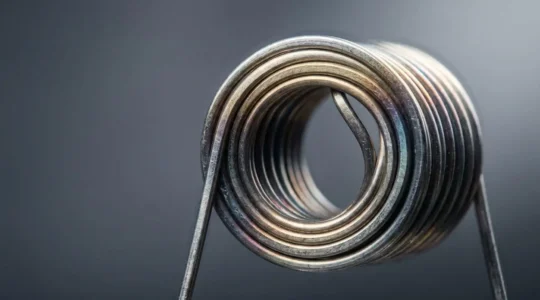
Why Does TC Stop Your Coil Burning? The Science of a Perfect Vape, Explained
That harsh, burnt taste of a dry hit is the single biggest frustration for many vapers. While Temperature Control (TC) mode is often touted as the solution, simply turning it…
Read more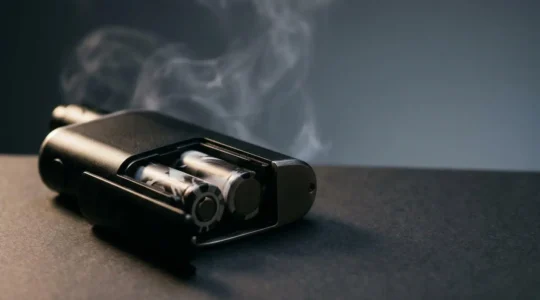
Why Does Your Dual-Battery Mod Only Last 6 Hours When It Should Last 12?
Your mod’s poor runtime is a symptom of electrical imbalance within the battery system, not just ‘old batteries’. Mismatched batteries, even from the same brand, create discharge asymmetry, forcing one…
Read more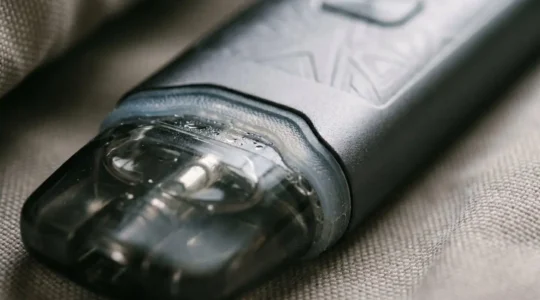
Why Does Your Pocket Pod Leak Every Time You Travel by Train or Plane?
In summary: Vape leaks during travel are not random; they are caused by a predictable combination of air pressure changes, e-liquid temperature, and how full your pod is. Preventing leaks…
Read more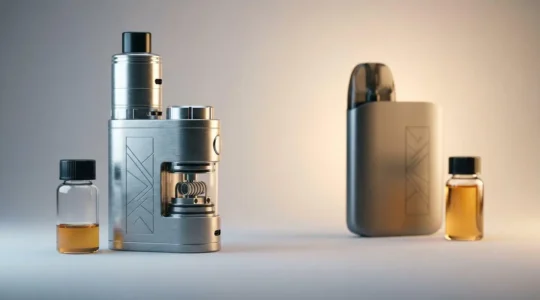
Why Does Sub-Ohm Vaping Drain Your E-Liquid 4x Faster Than Pod Systems?
Your sub-ohm vape isn’t ‘wasting’ e-liquid; it’s efficiently converting more of it into denser flavour and vapour, a fundamental difference in physics from your old pod system. Power (watts) and…
Read more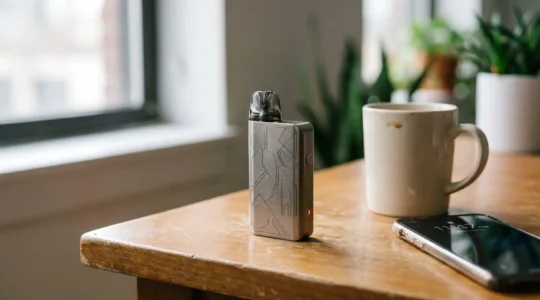
Why Does Your Pocket Pod Run Out of Battery by Lunchtime?
In summary: Stop hunting for one ‘perfect’ pod; instead, build a personal ‘vaping ecosystem’ with opportunity charging and strategic redundancy. Evaluate a pod’s real-world usability with the one-handed ‘Ergonomic Triangle’…
Read more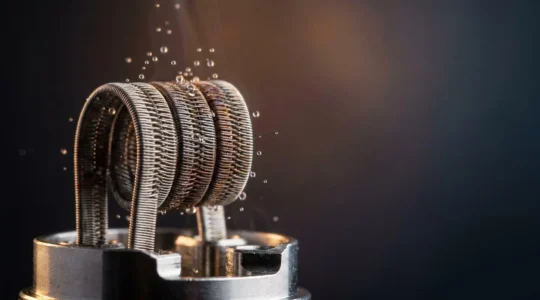
Why Does the Same E-Liquid Taste Completely Different at 30W Versus 50W?
Contrary to popular belief, the ‘perfect wattage’ isn’t a single number; it’s a dynamic setting that depends on the specific chemical makeup of your e-liquid’s flavour molecules. Higher wattages can…
Read more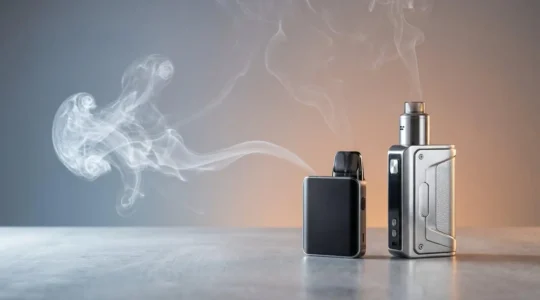
Why Does Your 200W Mod Produce Less Vapour Than Your Friend’s 80W Setup?
Your 200W mod isn’t underperforming; it’s being bottlenecked. Raw wattage is a blunt instrument that means nothing without total system synergy. True vapour production isn’t about maximum power, but about…
Read more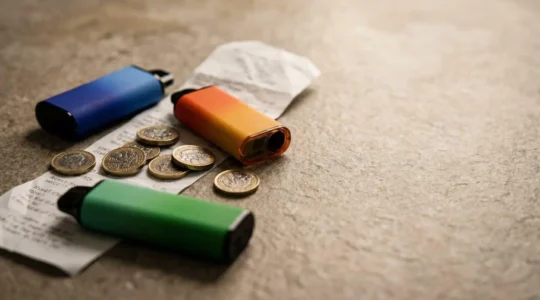
Why Do Disposable Vapes Cost £7 Each but Only Last 2 Days for Heavy Users?
Your £7 disposable vape isn’t just a purchase; it’s a high-cost convenience loan that can cost heavy users over £1,000 per year. The advertised “600 puffs” is a laboratory maximum,…
Read more
Why Does Your Pocket Always Have E-Liquid Stains After Carrying Your Vape?
Stop blaming bad luck for vape leaks; you’re witnessing a predictable failure of engineering caused by physics you can control. Leaks are not random. They are caused by quantifiable changes…
Read more
Why Did Your Friend’s Vape Stop Working (And Not Catch Fire)?
The most important safety feature of your vape is the one you mistake for a failure: when it shuts down unexpectedly, it’s doing its job perfectly. Modern vape mods are…
Read more