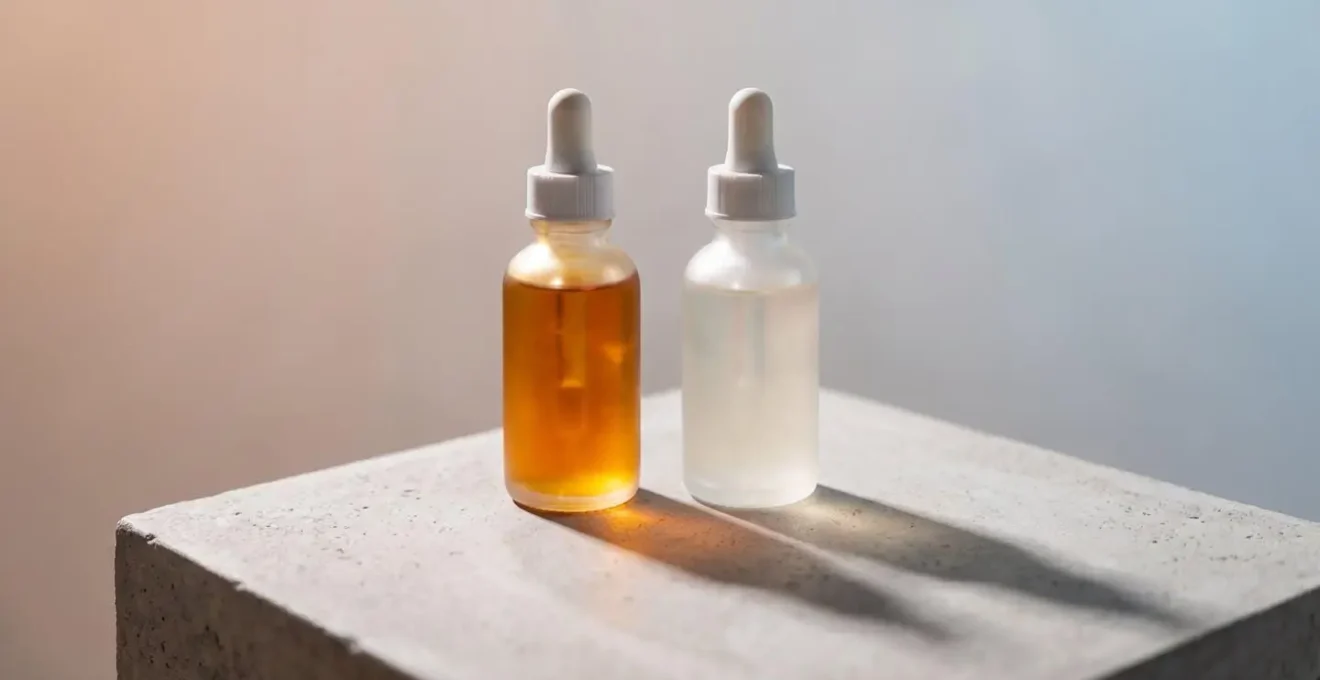
Flavour inconsistency in e-liquids isn’t a random flaw; it’s a direct result of manufacturing economics, marketing language, and brand philosophy.
- The final price of an e-liquid is dictated more by research, development, and steeping time rather than the raw ‘quality’ of ingredients alone.
- Marketing terms like “Max VG” are not standardised, leading to significant differences in vape experience even when labels look similar.
Recommendation: To find consistent satisfaction, you must learn to decode these market signals and calibrate your palate, transforming from a frustrated consumer into an educated vaper.
You’ve been there. You find a “Strawberry” e-liquid you adore, vape it until the last drop, and rush to buy another bottle, perhaps from a different, more readily available brand. You fill your tank with anticipation, take a puff, and… disappointment. It tastes nothing alike. One is a sweet, candy-like strawberry; the other is a creamy, dessert-style fruit. This frustrating experience is universal for vapers and is the single biggest hurdle in navigating the e-liquid market. Many will tell you the answer lies simply in the PG/VG ratio or some vague notion of ‘ingredient quality’.
While those factors play a role, they are merely symptoms of a much more complex system. The truth is that “flavour” in the e-liquid industry is a manufactured construct. It’s an intricate blend of supply chain economics, proprietary formulation philosophies, and the deliberate creation of a brand’s unique sensory fingerprint. Understanding this is the key to moving beyond flavour roulette and making truly informed choices.
This analysis will deconstruct the e-liquid market from the inside out. We will move past the superficial and dissect the core reasons for flavour inconsistency. By understanding the ‘why’ behind the taste, you’ll gain the knowledge to predict, choose, and ultimately enjoy your vaping experience far more consistently.
This deep dive will explore the key pillars that define an e-liquid’s final profile. We will examine everything from a brand’s signature formulation to the real meaning behind technical specifications and the economic realities that dictate why one bottle costs £3 and another £10.
Summary: Deconstructing the E-Liquid Flavour Puzzle
- Why All Vampire Vape E-Liquids Share a Recognisable Background Note?
- What Does “Max VG” Actually Mean When Brands Define It Differently?
- How Many E-Liquid Flavours Should You Rotate to Avoid Vaper’s Tongue?
- How Long Can You Store Unopened E-Liquid Before It Degrades Beyond Use?
- How to Try New E-Liquid Flavours Without Buying Full Bottles You Might Hate?
- Why Premium Fruit E-Liquids Cost £8 When Budget Options Cost £3?
- The Storage Error That Turns Your Premium E-Liquid Into Tasteless Liquid
- Why Do Some £3 E-Liquids Taste Better Than £10 Bottles?
Why All Vampire Vape E-Liquids Share a Recognisable Background Note?
One of the first patterns a discerning vaper might notice is that certain brands have a consistent, underlying taste across their entire range. This isn’t an accident or a sign of limited flavouring; it’s a deliberate and sophisticated strategy known as creating a brand DNA or signature accord. Just as famous perfume houses like Guerlain are known for their signature ‘Guerlinade’ base note that makes their fragrances instantly recognisable, leading e-liquid manufacturers cultivate a proprietary formula philosophy.
This “background note” is the result of using a specific combination of base liquids, sweeteners, or subtle flavour enhancers that form the foundation of all their recipes. It’s a house style. The goal is not to make all flavours taste the same, but to ensure a consistent level of quality, mouthfeel, and aftertaste that customers associate with the brand. It’s a mark of authenticity and a promise of a certain type of experience, regardless of whether you pick up their fruit, dessert, or menthol line.
This strategy is clearly visible in brands that focus on quality and consistency. For example, a detailed analysis of a brand’s approach can reveal a commitment to this very principle. A case study on DNA Vapor, for instance, highlights a similar strategy; they focus on using ‘only the best ingredients’ to create ‘smoother inhales and nuances in taste’. This establishes a recognisable brand DNA across their product range, differentiating them through consistent quality markers rather than just the top-note flavour.
What Does “Max VG” Actually Mean When Brands Define It Differently?
You’ve seen the term plastered on bottles: “Max VG.” It promises thick, dense clouds and a smooth inhale, and for the most part, it delivers. However, this term is one of the most misleading in the industry because it lacks a standardised definition. One brand’s “Max VG” might be an 80/20 VG/PG blend, while another’s could be 90/10 or even 100% VG (though the latter is rare as some PG is needed to carry the flavour concentrates). In fact, industry analysis reveals that Max VG could represent as low as 80% or as high as 100% VG concentration.
This inconsistency is a major source of frustration. You might find a Max VG liquid from Brand A that works perfectly in your sub-ohm tank, only to find that a Max VG liquid from Brand B is too thick and causes dry hits. This is because Vegetable Glycerin (VG) is significantly more viscous (thicker) than Propylene Glycol (PG). A higher VG percentage means a thicker liquid, which can struggle to wick properly in coils not designed for it.
As the visual contrast shows, the difference in viscosity is not trivial. This has a direct impact on the vaping experience beyond just cloud production. PG is a better flavour carrier and provides a stronger “throat hit,” while VG is smoother and produces more vapour. The table below breaks down these differences, illustrating why a seemingly small shift in the “Max VG” definition can fundamentally change the vape.
This comparative data, derived from a comprehensive analysis of e-liquid ratios, demystifies the practical impact of these blends.
| VG/PG Ratio | Vapor Production | Throat Hit | Flavor Intensity | Recommended Device |
|---|---|---|---|---|
| 50/50 | Moderate | Strong | High | MTL Pod Systems, Beginner Kits |
| 70/30 VG/PG | High | Moderate | Moderate | Sub-Ohm Tanks (Standard) |
| 80/20 VG/PG | Very High | Mild | Moderate-Low | High-Power Sub-Ohm Devices |
| Max VG (90/10+) | Maximum | Very Mild | Lower | RDAs, Advanced Sub-Ohm (Risk of dry hits) |
How Many E-Liquid Flavours Should You Rotate to Avoid Vaper’s Tongue?
Sometimes, the inconsistency isn’t in the bottle; it’s in your own perception. “Vaper’s Tongue,” or olfactory fatigue, is a very real phenomenon where your sense of taste and smell becomes desensitised to a specific flavour profile you’ve been vaping continuously. Suddenly, your all-day-vape tastes like nothing at all. This happens because our sensory systems are designed to detect changes, and constant exposure to the same stimulus causes them to tune it out. This is compounded by the fact that up to 70% of perceived flavour actually comes from our sense of smell.
There is no magic number of flavours to rotate, as sensitivity varies from person to person. However, the key is not just the number, but the variety of the profiles. Simply switching from one brand’s “strawberry” to another’s might not be enough if they share similar base notes. A more effective strategy is to create a rotation that cycles through distinctly different flavour categories. For instance, have a sharp menthol, a rich tobacco or coffee, a sweet dessert, and a zesty fruit in your collection. Switching between these diverse profiles provides a much-needed reset for your palate.
A good rule of thumb is to have at least three to four e-liquids from different categories on the go. Try not to vape the same liquid for more than a few days consecutively. If you feel a flavour starting to fade, switch to a contrasting one immediately for a day or two. Staying well-hydrated and maintaining good oral hygiene also play crucial roles in keeping your palate fresh and receptive.
Your Action Plan for Beating Vaper’s Tongue
- Categorise Your Collection: Don’t just see flavours; see categories. Group your liquids into Fruit, Dessert, Menthol, Tobacco, and Beverage profiles.
- Implement a 3-Day Rotation: Actively switch to a liquid from a different category every 2-3 days, even if you haven’t finished your tank.
- Acquire a Palate Cleanser: Designate one intensely different flavour (like a strong, pure menthol or a black coffee) as your “reset” button to use for half a day when other flavours seem muted.
- Hydration & Hygiene Audit: Track your water intake for a day – are you drinking enough? Add tongue scraping to your daily dental routine to remove film that can dull taste buds.
- Plan Sensory Breaks: Intentionally take a 1-2 hour break from vaping during your day to allow your olfactory senses to fully recover.
How Long Can You Store Unopened E-Liquid Before It Degrades Beyond Use?
Part of the inconsistency we experience with e-liquids comes not from their manufacturing but from how they are treated after they leave the factory. E-liquid is not an inert substance; it’s a chemical solution containing ingredients that can and will degrade over time. The main culprits are nicotine oxidation, flavour concentrate breakdown, and changes in the PG/VG base. This degradation is accelerated by exposure to heat, light, and air.
For an unopened bottle stored correctly, the shelf life is quite generous. Most manufacturers will print a “Best Before” or manufacturing date on the bottle. As a general rule, industry standards indicate a shelf life of 1-2 years for an unopened, nicotine-infused e-liquid from its production date. E-liquids without nicotine may last even longer. However, this is entirely dependent on proper storage conditions. An unopened bottle left on a sunny dashboard for an afternoon will degrade more than a bottle stored for a year in a cool, dark cupboard.
As the image clearly demonstrates, the environment is everything. The ideal storage location is a cool, dark place away from direct sunlight and significant temperature fluctuations, such as a drawer or a cupboard. You’ll know a liquid has degraded when you see a significant darkening in colour (oxidation) and notice a peppery taste or a severe drop-off in flavour intensity. While it may not be harmful to vape, the experience will be a pale shadow of what the manufacturer intended, leading to the perception that the liquid is “bad” or inconsistent.
How to Try New E-Liquid Flavours Without Buying Full Bottles You Might Hate?
The fear of commitment is real, especially when a 100ml shortfill bottle can be a significant investment. Nothing is more frustrating for a vaper than being stuck with a large quantity of e-liquid they dislike. Fortunately, the UK and EU markets, governed by TPD/TRPR regulations, have an inbuilt system perfect for experimentation: the 10ml bottle. Instead of seeing them as just for nicotine shots or for those who don’t want large bottles, you should view them as your primary tool for flavour exploration.
A strategic approach to sampling can save you money and disappointment. Rather than buying in bulk, focus on curating a small selection of 10ml bottles from different brands and flavour profiles. This allows you to test a wide range of liquids with minimal financial risk. Many savvy retailers and brands have leaned into this, offering curated sample packs or “Discovery Boxes” that group flavours by profile (e.g., a Dessert Sampler, a Tropical Fruit Box). This is an excellent, cost-effective way to calibrate your palate to what different brands offer.
Here are some of the most effective methods for cost-effective e-liquid sampling:
- Leverage 10ml Bottles: Use the UK/EU TPD-compliant 10ml bottle as a low-cost sampling system to explore different brands and their flavour ranges.
- Seek Out Discovery Boxes: Look for curated sample packs offered by retailers, which are often grouped by flavour profile, allowing you to compare similar styles across brands.
- Check for Brand-Direct Samples: Many e-liquid manufacturers offer smaller bottles or dedicated sample packs on their own websites to encourage trial without a large commitment.
- Consider DIY Micro-Batching: For the more adventurous, experimenting with small amounts of PG/VG base and one-shot concentrates from popular flavour houses can be a way to test core flavour notes.
Why Premium Fruit E-Liquids Cost £8 When Budget Options Cost £3?
The price difference between a budget and a premium e-liquid is one of the most confusing aspects for vapers. How can two 10ml bottles of “Blue Raspberry” have such a vast price gap? The answer lies in deconstructing the cost components, and it’s rarely about the simple “quality” of the raw ingredients. As one industry analysis bluntly puts it, most brands aren’t creating flavours from scratch but are expert mixologists using concentrates from a handful of major global suppliers.
Most brands don’t ‘make’ flavours from scratch; they are mixologists using concentrates from a handful of major suppliers like TFA, Capella, FlavourArt.
– E-Liquid Industry Analysis, Vaping360 Industry Report
The real cost, and therefore the source of the flavour difference, is in the research, development, and time. A premium brand might spend months testing dozens of different “Blue Raspberry” concentrates from multiple suppliers, blending them in various ratios, and undertaking extensive steeping (aging) trials to achieve a complex, layered, and unique profile. A budget brand might select a single popular, cost-effective concentrate, mix it to a standard recipe, and bottle it immediately. The former is flavour artistry; the latter is flavour manufacturing.
The following table, based on an industry breakdown of vape juice types, illustrates how the cost is distributed. Notice how raw materials are a much smaller percentage of the cost for a premium liquid, with the bulk of the expense going towards R&D and branding.
| Cost Component | Budget £3 Bottle | Premium £8 Bottle |
|---|---|---|
| Raw Materials | 70% | 25% |
| R&D & Steeping Time | 5% | 30% |
| Bottling & Labour | 20% | 10% |
| Marketing & Branding | 0% | 25% |
| Compliance & Testing (TPD/TRPR) | 5% | 10% |
The Storage Error That Turns Your Premium E-Liquid Into Tasteless Liquid
You’ve invested in a premium, complex e-liquid. You paid the £8, appreciated the intricate flavour notes, and put it away for a special occasion. When you come back to it a month later, it tastes flat, peppery, and utterly disappointing. You’ve just experienced the most common and costly storage error: degradation due to environmental exposure. You didn’t just lose flavour; you actively destroyed the investment you made in that bottle.
The complex blend of flavour concentrates that you paid a premium for is also the most fragile component of the e-liquid. As storage studies confirm, heat and UV light are the primary catalysts that accelerate the breakdown of these delicate compounds, especially the nicotine and flavourings. Leaving a bottle in your car, on a windowsill, or near a radiator is the fastest way to turn a masterpiece of mixology into a tasteless, bland liquid.
Nicotine oxidation is the most visible sign, turning the liquid a dark brown or orange and often imparting a harsh, peppery taste. But even before that becomes obvious, the top notes of the flavour profile—the bright, zesty, or floral elements—are the first to fade, leaving behind a dull, muddy base. The complexity you paid for has literally evaporated. A premium liquid is defined by its nuance, and by exposing it to these elements, you are systematically erasing that nuance and turning your £8 bottle into something that tastes worse than a £3 budget liquid that was stored correctly.
Key Takeaways
- Flavour is a construct: It’s built from brand philosophy and R&D investment, not just ‘ingredients’.
- Deconstruct the label: Terms like “Max VG” are marketing; understand the underlying VG/PG effects on your device and palate.
- You are part of the equation: Vaper’s tongue is real. Rotating flavour categories and proper storage are your responsibility to ensure consistency.
Why Do Some £3 E-Liquids Taste Better Than £10 Bottles?
After deconstructing the market, we can now answer the ultimate question that plagues every vaper. The answer is a synthesis of everything we’ve discussed: a “better” taste is a subjective outcome determined by the intersection of manufacturing philosophy, your personal palate, and post-purchase care. An expensive e-liquid is not inherently superior; it is merely more complex and has had more R&D investment.
A £3 e-liquid can taste “better” for several reasons. Firstly, simplicity can be a virtue. If a budget brand uses a single, high-quality, popular concentrate for “Strawberry” and executes it well, it can deliver a clean, clear, and satisfying flavour. It does one thing, and it does it well. Conversely, a £10 bottle might try to blend three different strawberries with notes of cream, vanilla, and a hint of a secret ingredient. If this complex blend is not perfectly balanced, improperly steeped, or simply doesn’t align with your personal taste, it can come across as a muddled, confusing mess.
Secondly, your own palate and device play a huge role. A simple, sweet flavour might shine in a basic pod kit, while the subtle nuances of a premium liquid might only be detectable with a high-end RDA and a finely-tuned coil. Finally, as we’ve seen, storage is critical. A fresh, properly stored £3 bottle will always taste better than a premium £10 bottle that has been left to oxidise in the sun. The “better” e-liquid is the one that delivers the intended flavour profile to your taste buds most effectively, and price is only one small part of that equation.
The path to consistent vaping satisfaction is not about finding the “best” brand, but about becoming an educated consumer. By understanding the forces of formulation philosophy, marketing language, economic mixology, and palate calibration, you can finally take control and choose the right liquid, for the right price, for you.