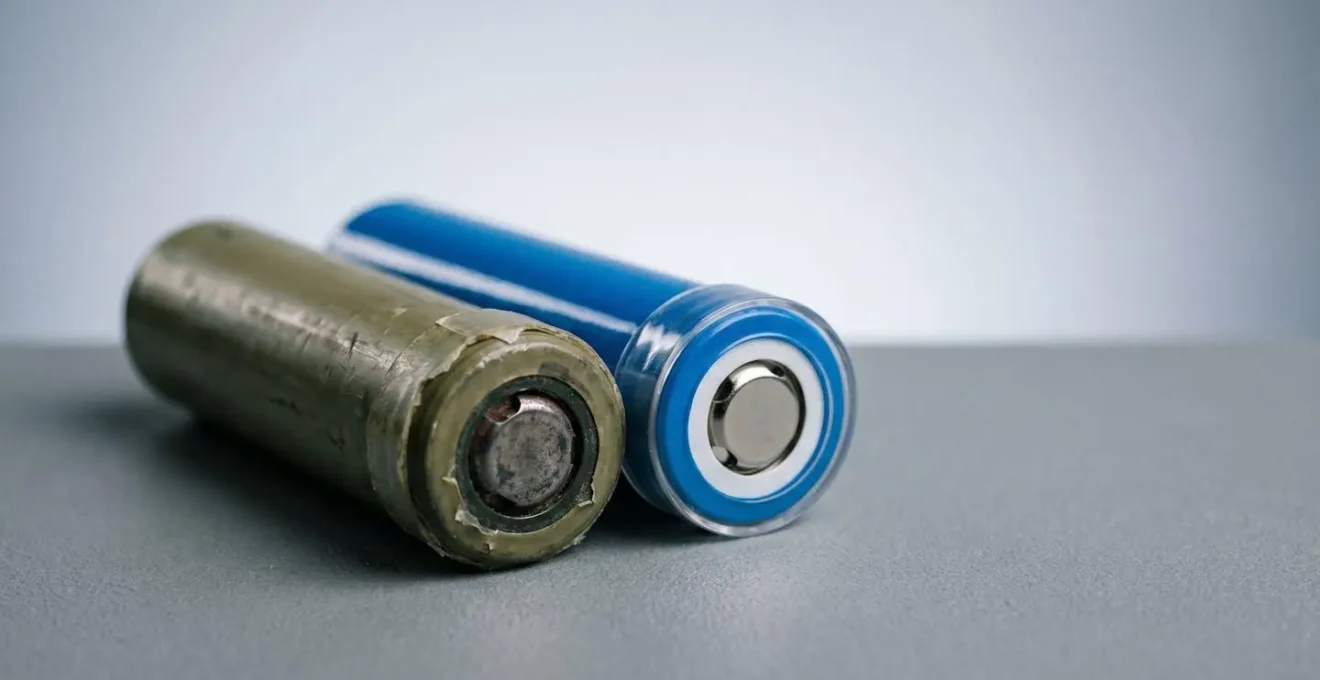
Contrary to popular belief, your vape battery’s short life isn’t a sign of a cheap product but a misunderstanding of its sensitive chemical system.
- The primary causes of early battery death are heat and voltage stress, often caused by seemingly harmless habits like overnight charging.
- Counterfeit batteries with fraudulent capacity ratings and dangerous construction are a major, often unseen, problem in the UK market.
Recommendation: To double your battery’s lifespan, stop charging via your mod’s USB port and start using a dedicated external charger for all removable 18650/21700 cells.
It’s a frustration every dedicated UK vaper knows intimately: the premium mod you invested in, with batteries that promised a lifespan of up to two years, starts dying before your lunch break after only a few months. You’re told the usual things – “don’t overcharge it,” “buy a better brand,” or “maybe you’re using it too much.” These explanations are well-meaning but ultimately unhelpful because they miss the fundamental point.
A vape battery isn’t just a power canister; it is a delicate chemical system. Its longevity is not determined by luck, but by physics. The rapid decline in performance you’re experiencing is not a random failure. It is a predictable, cumulative result of specific stressors that cause irreversible damage at a cellular level. Most common advice only addresses the symptoms, not the root cause.
But what if the key to a two-year lifespan wasn’t about trying harder, but about understanding the science? What if you could stop the premature death of your batteries by identifying the four hidden culprits of degradation: heat, voltage stress, physical damage, and uneven electrical load? This isn’t about blaming the user; it’s about empowering you with the technical knowledge that manufacturers and vape shops often fail to provide.
This guide will deconstruct the science behind why your batteries are failing. We will examine the critical mistakes made during charging, the subtle signs of dangerous counterfeits, the real-world physics of pocket explosions, and the non-negotiable rules for using dual-battery mods. Prepare to move from a frustrated consumer to an informed operator who can finally get the performance and safety you paid for.
To navigate this technical subject, we’ve broken down the core principles into distinct sections. This structure will guide you through understanding the problem, identifying risks, and implementing a robust maintenance strategy for a longer, safer battery life.
Summary: Unlocking the Secrets to Vape Battery Longevity
- Why Charging Your Vape Overnight Cuts Battery Lifespan by 50%?
- How to Choose 18650 Batteries That Won’t Overheat in Your Sub-Ohm Mod?
- The 4 Visual Signs Your Vape Battery Is a Dangerous Counterfeit
- The Pocket Mistake That Causes 90% of Vape Battery Explosions in the UK
- When to Rotate Your Dual-Mod Batteries for Even Wear and Longer Life?
- Why Charging 18650s Through Your Mod Wears Them Out Faster?
- Why You Must Always Buy Batteries in Pairs for Your Dual Mod?
- Why Does Your Mod Battery Last 6 Months When It Should Last 2 Years?
Why Charging Your Vape Overnight Cuts Battery Lifespan by 50%?
The advice to “not overcharge” your vape is ubiquitous, but it’s a misleading simplification. Modern lithium-ion (Li-ion) batteries have protection circuits that stop them from overcharging in the explosive sense. The real damage from overnight charging comes from two more subtle but devastating factors: heat and prolonged voltage stress. Leaving a device plugged in for eight hours after it has reached a full charge (which often only takes 60-90 minutes) subjects the battery’s internal chemistry to its most stressful state: 100% state-of-charge (SoC) at an elevated temperature.
Heat is the primary accelerator of battery degradation. Charging generates heat, and leaving the device on a surface like a duvet or pillow traps this heat, raising the battery’s internal temperature. Scientific studies consistently show this is catastrophic for lifespan. For instance, research shows that a Li-ion cell loses 6.7% of its capacity after just 200 cycles when charged at 45°C, compared to only 3.3% at a cooler 25°C. Overnight charging on a warm surface easily pushes the battery into this high-degradation zone.
Simultaneously, holding a battery at a full 4.2 volts (100% SoC) for hours on end puts immense stress on the cathode, causing a permanent loss of lithium ions and increasing internal resistance. Think of it like holding a muscle in a fully tensed position for hours; fatigue and damage are inevitable. The optimal state for a Li-ion battery’s health is around 50% SoC, stored at room temperature. By charging to 100% and holding it there overnight, you are actively accelerating its demise. A smart charging routine—unplugging as soon as it’s full and aiming to recharge around 20%—can realistically double the number of effective charge cycles before performance noticeably drops.
How to Choose 18650 Batteries That Won’t Overheat in Your Sub-Ohm Mod?
For sub-ohm vaping, the battery isn’t just a power source; it’s the engine. Choosing the right one is a matter of safety and performance, not just brand preference. The key characteristic that determines if a battery will overheat under the high-current demands of a sub-ohm mod is its Continuous Discharge Rating (CDR), also known as the max continuous amperage. A battery with a low CDR (e.g., 10A) forced to power a coil that demands 25A will have its voltage sag dramatically. This forces the cell to work harder, generating excessive heat and increasing its internal resistance, which is a primary cause of thermal runaway.
Therefore, you must always choose batteries with a CDR that safely exceeds your mod’s amperage draw. For most sub-ohm applications, this means selecting authentic cells from reputable manufacturers like Molicel, Sony/Murata, Samsung, or LG with a genuine CDR of 20A or higher. However, the market is flooded with counterfeits that wildly exaggerate these specifications. A common tactic is to re-wrap a cheap, low-amperage cell with a fake sleeve advertising a 35A rating and an impossible 4000mAh capacity.
A critical fact to remember is that there is a trade-off between capacity (mAh) and discharge rating (A). High-capacity cells have lower amperage ratings, and vice-versa. As a rule of thumb, according to battery testing experts, the current technological maximum is around 3600mAh for an 18650. Any 18650 advertised with a capacity over 3600mAh is guaranteed to be a fake with a dangerously overrated amperage. Choosing a genuine, slightly lower-capacity cell with a high, verified CDR is the single most important decision to prevent overheating.
The physical construction quality is also a tell-tale sign. As the image above illustrates, authentic batteries exhibit precision engineering in their components, like the top cap and insulator ring. Counterfeits often use cheaper materials and have visible imperfections. Always purchase from reputable, dedicated UK battery vendors who provide independent test data, not from auction sites or general marketplaces.
The 4 Visual Signs Your Vape Battery Is a Dangerous Counterfeit
The proliferation of counterfeit 18650 batteries in the UK is a serious safety crisis. These are not simply lower-quality items; they are often dangerous products made from rejected or recycled cells, wrapped in sleeves with fraudulent specifications. As the Counterfeit Report Consumer Alert grimly notes, “Counterfeit 18650 Lithium Ion batteries have been identified in some deaths, and a number of injuries and fires.” Relying on performance alone to spot a fake is too late; you must become proficient at visual inspection before a battery ever enters your device.
At a glance, a counterfeit can look identical to a genuine battery, but subtle differences in manufacturing give them away. Fraudsters rely on consumers not knowing what to look for. By turning a critical eye to the physical object in your hand, you can identify the vast majority of dangerous fakes. The four key areas to scrutinize are weight, the wrapper material, the top cap design, and the printed codes.
A lighter-than-expected battery is a major red flag, as counterfeiters often place a smaller, cheaper cell inside an 18650-sized shell to save costs. Similarly, the wrapper itself provides clues; genuine batteries use high-quality, soft-touch materials with deep, consistent colour printing, whereas fakes often feel hard, brittle, and have overly bright, poorly printed graphics. The top cap is one of the hardest parts to replicate, with each major brand having a distinct, patented design. Learning to recognize the three-pronged top of a Samsung from the four-pronged top of many fakes is a powerful authentication tool. Finally, validating the printed date codes against manufacturer databases can definitively unmask a counterfeit.
Your 5-Step Battery Authentication Audit
- Record Specifications: Before buying, visit a trusted battery testing source (like Mooch’s blog) and note the specified weight and top-cap design for the exact model you want.
- Check Weight: Use a calibrated digital scale. A genuine Samsung 25R should weigh around 45g. A fake is often significantly lighter as it contains smaller, inferior cells.
- Examine Wrapper Quality: Authentic wrappers have a deep, even colour and feel soft. Counterfeits are often shiny, hard, and have bright, garish colours or fuzzy printing.
- Inspect Top Cap Design: Compare the top cap with photos from a reliable source. For example, genuine Samsung cells typically have a distinctive three-legged connection on the positive terminal, while many fakes use a four-legged design.
- Validate Date & QR Codes: Cross-reference any printed codes with the manufacturer’s online validation tools if available. Nonsensical codes or a lack of a scannable QR code on newer models is a strong indicator of a fake.
The Pocket Mistake That Causes 90% of Vape Battery Explosions in the UK
While stories of vapes “exploding” during use make headlines, the overwhelming majority of battery thermal runaway incidents happen when the battery is not in the device. The cause is almost always the same: a loose, unprotected 18650 battery making contact with metal objects like keys or coins in a pocket or bag. This creates an external short circuit, a direct, low-resistance path between the battery’s positive and negative terminals. The result is a catastrophic and near-instantaneous release of the battery’s stored energy as intense heat.
The danger of this simple mistake cannot be overstated, and the frequency of these incidents is rising at an alarming rate in the UK. According to data obtained by Zurich UK, there was a staggering 450% increase in vape-related fire incidents between 2021 and 2025. Many of these events are attributable to the improper handling and transport of removable batteries.
To understand the terrifying speed of this event, we can look to a controlled laboratory demonstration conducted by experts.
Case Study: Swiss Laboratory Reconstruction of a Pocket Short-Circuit
In a study by the Swiss Federal Laboratories for Materials Science and Technology (Empa), battery expert Marcel Held recreated a real-world incident where a man was severely burned by a spare battery in his pocket. To demonstrate the danger, Held placed an unprotected 18650 cell in a beaker with a handful of keys and coins. Within a mere 10 seconds of the short circuit occurring, the battery’s safety vents burst, and it erupted into a 30-centimetre jet of flame, incinerating the surrounding objects. This experiment provides a stark, visual confirmation of the violent potential energy stored within each cell, waiting to be released by a single moment of carelessness.
The solution to this severe hazard is astonishingly simple and cheap: never, ever carry a loose battery. Always use a dedicated, non-conductive battery case or sleeve. These are typically made of plastic and cost a mere £2-£3 from any reputable UK vape shop. This small, inexpensive piece of plastic is the single most important safety accessory a vaper can own, creating an essential barrier that makes a pocket short-circuit physically impossible.
When to Rotate Your Dual-Mod Batteries for Even Wear and Longer Life?
When you use a dual-battery mod, it’s crucial to stop thinking of them as two separate batteries and start treating them as a single, co-dependent unit. This is the principle of “marrying” batteries: purchasing two identical cells from the same batch, and dedicating them to be used and charged together for their entire lifespan. The reason for this is to maintain a balanced electrical load and ensure even wear, which is critical for both safety and longevity.
Even in a high-quality regulated mod, the power draw from each battery slot is rarely perfectly identical. One slot (often the one with a shorter connection to the chipset) may consistently be subjected to a slightly higher load. Over time, this causes the battery in that slot to degrade faster, its internal resistance increasing more rapidly than its partner’s. This imbalance is dangerous. The mod will try to draw the same power, forcing the “stronger” battery to work harder and discharge faster to compensate for the “weaker” one. This creates a feedback loop of escalating stress, generating excess heat and accelerating the degradation of both cells.
This is why simply using two random batteries, even of the same brand, is a recipe for premature failure. To prevent this imbalance, a strict rotation system is necessary. By physically swapping the batteries between the mod’s slots on a regular schedule, you ensure that any minor differences in load are distributed evenly across both cells over time. This keeps their internal resistance and capacity degradation in sync, allowing the pair to function as a balanced unit for much longer.
Battery Marrying and Rotation System
- Purchase two identical batteries from the same batch at the same time from a reputable UK vendor to ensure matched internal resistance and capacity.
- Label your batteries clearly (e.g., ‘A’ and ‘B’ with a marker) and mentally note the mod’s battery slots (e.g., ‘1’ and ‘2’).
- Always charge and discharge the married pair together. Never separate them or introduce a different battery into the pair.
- Implement a weekly rotation: On Monday of Week 1, use battery A in slot 1 and B in slot 2. On Monday of Week 2, swap them: A goes into slot 2, and B goes into slot 1.
- Monitor for consistency: After charging, both batteries should have a nearly identical voltage (within 0.1V). If you notice one is consistently lower than the other, the pair is unbalanced and should be safely retired and recycled together.
Why Charging 18650s Through Your Mod Wears Them Out Faster?
While the USB port on your mod is a convenient feature for firmware updates or an emergency top-up, relying on it for daily charging is one of the quickest ways to shorten the life of your 18650 batteries. The issue lies in the quality and sophistication of the charging circuitry. A dedicated external smart charger is a complex piece of electronic equipment designed to do one job perfectly: safely charge Li-ion cells. A vape mod is a device designed to do another job: deliver high-power output to a coil. The charging function is almost always an afterthought.
External chargers from brands like XTAR or Nitecore employ sophisticated algorithms that monitor each battery individually. They use a CC/CV (Constant Current/Constant Voltage) charging profile, can detect battery temperature, and terminate the charge precisely when the cell is full, preventing voltage stress. In contrast, the USB charging boards in most mods are far simpler. They often lack the ability to properly balance-charge two cells, leading to one battery consistently receiving more charge than the other. This creates the exact imbalance that marrying and rotating batteries is meant to prevent.
Furthermore, internal charging generates significant heat within the mod itself. This heat is trapped in an enclosed space along with the batteries and the sensitive chipset, creating a high-temperature environment that, as we’ve established, is devastating to battery health. The advice from MIST Liquid’s Battery Care Guide is unequivocal: “Batteries hate extreme temperatures. Never leave your vape in a hot car, in direct sunlight, or out in the freezing cold. Extreme heat and cold can cause permanent damage and force the battery to work harder.” Charging inside the mod actively creates these damaging conditions. By consistently using an external charger, you keep the batteries cool and ensure each cell is charged optimally, preserving their capacity for the maximum number of cycles. In fact, battery safety experts recommend that batteries should be retired after 300-500 charge cycles; internal charging can drastically reduce this number.
Why You Must Always Buy Batteries in Pairs for Your Dual Mod?
The rule of “marrying” batteries for a dual mod extends to their very moment of purchase. Buying two identical batteries at the same time, from the same batch, is not just a best practice—it is fundamental to the safe and efficient operation of your device. Every battery cell, even from the same production line, has miniscule variations in its internal resistance and total capacity. Reputable UK vendors who sell “matched pairs” perform an extra quality control step, testing cells to ensure these variations are as small as possible before packaging them together.
Introducing a brand-new battery to work alongside an older, used one is a recipe for disaster. The older battery will have a higher internal resistance and a lower capacity from months of use. When paired, the mod’s regulated circuit will attempt to draw power evenly, but the older cell will struggle to keep up. Its voltage will sag under load, forcing the new, stronger battery to over-compensate, discharging at a higher, more stressful rate. This not only rapidly wears out the new battery but also puts the old battery under extreme strain, causing it to heat up dangerously and risk venting.
This principle is confirmed by industry performance analysis, which highlights the accelerated degradation caused by mismatched pairs.
Industry Study on Matched Battery Performance
Testing by UK vape industry experts demonstrates that when one battery in a pair ages faster, the mod draws power unevenly, creating excess heat and accelerating the degradation of both cells. The stronger cell is overworked, and the weaker cell is pushed beyond its safe operating limits. This is why reputable UK vendors specifically sell ‘matched pairs’ that have been factory-tested for near-identical specifications. This practice can extend the effective lifespan of a dual-battery setup from an average of just 6 months for a mismatched set to a much healthier 12-18 months for a properly maintained and rotated married pair.
This also applies to retirement. When one battery in a married pair starts to fail, the entire pair must be retired and recycled together. As Vaporesso’s safety guidelines state, you should “Replace batteries that hold less than 80% of the original charge capacity or get noticeably warm when used/charged.” Trying to save one “good” battery to pair with a new one completely defeats the purpose and re-introduces the dangerous imbalance you sought to avoid.
Key Takeaways
- Heat and prolonged high-voltage are the main killers: Overnight charging and charging inside the mod create these exact conditions.
- Counterfeits are a real and present danger: Any 18650 advertised over 3600mAh is a fake. Always buy from specialist UK vendors.
- Dual-mod batteries are a team: They must be purchased as a matched pair, charged together, rotated weekly, and retired together to prevent dangerous imbalances.
Why Does Your Mod Battery Last 6 Months When It Should Last 2 Years?
We’ve deconstructed the science, and the answer to this frustrating question should now be clear. Your battery isn’t failing because of a single catastrophic event, but from a “death by a thousand cuts.” Its premature demise is the cumulative result of repeated exposure to the four horsemen of battery degradation: heat, voltage stress, physical damage, and uneven load. The six-month lifespan you’re experiencing is the predictable outcome of common but ill-advised practices, while the two-year potential is achievable only through a disciplined, informed maintenance routine.
Charging overnight subjects the cell to hours of damaging heat and voltage stress. Using the mod’s built-in USB port for charging does the same, while also creating imbalances in dual-battery setups. Tossing a spare battery in your pocket without a case risks a catastrophic short circuit. Mixing and matching old and new batteries, or failing to rotate a married pair, creates an uneven load that wears out both cells exponentially faster. And underlying all of this is the pervasive risk of using a counterfeit battery, a product with fundamentally flawed chemistry that was never designed to meet the demands you place on it.
The environmental impact of this premature failure is also significant. With Material Focus estimating that 8.2 million vapes are disposed of weekly in the UK, extending the life of your reusable batteries is a crucial step in reducing electronic waste. By adopting the professional practices outlined in this guide, you are not only saving money and improving safety but also making a more responsible choice. The power to achieve that two-year lifespan lies entirely in your hands, through knowledge and discipline.
The UK Vaper’s Battery Lifespan Optimization Checklist
- Purchase only from reputable UK vendors or authorized retailers to avoid counterfeit batteries that fail prematurely.
- Use an external smart charger for all removable batteries; avoid using your mod’s USB port for daily charging.
- Always store and transport spare batteries in protective plastic cases, which are available for a few pounds at any UK vape shop.
- For dual mods, buy batteries exclusively in “matched pairs” and implement a weekly rotation schedule to ensure even wear.
- Inspect battery wrappers weekly for tears, nicks, or damage. Re-wrap or retire any battery that is not in pristine condition. Never use a battery with dents or swelling.
- At end-of-life, take old batteries to local council recycling centres or use the vape shop take-back schemes that comply with UK WEEE regulations. Never dispose of them in household waste.
Stop letting your batteries dictate your vaping experience. By applying these scientific principles, you take back control, improve safety, and save money. Your journey to a two-year battery lifespan begins by auditing your current charging habits and equipment today.