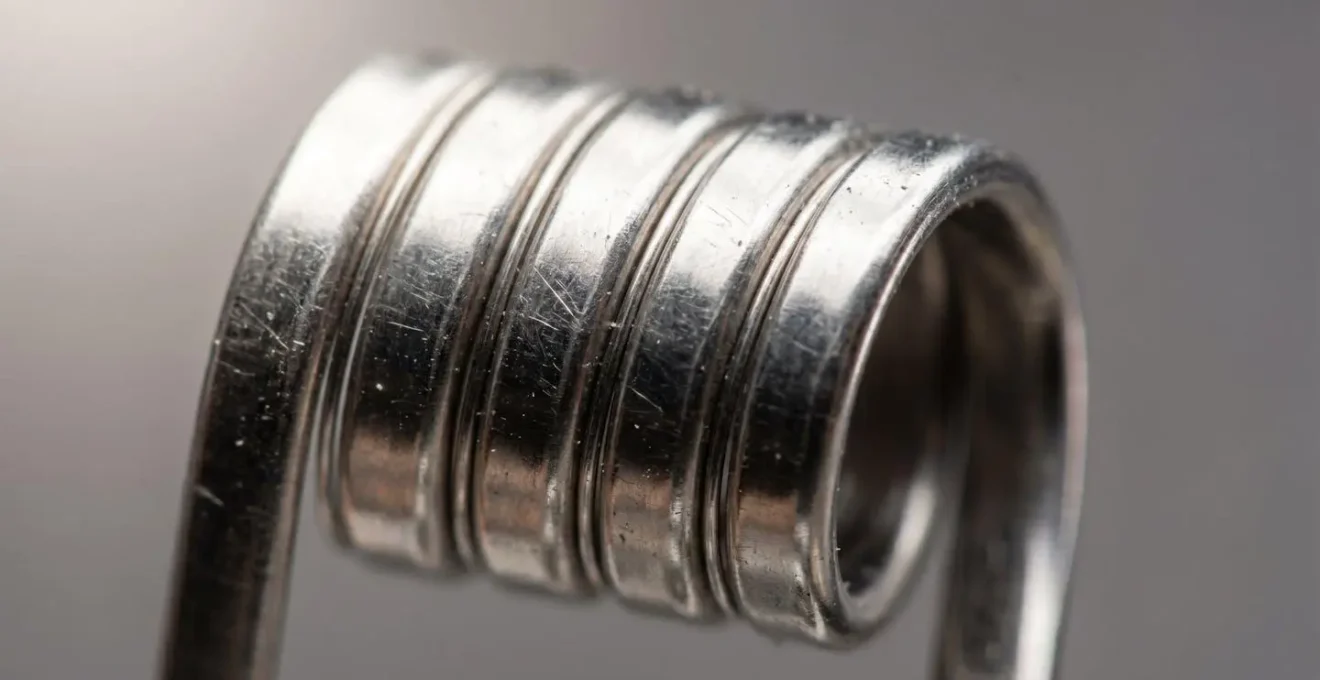
Mastering temperature control has less to do with your mod’s brand and more to do with understanding the unique physics of Stainless Steel wire.
- Stainless Steel’s resistance changes predictably with heat (its TCR), allowing your mod to calculate temperature, a property Kanthal almost entirely lacks.
- Most “Temp Protect” errors are not mod failures but wicking issues; the coil heats faster than the liquid can cool it.
Recommendation: Instead of blaming the technology, focus on a holistic system check: your wire grade, coil build, and wicking are the true keys to a perfect TC vape.
If you’re a vaper in the UK, you’ve likely walked into a vape shop, picked up a spool of Stainless Steel (SS) wire, and been told it’s “the one for Temperature Control (TC).” You get home, build a perfect coil, set your mod to TC-SS mode, and take a puff. Two seconds later, the screen flashes “Temperature Protection.” You’re left confused, frustrated, and wondering why this supposedly superior technology feels more finicky than your trusty Kanthal setup. The common advice—”lock your resistance,” “check your connections”—often feels like fumbling in the dark.
The frustration is understandable, but the problem isn’t a faulty mod or a bad coil. The issue is a misunderstanding of the fundamental science at play. While Kanthal is simple and reliable for wattage mode, it’s a dead end for TC. The secret to unlocking a flawless TC vape lies not in memorising settings, but in deeply understanding the specific physical and chemical properties of Stainless Steel itself. It’s about learning the language your mod and coil are speaking to each other.
This guide will demystify Temperature Control by focusing on the material science. We will explore why SS is the pragmatic choice, how different grades affect your flavour, and what those error messages are really trying to tell you. By understanding the ‘why’ behind the ‘what’, you will gain the knowledge to diagnose issues, perfect your setup, and finally experience the clean, consistent, and burn-free vape that TC promises.
To navigate this technical journey, we will break down the essential concepts. This article covers everything from the core science of resistance to practical troubleshooting, providing a complete roadmap for any vaper looking to move beyond wattage mode and truly master their device.
Summary: The Vaper’s Deep Dive into Stainless Steel and TC
- Why Stainless Steel Changes Resistance When Heated: The TC Science Explained?
- SS304, SS316L, or SS430: Which Grade Delivers the Cleanest Flavour?
- What Temperature to Set for Dessert E-Liquids on Your SS316L Coil?
- The Dry-Burn Mistake That Creates Toxic Chromium Oxide on SS Coils
- Why Your TC Mod Reads “Temperature Protection” After 2 Seconds With SS Coils?
- Nickel, Titanium, or Stainless Steel: Which Wire Works Best in TC Mode?
- Why Kanthal Remains the Most Popular Coil Wire After 15 Years of Alternatives?
- Why Does Temperature Control Keep Your Coil From Burning Even When Dry?
Why Stainless Steel Changes Resistance When Heated: The TC Science Explained?
The entire magic of Temperature Control vaping hinges on a single, crucial physical property: the Temperature Coefficient of Resistance (TCR). This is a scientific measure of how much a material’s electrical resistance changes when its temperature changes. For TC to work, your mod needs to see a clear, predictable increase in resistance as the coil heats up. This allows it to run a calculation: “If the resistance has risen by X amount, the temperature must be Y degrees.” As the E-Cigarettes.ca technical documentation explains, “Temperature control works by monitoring changes of resistance in the coil and using this to estimate temperature changes. It works because resistance increases linearly and predictably with temperature.”
This is where the stark difference between Stainless Steel and Kanthal becomes clear. Kanthal (an iron-chromium-aluminium alloy) is engineered for stability; its resistance barely budges when heated. This makes it perfect for wattage mode, where you want consistent power output, but useless for TC. Your mod gets no feedback. In stark contrast, Stainless Steel is a dynamic material. According to technical documentation on TCR values, SS has a coefficient of approximately 0.00094. Kanthal’s is around 0.00002. This means SS provides a clear, strong, and measurable signal that a TC-equipped mod can read and act upon.
Think of it like this: using Kanthal for TC is like trying to measure temperature with a ruler made of ice in a warm room—the tool itself isn’t providing reliable data. Using Stainless Steel is like using a precision mercury thermometer; the change is predictable, measurable, and directly correlated to the heat. This resistance feedback loop is the conversation happening between your coil and your mod every millisecond, and SS is the only material of the two that can speak the language of temperature control.
SS304, SS316L, or SS430: Which Grade Delivers the Cleanest Flavour?
Once you’ve decided on Stainless Steel, the next choice is which grade to use. While many spools are simply labelled “SS,” the specific alloy—most commonly SS316L, SS304, or SS430—has a significant impact on performance, flavour, and even safety for some users. They are not interchangeable. Each grade has a unique composition which alters its TCR value, resistance, and metallic properties, directly affecting your vape experience. Many experienced vapers and analysts have noted these differences.
As highlighted in a VADAS Philippines technical analysis, “Many vapers report that SS316L wires provide a cleaner and more intense flavor compared to SS304.” This is often attributed to the addition of molybdenum in SS316L, which increases corrosion resistance and thermal stability. This stability can translate to a purer flavour profile, as fewer metallic ions are released during heating. The choice becomes even more critical for vapers with nickel sensitivity. While SS316L and SS304 are excellent performers, they contain significant amounts of nickel. SS430, a ferritic stainless steel, offers a nearly nickel-free alternative, making it the superior choice for sensitive individuals without sacrificing the ability to use Temperature Control.
| Grade | Composition | TCR Value (×10⁻⁵) | Flavor Profile | Nickel Content |
|---|---|---|---|---|
| SS316L | Iron, Carbon, 16-18% Cr, 10-14% Ni, 2-3% Mo | ~92 | Clean, intense flavor with molybdenum-enhanced stability | 10-14% (not suitable for nickel-sensitive vapers) |
| SS304 | Iron, Carbon, 18-20% Cr, 8-10.5% Ni | ~101 | Decent flavor, slightly higher resistance | 8-10.5% (contains nickel) |
| SS430 | Iron, Carbon, 16-18% Cr, minimal Ni | ~138 | Superior for flavor and nickel-sensitive users | Minimal (<0.75% – nickel-free alternative) |
The table clearly shows that SS316L is the popular all-rounder, offering a great balance of quick ramp-up and clean flavour. SS304 is a viable alternative but is often seen as slightly inferior in taste. However, for those with nickel allergies, SS430 is not just an option but a necessity, providing a safe and flavourful TC experience. Choosing the right grade is the first step in tailoring your vape to your specific needs and preferences.
What Temperature to Set for Dessert E-Liquids on Your SS316L Coil?
Dialling in the perfect temperature for your e-liquid is where Temperature Control truly shines, transforming a good vape into a great one. This is especially true for complex dessert profiles, where different flavour compounds are activated at different heat levels. While general industry guidelines recommend a range of 400°F – 450°F (204°C – 232°C) for Stainless Steel coils, the optimal setting for a creamy custard or a rich caramel is a matter of fine-tuning. Setting the temperature isn’t just about avoiding dry hits; it’s about flavour chasing at a molecular level.
Think of your coil as a tiny, controllable oven for your e-liquid. Just as a pastry chef uses different temperatures to bake a cake versus browning a meringue, a vaper can use TC to target specific notes in their juice. Lower temperatures tend to accentuate brighter, more delicate notes, while higher temperatures promote the Maillard reaction, which is responsible for the rich, ‘toasted’ flavours in bakery and nutty profiles. However, there’s a fine line. Pushing the temperature too high will burn the sweeteners like sucralose, resulting in a harsh, bitter taste that ruins the entire experience.
To find the sweet spot for your favourite dessert e-liquid, it’s best to start low and work your way up. Here’s a practical guide to flavour profiling with TC:
- 193-210°C (380-410°F): The ideal starting point. This range is perfect for preserving the subtle notes of vanilla, fresh cream, and light fruits. It prevents sweeteners from caramelising too quickly, keeping the flavour bright and clean.
- 215-225°C (420-440°F): The bakery zone. This is the optimal temperature for enhancing the Maillard reaction. It brings out the deeper, richer characteristics of custards, caramels, nuts, and pastry crusts, creating a warmer, more complex vape.
- 232°C+ (450°F+): The danger zone. At these temperatures, common sweeteners like sucralose and ethyl maltol begin to decompose and burn. This creates an unpleasant, acrid taste and can gunk up your coils rapidly. This range should generally be avoided for most dessert liquids.
Beyond the temperature setting itself, consider using a gentle preheat function if your mod has one. A lower-wattage ramp-up prevents flash-caramelisation of sugars on the coil surface, which can spoil the flavour even if the sustained temperature is correct. This methodical approach allows you to become a true ‘vape sommelier’, unlocking flavour notes you never knew existed in your bottle.
The Dry-Burn Mistake That Creates Toxic Chromium Oxide on SS Coils
One of the most common practices inherited from the Kanthal era is the “dry burn”—heating a bare coil until it glows bright orange to burn off residue and check for hotspots. While this is relatively safe with Kanthal, performing the same action on Stainless Steel coils is a critical mistake that can carry significant health risks. The issue lies in the chemical composition of SS and how it reacts to extreme heat. Overheating an SS coil doesn’t just clean it; it can alter its surface at a chemical level, potentially creating harmful compounds.
The primary concern is the formation of chromium oxides. Stainless steel contains chromium for corrosion resistance. When you heat it to a bright orange or yellow glow, you are reaching temperatures high enough to cause oxidation. In a pivotal analysis on dry-burning, Dr. Konstantinos Farsalinos noted the danger, stating, “Oxidation of chromium can occur at similar temperature of a dry burn process. Although these studies show the formation of a less harmful chromium oxide, Cr2O3, we cannot exclude the formation of hexavalent chromium.” Hexavalent chromium (Cr(VI)) is a known carcinogen, and creating it on a surface you intend to inhale from is an unacceptable risk.
This doesn’t mean you can’t clean your SS coils, but it requires a shift in technique from a burn to a gentle pulse. The goal is to use just enough heat to clean the coil without crossing the oxidation threshold. A faint, deep cherry red glow in a dimly lit room is the absolute maximum temperature you should aim for. Anything brighter indicates you are entering the danger zone. For a completely safe approach, non-heating methods are superior.
Here is a safe protocol for maintaining your SS coils:
- Low-Wattage Pulse: Use a very low wattage (15-20W) and pulse the fire button briefly. Watch for a faint, deep red glow. Do not let it reach bright orange or yellow.
- Scrubbing: After a gentle pulse, you can use a coil brush or a toothbrush with some water or isopropyl alcohol to scrub away any remaining residue.
- Ultrasonic Cleaner: The safest and most effective method is to use an ultrasonic cleaner with distilled water. This cleans the coils thoroughly with no heat, preserving the material’s integrity.
Why Your TC Mod Reads “Temperature Protection” After 2 Seconds With SS Coils?
There is no more common frustration in Temperature Control than the dreaded “Temperature Protection” or “Temp Protect” message appearing almost instantly. The immediate assumption is that the mod is broken or the technology is flawed. In reality, this message is not an error; it’s the system working exactly as designed. It’s the mod telling you, “I have reached the temperature limit you set. To prevent overheating, I am cutting power.” The real question isn’t why the mod is stopping, but why the coil is reaching the limit so quickly. As one Vaping360 analysis puts it, “The mod is applying heat, and the e-liquid is providing cooling. ‘Temp Protect’ simply means heat is winning.”
The problem is almost always a breakdown in the cooling system—your wicking. A perfectly built TC setup is a delicate balance of thermal equilibrium. The mod applies wattage to heat the coil, and the e-liquid flowing through the wick constantly cools it down. The temperature you vape at is the stable point where heating and cooling are in balance. When you get an instant “Temp Protect” message, it means the wick is failing to supply enough e-liquid to the coil to counteract the heat being applied. The coil, starved of liquid, heats up almost instantaneously, its resistance skyrockets, and the mod rightly cuts power to prevent a dry, burnt hit.
Troubleshooting this issue requires a holistic approach that examines the entire system, from the mod’s 510 connector to the viscosity of your e-liquid. It’s rarely a single issue, but often a combination of small factors that disrupt the delicate thermal equilibrium.
Your 5-Point ‘Temp Protect’ Diagnostic Plan
- Connection Audit: Begin at the source. Ensure your atomizer is screwed down firmly and the 510 pin on both the mod and tank is clean. For rebuildables, double-check that your post screws are tight, as a loose leg can cause massive resistance fluctuations.
- Settings Verification: Confirm the basics in your mod’s menu. Ensure you have the correct TCR value set for your specific grade of wire (e.g., SS316L) and, most importantly, that you locked the coil’s resistance at room temperature before the first use.
- Coil Integrity Check: Inspect the coil itself. Gently pulse-fire it at very low wattage (in wattage mode) to check for hotspots. Ensure the coil glows evenly from the centre outwards. For TC, spaced coils are often more stable and reliable than contact coils.
- Wicking System Analysis: This is the most common culprit. Is your cotton too dense, choking off liquid flow? Is it too loose, not making proper contact? The wick must be snug enough to touch the entire inner surface of the coil but loose enough to draw liquid freely.
- E-Liquid & Coil Mass Evaluation: Consider the relationship between your juice and your build. A thick, high-VG liquid requires more efficient wicking to feed a large, high-mass coil (like a fused Clapton) compared to a simple round wire build. If the wicking can’t keep up, “Temp Protect” is inevitable.
By methodically working through these steps, you move from blaming the technology to diagnosing the system. You are no longer a victim of the error message, but an engineer fixing a problem in a system you understand.
Nickel, Titanium, or Stainless Steel: Which Wire Works Best in TC Mode?
While Stainless Steel is a fantastic and versatile option, it’s not the only wire capable of Temperature Control. The other two main players are Nickel (Ni200) and Titanium (Ti). Each material has a distinct personality, with its own set of advantages and significant drawbacks. The choice between them depends entirely on your priorities as a vaper: are you chasing absolute TC purity, raw performance, or pragmatic versatility? As one guide from Vaping 101 notes, “Stainless steel is the only wire type that is compatible with both temperature control and variable wattage vaping.” This dual-mode capability is SS’s trump card, making it incredibly user-friendly.
Nickel, specifically Ni200, was the original TC wire. It has the highest TCR of the three, meaning it provides the strongest, most accurate signal to the mod. A TC purist might argue it gives the most precise temperature reading. However, it’s extremely soft, making it notoriously difficult to build with. Coils deform easily during wicking, and its very low resistance can be problematic for some mods. More importantly, it carries a risk for users with nickel allergies.
Titanium (Grade 1) sits between Nickel and Stainless Steel in terms of its TCR value. It offers good TC accuracy and is easier to work with than Nickel. However, it comes with a major safety caveat: if overheated, it can release a toxic compound (titanium dioxide) and, in extreme cases, can even combust. For this reason, many experienced vapers and vendors advise against using Titanium, deeming the risk not worth the reward. This leaves Stainless Steel as the pragmatic champion. It’s strong, easy to build with, relatively inexpensive, and safe when used correctly. Its TCR is lower than Ni200 or Ti, but it’s more than sufficient for modern mods to provide an excellent TC experience. The following matrix from a comprehensive TC guide breaks down the choice clearly:
| Wire Type | Vaper Profile | TC Accuracy | User-Friendliness | Build-ability | Safety Considerations |
|---|---|---|---|---|---|
| Nickel (Ni200) | The TC Purist | Highest (100% TCR reference) | Low (very soft, easily deforms) | Difficult (requires spaced coils, extreme softness) | Nickel sensitivity/allergies concern |
| Titanium (Ti) | The High-Risk Performer | High | Very Low (risk of overheating) | Challenging (requires careful temperature management) | Not recommended – overheating risks |
| Stainless Steel (SS316L) | The Pragmatic All-Rounder | Good (can use TC or wattage mode) | High (forgiving, versatile) | Easy (springiness makes it forgiving, works in both modes) | Safest TC option, can be dry-burned at low wattage |
For the vast majority of vapers, especially those in the UK looking for a reliable, safe, and flexible option, Stainless Steel is the undisputed winner. It delivers 90% of the TC performance with none of the build frustrations of Nickel or the safety concerns of Titanium, all while offering the fallback option of running in standard wattage mode.
Why Kanthal Remains the Most Popular Coil Wire After 15 Years of Alternatives?
Given the clear advantages of Stainless Steel for Temperature Control and the promise of a burn-free vape, a logical question arises: why is Kanthal still the most dominant wire in the vaping industry? Walk into any vape shop, and the vast majority of pre-made coil heads for sub-ohm tanks will be built with Kanthal A1. The answer has less to do with performance and more to do with economics, manufacturing simplicity, and market inertia.
Temperature Control, for all its technical elegance, is a niche pursuit. It requires a certain level of user engagement, a willingness to learn, and an acceptance of a steeper learning curve. As Vaping360 succinctly puts it, “Kanthal is still the most common coil metal in vaping. While stainless steel is still popular, the majority of tanks don’t come with TC-ready coils. If you want to vape in TC, and you are not interested in building your own coils, truth is that your choices are limited.” The mass market runs on simplicity, and nothing is simpler than Kanthal in wattage mode.
This market reality is not an accident; it’s a result of Kanthal’s inherent properties being perfectly suited for mass production and a user base that prioritises convenience over customisation. It’s the ultimate “plug and play” material.
Kanthal’s Market Dominance: Manufacturing and Economic Factors
Kanthal’s continued market dominance is rooted in its absolute reliability and manufacturing simplicity. As documented in industry analysis, Kanthal works with any mod, requires no special settings, and is incredibly resilient. Its resistance remains constant regardless of temperature, making it ideal for the massive pre-made coil head market where simplicity and consistency in high-heat, non-TC environments are paramount. The complexity and ‘fussiness’ of temperature control has prevented it from fully replacing Kanthal, exposing the gap between TC’s promise and its reality for average users. Kanthal is cheap to produce, and its properties are perfectly suited for mass manufacturing, cementing its market position through manufacturing logistics rather than just user preference.
In essence, Kanthal’s reign is not a testament to its superiority, but to its “good enough” nature combined with manufacturing efficiency. It represents the path of least resistance for both manufacturers and a large segment of vapers. Stainless Steel and TC offer a superior, more controlled experience, but it remains a premium option for enthusiasts willing to invest the time to understand it, leaving Kanthal to comfortably serve the masses.
Key takeaways
- The fundamental principle of TC is the Temperature Coefficient of Resistance (TCR); Stainless Steel has a high, predictable TCR while Kanthal’s is nearly flat, making it unsuitable.
- Not all Stainless Steel is equal: SS316L offers the best balance of clean flavour and performance, while SS430 is the essential choice for users with nickel sensitivity.
- Most “Temp Protect” errors are not faults but signs of an imbalanced system, most often caused by wicking that cannot supply e-liquid fast enough to cool the coil.
Why Does Temperature Control Keep Your Coil From Burning Even When Dry?
We’ve established the science and the materials, but the ultimate benefit of Temperature Control is its namesake: controlling temperature to prevent a negative outcome. The most significant of these is the dreaded dry or burnt hit, which occurs when you fire a coil with an unsaturated wick. In standard wattage mode, the mod blindly sends power, causing the cotton to burn and producing foul-tasting, potentially harmful aldehydes like acrolein. Temperature Control acts as an intelligent failsafe. As defined by Vaping360, “Temperature control is a technological innovation in vaping that prevents dry and burnt hits by limiting the vape to a temperature set by the user.”
It achieves this through the constant, high-speed resistance feedback loop we discussed earlier. The mod isn’t just setting a temperature; it’s actively managing power second-by-second to maintain that temperature. When the wick is dry, the coil is robbed of its e-liquid coolant. Its temperature and resistance skyrocket almost instantly. The mod detects this massive, sudden spike in resistance and interprets it correctly: “Warning! No coolant detected. Temperature is exceeding the safety limit.” It then immediately cuts or dramatically reduces power to the coil, long before the cotton has a chance to combust. The result for the user is not a lungful of acrid smoke, but a weak, wispy, or non-existent puff—a clear and safe signal that it’s time to re-drip or refill.
This millisecond-level process is a sequence of events that showcases the elegance of the technology:
- The mod sends an initial burst of power to the coil to begin the heating cycle.
- As the SS coil heats, its electrical resistance rises in direct, linear proportion to the temperature increase.
- The mod’s chip continuously reads this changing resistance value hundreds of times per second.
- If the resistance value corresponds to the maximum temperature set by the user (e.g., 220°C), the mod instantly throttles the power to prevent it from going any higher.
- In the case of a dry wick, the resistance spikes dramatically and instantly. This triggers the power cut immediately, preventing the cotton from burning and protecting the user from inhaling combustion byproducts.
This single function elevates Temperature Control from a flavour-chasing tool to a genuine harm-reduction feature. It not only creates a more consistent and flavourful vape by preventing overheating during a long drag, but it also provides a crucial safety net, ensuring you are always vaporising, never combusting.
Now that you understand the science behind the technology, from the TCR of the wire to the wicking that cools it, you are no longer just a user but a system operator. The next time you build an SS coil, you won’t just be wrapping wire; you’ll be constructing one half of a sophisticated feedback system. It is time to apply this knowledge, re-wick your favourite atomiser, and experience the clean, controlled, and flavourful vape that you now have the power to create.