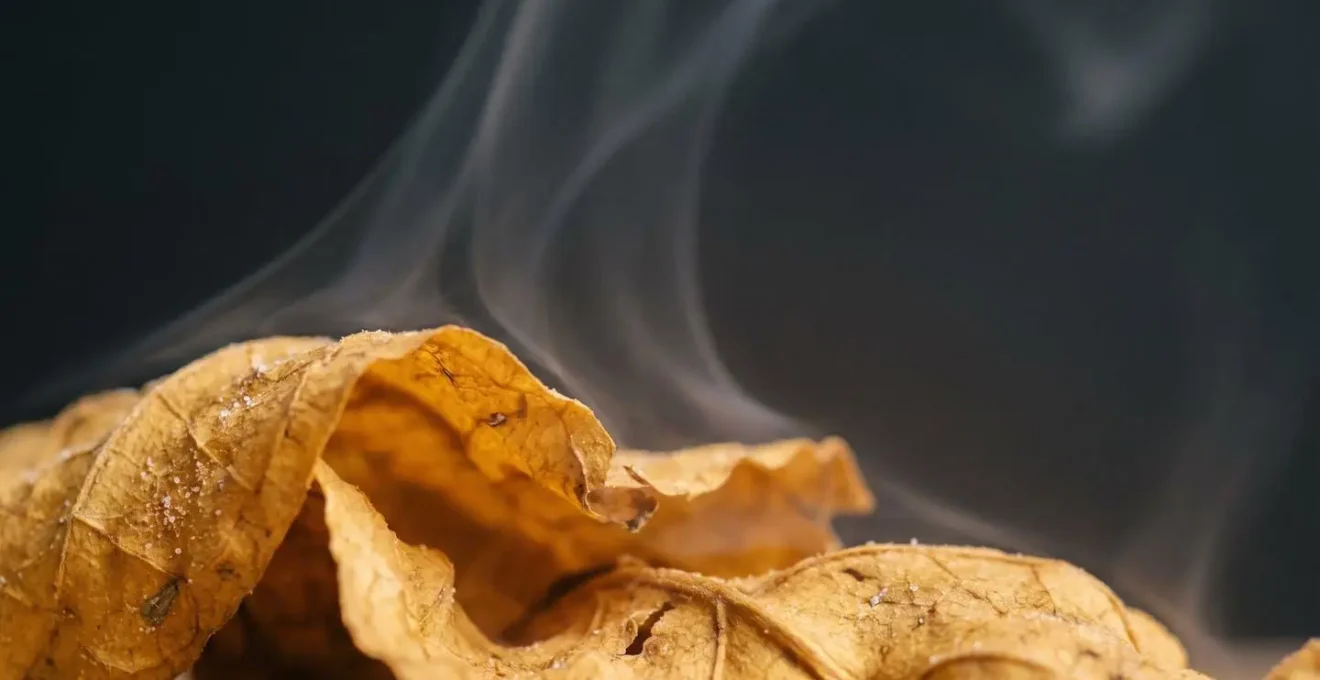
The search for a vape that perfectly mimics a cigarette is destined for failure; the goal is to engineer a new, more satisfying experience.
- Combustion creates thousands of chemicals that vaporization cannot replicate, fundamentally changing the taste.
- Sweet, complex notes in e-liquids are often added to mimic the natural sweetness created when a real cigarette burns.
Recommendation: Stop chasing an identical replacement and start building a superior satisfaction profile by understanding flavour bases, steeping, and nicotine chemistry.
If you’ve switched from smoking to vaping, you’ve likely walked this path. You search for a “tobacco” flavoured e-liquid, hoping to recapture the familiar, robust taste of your favourite brand. Instead, you’re met with a puff of something oddly sweet, nutty, or worse, vaguely reminiscent of raisins or dried fruit. This experience is so common it’s a running joke in the vaping community, but for an ex-smoker, it’s a genuine point of frustration that can derail the entire transition. The disappointment is real, and it stems from a fundamental misunderstanding.
The inconvenient truth that most vape shops won’t tell you is that no e-liquid will ever taste exactly like a burning cigarette. It’s a chemical impossibility. The flavour you remember isn’t just “tobacco”; it’s a complex cocktail of burning paper, additives, and thousands of chemical compounds born from combustion—a process that vaporization, by its very nature, is designed to avoid. The raisin-like sweetness you’re tasting is often a deliberate attempt by flavourists to replicate the caramelized sugars created by that very combustion.
But this isn’t a story of failure. It’s a re-education. The key to satisfaction isn’t finding a perfect replica; it’s about deconstructing the sensory experience you crave and methodically rebuilding it. This guide will walk you through that process of sensory reconstruction. We’ll explore why your expectations need to shift, how to choose the right tobacco base, why blended flavours often work better, and how to fine-tune your hardware and nicotine to engineer a vape that doesn’t just replace your cigarette, but creates a new, more tailored, and ultimately more satisfying ritual.
To help you navigate this journey from disappointment to satisfaction, this guide breaks down the essential elements you need to master. From the science of flavour to the nuances of nicotine, here is your roadmap to building a better tobacco vape experience.
Summary: Why Does Your Tobacco E-Liquid Taste Like Raisins Instead of Cigarettes?
- Why No E-Liquid Will Ever Taste Exactly Like a Burning Cigarette?
- Virginia, Burley, or Turkish: Which Tobacco Style Matches Your Cigarette Brand?
- Why Tobacco-Caramel Blends Satisfy More Than Straight Tobacco Flavours?
- How Long Should You Steep a Tobacco E-Liquid for Peak Richness?
- Why Tobacco Flavours Taste Better at Lower Wattages Than Fruits?
- Why 35mg Nicotine Salt Feels Smoother Than 6mg Freebase Nicotine?
- High-PG or 50/50 E-Liquid: Which Delivers the Best MTL Throat Hit?
- Why Do Nicotine Salts Satisfy Cravings in 30 Seconds When Freebase Takes 5 Minutes?
Why No E-Liquid Will Ever Taste Exactly Like a Burning Cigarette?
The first and most important step is a reality check: you are not vaping tobacco, you are vaping a tobacco flavouring. A cigarette’s taste is the result of combustion. When you light a cigarette, you are incinerating dried tobacco leaf, paper, and various additives at over 800°C. This process, pyrolysis, creates over 7,000 chemicals, including tar, carbon monoxide, and the complex aromatic compounds that form your “tobacco” flavour memory. Vaping, conversely, heats a liquid to around 200°C to create an aerosol. It’s a fundamentally different process designed to avoid combustion entirely.
E-liquid flavourings are food-grade concentrates, typically diluted into a Propylene Glycol (PG) and Vegetable Glycerin (VG) base. These flavourings are complex, but they are a pale imitation of the chemical symphony of a burning cigarette. Research shows that flavour chemicals in e-liquids typically range from 1-4% concentration, a tiny fraction of the compounds in smoke. Flavourists try to mimic the key notes—nutty, earthy, woody, sweet—but they can’t replicate the acrid, smoky, and slightly bitter edge that comes from actual burning organic matter. That “ashtray” taste is unique to combustion.
Furthermore, the chemical interactions don’t stop once the liquid is bottled. As Dr. Hanno Erythropel of the Yale Tobacco Center of Regulatory Science noted, these flavourings can react within the e-liquid itself over time. He explains:
Our findings show that even in the absence of heating and combustion, chemical reactions are occurring in e-cigarette liquids and the resulting compounds could be harmful to the user’s airways.
– Dr. Hanno Erythropel, Ph.D., Duke University Study
This is why managing expectations is crucial. You’re not looking for a 1:1 replacement. You are building a new sensory profile. The goal is to find a flavour you enjoy in its own right, one that satisfies your cravings without needing to be an identical copy of a Marlboro or a Benson & Hedges. Understanding this distinction is the key to moving past the initial disappointment.
Virginia, Burley, or Turkish: Which Tobacco Style Matches Your Cigarette Brand?
Once you accept that you’re chasing a flavour profile, not a perfect replica, you can start making educated choices. Most e-liquid tobacco flavours are based on one of three main styles of tobacco leaf, distinguished by their curing process and resulting taste. Understanding these categories is the first step in your journey of “sensory reconstruction” and aligning a vape flavour with the memory of your former cigarette brand.
The three foundational profiles are Virginia, Burley, and Turkish (or Oriental). Each offers a distinct experience. Virginia tobacco is flue-cured, which gives it a high sugar content and a light, sweet, and aromatic flavour. This is the base for most popular “light” cigarettes like many Marlboro variants. If you preferred a smoother, sweeter smoke, Virginia-based e-liquids are your starting point. Burley tobacco is air-cured, resulting in very low sugar, a higher nicotine content, and a dry, nutty, almost cocoa-like flavour profile. It’s the backbone of many full-flavour cigarettes and pipe tobaccos. If you smoked stronger brands and enjoyed that robust, earthy taste, you should explore Burley blends. Finally, Turkish/Oriental tobacco is sun-cured, making it highly aromatic with a spicy, tangy, and sometimes slightly floral or sour note. It’s most famously used in Camel cigarettes to provide that distinctive exotic character.
This image below illustrates the visual difference that the curing process imparts on the leaves, which directly translates to their final flavour profile.
By identifying the type of cigarette you used to smoke, you can intelligently narrow your search. Were you a Marlboro Gold smoker? Look for Virginia blends. A Camel smoker? Try a blend with Turkish notes. This table breaks down the core characteristics to help guide your choice.
| Tobacco Type | Curing Method | Flavor Profile | Sugar Content | Nicotine Level | Common Use |
|---|---|---|---|---|---|
| Virginia (Flue-Cured) | Artificial heat drying | Naturally sweet, light, aromatic | High sugar | Moderate | Marlboro base, light cigarettes |
| Burley (Air-Cured) | Open-barn air drying | Nutty, earthy, cocoa-like | Low sugar | High | Full-flavor cigarettes, pipe tobacco |
| Oriental/Turkish (Sun-Cured) | Natural sunlight drying | Spicy, aromatic, tangy, floral | Moderate | Low | Camel blends, premium cigarettes |
Why Tobacco-Caramel Blends Satisfy More Than Straight Tobacco Flavours?
You’ve selected a Virginia or Burley-based e-liquid, hoping for that pure tobacco taste, yet it still falls flat. It feels thin, lacking the richness you remember. This is where the second layer of sensory reconstruction comes in: understanding the role of sweetness. It might seem counter-intuitive, but many ex-smokers find that blended flavours like “RY4” (a classic tobacco, caramel, and vanilla mix) are far more satisfying than so-called “straight” tobaccos.
The reason lies in the Maillard reaction. This is the same chemical process that browns toast and gives roasted coffee its flavour. When you burn a cigarette, the high sugar content in Virginia tobacco caramelizes, creating sweet, nutty, and roasted notes. These are not “additives” in the traditional sense; they are flavour compounds created by the act of combustion itself. Your brain has been conditioned to associate these sweet, complex notes with the satisfaction of a real cigarette. A “straight” tobacco e-liquid, which only mimics the unburnt leaf, feels empty because it’s missing these crucial caramelized elements.
E-liquid manufacturers figured this out long ago. They add flavourings like vanillin, ethyl maltol (cotton candy flavour), and various nutty or caramel notes to their “tobacco” blends to simulate the byproducts of combustion. This isn’t about turning your vape into a dessert; it’s about filling a sensory gap left by the absence of fire.
Case Study: The “Confectionery” Tobacco Takeover
A deep dive into the chemical makeup of popular tobacco-flavoured e-liquids reveals a surprising trend. Research examining products over the last decade found that compounds like ethyl maltol, vanillin, and corylone—chemicals typically associated with confectionery and sweets—are the dominant flavourings in liquids marketed as “tobacco”. As detailed in an analysis of tobacco-flavoured e-liquids, this shows a deliberate shift by manufacturers. They are moving away from trying to replicate the harsh taste of raw leaf and are instead focusing on recreating the warmer, sweeter, and more complex notes like vanillin that are naturally formed during the burning of a cigarette. This “sweetening” is a form of flavour engineering designed to better match the smoker’s palate.
So, if you find straight tobacco flavours unsatisfying, don’t give up. Instead, lean into the blends. Try an RY4 or a tobacco-caramel-nut (TCN) blend. You may find that this touch of engineered sweetness provides the missing richness and depth, creating a much more complete and satisfying experience than a “pure” flavour ever could.
How Long Should You Steep a Tobacco E-Liquid for Peak Richness?
You’ve chosen your tobacco base and embraced a blend. You take a puff from the new bottle… and it tastes harsh, chemical, or just plain weird. Don’t throw it away. Your e-liquid might just be “young.” Just like a good wine, complex e-liquids, especially tobaccos, need time to mature. This process is called steeping, and it’s one of the most overlooked but critical variables in achieving a rich, smooth flavour.
Steeping is essentially a controlled oxidation and homogenization process. A freshly mixed e-liquid is a chaotic jumble of different molecules (PG, VG, nicotine, and multiple flavour compounds). Over time, these components bond and meld. Volatile, alcohol-like notes (often responsible for a harsh or “perfumey” taste) evaporate, while the heavier, richer flavour notes deepen and combine. The liquid will often darken in colour as the nicotine oxidizes and the flavour molecules interact, which is a good sign that the process is working.
How long should you steep? It depends heavily on the type of flavouring. Simple fruit flavours can be ready to vape in a day, but complex tobaccos are on the other end of the spectrum. Synthetic tobacco flavours generally need at least two to four weeks to reach their peak. The initial harshness will mellow, and the individual flavour notes will fuse into a more coherent and rounded profile. For Naturally Extracted Tobacco (NET) liquids, which use flavourings derived directly from real tobacco leaves, the process is even longer. These are the most complex e-liquids available, and they can require one to three months, or even longer, of steeping to fully develop their nuanced, authentic character.
Patience is a virtue here. If you buy a tobacco e-liquid and don’t like it at first, don’t write it off. Put it in a cool, dark cupboard, give it a good shake every few days, and come back to it in a few weeks. You will often be shocked at the transformation.
Action Plan: Your Tobacco E-Liquid Steeping Guide
- Check the base: For Naturally Extracted Tobacco (NET) liquids, plan to steep for 1-3 months. The complex organic compounds need this extended time to meld.
- Set a timeline for synthetics: For standard synthetic tobacco flavours, aim for a 2-4 week steeping period. Be aware that over-steeping can sometimes mute flavours.
- Address harshness: If the taste is perfumey or harsh, the liquid needs more time. Continue steeping and shaking periodically to help volatile compounds evaporate.
- Troubleshoot weak flavour: If the flavour seems to fade after a long steep, it may be past its peak. Try shaking it vigorously to redistribute any settled flavour compounds.
- Prevent nicotine pepperiness: If a harsh, peppery sensation develops, your nicotine may be oxidizing too quickly. Ensure the bottle is stored in a cool, dark place with minimal air exposure.
Why Tobacco Flavours Taste Better at Lower Wattages Than Fruits?
Now we move from the liquid to the machine. You can have the perfectly blended, expertly steeped tobacco e-liquid, but if you vape it in the wrong device, it will still taste terrible. One of the most common mistakes ex-smokers make is using a high-powered, “sub-ohm” device designed for massive clouds. This is the equivalent of trying to appreciate a fine single malt whisky by drinking it like a shot of tequila. Tobacco flavours are delicate and complex; they require a different approach.
The key variable here is wattage, which controls the temperature of your coil. Fruit and dessert flavours are often made with simpler, more robust flavour molecules. They can handle high heat, which tends to amplify their sweetness and create a bold, intense flavour. This is why “cloud-chasing” devices running at 60, 80, or even 100 watts are popular with fans of those profiles. They deliver a powerful, sugary punch.
Tobacco flavours, however, are composed of more delicate and volatile aromatic compounds. An analysis of flavoured e-liquids identified 173 distinct chemical compounds across various classes. When you apply high heat to a complex tobacco blend, you effectively scorch these delicate notes. The subtle nutty, woody, and spicy elements get burnt off, leaving behind a harsh, acrid, and often unpleasantly sweet taste. You are boiling away the complexity. To properly taste a tobacco e-liquid, you need to use low wattage, typically in the 10 to 20-watt range. This gentle heat allows the full spectrum of flavour to vaporize without being destroyed, revealing the nuanced layers you’ve been so patiently steeping. This is why “mouth-to-lung” (MTL) devices, which operate at lower power and mimic the draw of a cigarette, are almost always the best choice for tobacco vapers.
Think of it like cooking. You wouldn’t pan-sear a delicate fish fillet on the same high heat you’d use for a thick steak. The same logic applies to vaping. To preserve the intricate flavour of tobacco, you must turn the power down.
Why 35mg Nicotine Salt Feels Smoother Than 6mg Freebase Nicotine?
We’ve engineered the flavour, now we need to engineer the feel. A huge part of a cigarette’s satisfaction is the nicotine delivery. A new vaper might logically start with a low-strength “freebase” nicotine e-liquid, like a 3mg or 6mg, to be cautious. They then find they have to puff on the device constantly to keep cravings at bay, and the vape itself feels harsh and scratchy on the throat. This is a common and frustrating experience that leads many back to smoking.
The solution to this puzzle lies in chemistry: nicotine salts. Traditional “freebase” nicotine, used in e-liquids for years, is alkaline. It has a high pH, which is what causes that harsh, peppery “throat hit,” especially at higher concentrations (anything above 12mg is often unpalatable for most). Nicotine salts are different. By adding a weak acid (like benzoic acid) to freebase nicotine, flavour chemists lower its pH, making it much closer to neutral. The result is a dramatically smoother vaping experience, even at very high nicotine concentrations.
This is why a 20mg or 35mg nicotine salt liquid can feel significantly smoother on the inhale than a 6mg or 12mg freebase liquid. The harshness is gone. A randomized clinical trial of 119 participants found that salt nicotine increased smoothness ratings by 17.4 points (on a 100-point scale) and reduced harshness by 21 points compared to freebase. This smoothness allows an ex-smoker to use a higher nicotine concentration comfortably, which is essential for satisfying the intense cravings that occur in the early stages of quitting.
If you’re an ex-smoker puffing constantly on a low-strength freebase liquid and still feeling unsatisfied, you are the prime candidate for nicotine salts. They allow you to get the nicotine level you actually need to fight cravings, without the punishing throat hit. This is a game-changer for transitioning smokers, enabling a more satisfying and effective replacement from the very first puff.
High-PG or 50/50 E-Liquid: Which Delivers the Best MTL Throat Hit?
Having chosen a low-wattage device and a smooth nicotine salt, there’s one final component to engineer: the “throat hit.” This is the distinct, sharp, and satisfying sensation at the back of the throat on inhaling, a feeling that smokers are intimately familiar with. While nicotine contributes to this, the primary driver of throat hit in vaping is Propylene Glycol (PG). Your e-liquid is a base of PG and Vegetable Glycerin (VG), and their ratio dramatically affects your experience.
PG is a thin, watery liquid that is an excellent flavour carrier and provides a sharp, scratchy throat hit very similar to that of a cigarette. VG, on the other hand, is a thick, viscous liquid with a slightly sweet taste. It’s responsible for producing dense clouds of vapour but is very smooth on the throat. For a former smoker seeking to replicate the physical sensation of smoking, a liquid with a higher proportion of PG is essential. A high-VG liquid, popular with cloud-chasers, will feel weak and unsatisfying, like inhaling warm air.
For a mouth-to-lung (MTL) vaper using tobacco flavours, a 50/50 PG/VG ratio is the ideal starting point. This provides a perfect balance: enough PG for a noticeable throat hit and clear flavour, and enough VG for a visible and satisfying amount of vapour. Most nicotine salt e-liquids are formulated in a 50/50 ratio for this exact reason. If you find you want an even sharper kick, you can look for liquids with a 60/40 or even 70/30 PG/VG ratio, though these are less common today. Conversely, if your vape feels too harsh even with nic salts, switching to a 50/50 liquid from a high-PG one could be the solution.
This table summarises how the PG/VG ratio impacts the core elements of the vaping experience, guiding you to the right choice for your goal. As you can see, for the user profile of a former smoker, a high-PG or balanced blend is the clear winner.
| PG/VG Ratio | Throat Hit Intensity | Flavor Clarity | Vapor Production | Best Device Type | Ideal User Profile |
|---|---|---|---|---|---|
| High-PG (60/40 PG/VG) | Sharp, scratchy kick | Excellent – PG carries flavor molecules cleanly | Minimal | MTL pods, low-wattage | Former smokers seeking cigarette-like sensation |
| 50/50 Balanced | Moderate, versatile | Good balance | Moderate | Most pod systems, MTL tanks | New vapers, nic salt users |
| High-VG (70/30 VG/PG) | Muted, smooth warmth | Slightly muted by VG sweetness | Large clouds | Sub-ohm tanks, high-wattage | Cloud chasers, DTL vapers |
Key Takeaways
- Stop chasing a perfect cigarette replica; it’s chemically impossible. Aim to engineer a new, satisfying experience.
- Match your e-liquid’s tobacco base (Virginia, Burley, Turkish) to the profile of your former cigarette brand.
- Embrace blended flavours with caramel or vanilla notes; they mimic the sweetness created by combustion and provide a richer taste.
Why Do Nicotine Salts Satisfy Cravings in 30 Seconds When Freebase Takes 5 Minutes?
We’ve built the flavour and the feel. The final, and arguably most important, piece of the satisfaction puzzle is the speed. A cigarette delivers nicotine to the brain in under 10 seconds, creating a near-instantaneous rush that obliterates cravings. For years, vaping struggled to compete. Freebase nicotine is not only harsher, but it’s also absorbed by the body much more slowly. A vaper using freebase might have to puff for five minutes or more to reach the same blood-nicotine level that a cigarette provides in seconds. This “lag” is a major reason why many find vaping unsatisfying at first.
This is where nicotine salts deliver their final, decisive advantage. The same chemical modification (adding benzoic acid) that makes them smoother also dramatically increases their bioavailability. Because their pH is lower and closer to that of our own bodies, nicotine salts are absorbed into the bloodstream much more rapidly and efficiently than freebase nicotine. The absorption profile of nicotine salts is remarkably similar to that of a combustible cigarette.
While a cigarette is still faster, the difference is now a matter of seconds, not minutes. Some studies have shown that nic salts can achieve a significantly higher blood-nicotine concentration in the first few minutes compared to freebase. This means a few puffs from a nic salt device can quell a craving in 30-60 seconds, providing that immediate sense of relief that ex-smokers are desperate for. A 2024 study in Nicotine & Tobacco Research even confirmed this, showing that nicotine salts enhance drug-seeking behaviour in models more than freebase, precisely because their reinforcement effect is more immediate, mimicking the addictive efficiency of a cigarette.
This rapid satisfaction is the capstone of your sensory reconstruction. By combining a well-chosen flavour, a patient steep, a low-wattage device, a balanced PG/VG ratio, and a fast-acting nicotine salt, you have finally engineered an experience that satisfies on every level: taste, physical sensation, and biochemical craving. It may not taste *exactly* like that old cigarette, but it’s a superior, tailor-made experience that finally allows you to leave smoking behind for good.