Contrary to popular belief, a higher price tag does not guarantee better taste or quality in the UK e-liquid market; formulation science and compliance are the real differentiators.
- All legal UK e-liquids, regardless of price, must meet the same strict MHRA safety standards, creating a high regulatory floor for quality.
- Perceived taste is a combination of the flavour concentrate recipe, the type of nicotine used (salts vs. freebase), and how the liquid interacts with your specific vape device’s heat output.
Recommendation: Stop guessing based on price. Instead, verify any e-liquid’s MHRA registration and choose products based on a formulation that suits your palate and hardware.
You stand in a UK vape shop, faced with a familiar dilemma. On one shelf, a 10ml bottle of “Strawberry Bliss” for £3. On another, a premium-packaged “Heirloom Strawberry” for £10. The common wisdom, “you get what you pay for,” whispers that the expensive bottle must be better, safer, and more flavourful. But is that truly the case? When you take a puff of that budget-friendly liquid and find it surprisingly delicious, even better than a premium one you tried last week, the logic starts to crumble.
The assumption is that price directly correlates with ingredient quality and safety. Many vapers believe cheap liquids cut corners, use inferior flavourings, or are somehow less regulated. This leads to confusion and often, overspending on products that don’t deliver a superior experience. The truth, however, is far more nuanced and lies not in the price itself, but in a trinity of factors most consumers are unaware of: stringent UK regulations, the hidden science of flavour formulation, and the specific chemistry of nicotine.
What if the real key to a great vaping experience wasn’t the cost, but understanding the regulatory and chemical landscape? This article demystifies the UK e-liquid market from an insider’s perspective. We will dissect why a fully compliant, well-formulated £3 liquid can genuinely outperform a £10 bottle by exploring the non-negotiable safety standards all legal products must meet, the crucial differences in nicotine types, the secrets behind flavour concentrates, and the simple mistakes that can ruin even the most expensive juice.
To navigate this complex topic, we will break down the essential elements that define an e-liquid’s true quality, moving from mandatory legal checks to the finer points of formulation and user experience. This guide will equip you with the knowledge to make informed choices based on science, not just marketing.
Contents: The Science Behind E-Liquid Value and Flavour
- Why TPD-Compliant E-Liquids Protect You From Unregulated Ingredients?
- How to Match Your 20-a-Day Habit to the Right E-Liquid Nicotine Strength?
- UK-Made or Imported E-Liquid: Which Offers Better Quality Control?
- The Storage Error That Turns Your Premium E-Liquid Into Tasteless Liquid
- When to Stock Up on E-Liquid Without Wasting Money on Expired Bottles?
- Why 35mg Nicotine Salt Feels Smoother Than 6mg Freebase Nicotine?
- What Testing Does an E-Liquid Need to Pass Before Legal UK Sale?
- Why Do Two E-Liquids With Identical Flavour Names Taste Completely Different?
Why TPD-Compliant E-Liquids Protect You From Unregulated Ingredients?
The single most important factor levelling the playing field between cheap and expensive e-liquids in the UK is the Tobacco Products Directive (TPD), enforced by the Medicines and Healthcare products Regulatory Agency (MHRA). This regulation establishes a high, non-negotiable safety floor. Before any e-liquid can be legally sold, it must be notified to the MHRA, and its full ingredient list and emissions data submitted for review. This isn’t a suggestion; it’s the law.
This process is what protects consumers from known harmful ingredients. For instance, diacetyl, a flavouring compound linked to a serious lung condition known as “popcorn lung,” was a concern in the early days of vaping. However, thanks to the TPD, diacetyl has been banned in UK e-liquids since 2016, along with other known carcinogens, mutagens, and reprotoxic substances (CMRs). Whether a bottle costs £3 or £10, if it is legally sold in a UK shop, it has passed this fundamental safety check. The price difference, therefore, is not about basic safety but about other factors like brand marketing, complexity of flavour, or nicotine type.
An “expensive” but non-compliant liquid imported illegally is vastly more dangerous than a cheap, TPD-compliant one. Your first priority should always be to verify compliance, not to judge by price. This simple check is the most powerful tool you have as a consumer.
Your Action Plan: Verify Your E-Liquid’s MHRA Registration
- Visit the official MHRA e-cigarette product search portal to check the published products list.
- Search by the product name, brand, or the ECID (European Community Identification Number) which should be printed on the packaging.
- Verify the product you are checking appears in the database with complete and matching registration details.
- Cross-reference the packaging for mandatory elements: a clear ECID number, a health warning covering 30% of the surface, a childproof cap, and a full ingredient list.
- If you cannot find the product in the MHRA database, do not purchase it. Contact the retailer for clarification or, better yet, choose a verified product.
How to Match Your 20-a-Day Habit to the Right E-Liquid Nicotine Strength?
For a smoker transitioning to vaping, getting the nicotine strength right is the most critical step for success. A 20-a-day smoker needs a satisfying nicotine hit to keep cigarette cravings at bay, but the “right” strength isn’t a single number. It’s a calculation involving your previous smoking habits and, crucially, the type of device you use. A common mistake is choosing a low strength in a low-power device, leading to dissatisfaction and a potential return to smoking.
High-power, Direct-to-Lung (DTL) devices (the kind that produce big clouds) are very efficient at vaporising liquid. A 6mg freebase nicotine liquid in one of these can feel very strong and deliver a significant throat hit. Conversely, a low-power, Mouth-to-Lung (MTL) pod system (which mimics the draw of a cigarette) is less powerful. To get a satisfying hit from an MTL device, a former heavy smoker would need a much higher nicotine concentration, often in the 18-20mg range, usually in the form of nicotine salts for a smoother experience.
The visual difference between a large DTL mod and a discreet MTL pod system is a clear indicator of their different functions and nicotine delivery capabilities. Choosing the wrong liquid for your device is a common reason a “premium” liquid can taste harsh or unsatisfying, while a “cheap” liquid with the appropriate strength and type for your kit feels perfect. It’s about synergy between hardware and software.
The following table provides a general guideline for matching your smoking habit to an e-liquid strength, considering the crucial variable of device type. This demonstrates that there is no one-size-fits-all answer.
| Smoking Habit | Device Type: Low-Power Pod (MTL) | Device Type: High-Power Mod (DTL) | Nicotine Type Recommended |
|---|---|---|---|
| 20-a-day (full-flavour cigarettes) | 18-20mg nicotine salts | 6-12mg freebase | Nic salts for MTL, freebase for DTL |
| 20-a-day (light/mild cigarettes) | 12-18mg nicotine salts | 3-6mg freebase | Nic salts for MTL, freebase for DTL |
| Vaping style: Short, frequent puffs | Higher strength (18-20mg) | Higher strength (6-12mg) | Mimics cigarette behavior |
| Vaping style: Long, infrequent draws | Lower strength (12-15mg) | Lower strength (3-6mg) | Adjust for longer absorption time |
UK-Made or Imported E-Liquid: Which Offers Better Quality Control?
There’s a pervasive myth that e-liquids manufactured in the UK are inherently safer or of higher quality than those imported from countries like Malaysia or the USA. While supporting local business has its merits, from a regulatory and safety standpoint, this belief is unfounded. The TPD and MHRA regulations act as a great equaliser. The rules are the same for everyone.
Any e-liquid, whether it’s blended in Manchester or Kuala Lumpur, must undergo the exact same rigorous MHRA notification and emissions testing process to be legally sold in the UK. This standardises the minimum safety and quality control requirements for all products on the market. An international brand cannot simply ship its products to the UK; it must invest in the full, expensive compliance process, including third-party lab testing for harmful compounds and a full toxicological review of its ingredients.
In fact, the success of many international brands in the UK market is a testament to this uniform standard. Renowned manufacturers from the US and Asia have successfully navigated the MHRA system, proving their products meet the UK’s high safety bar. This demonstrates that compliance, not country of origin, is the true benchmark of quality control. A legally sold imported liquid has jumped through the same hoops as a domestic one. Therefore, choosing a UK-made product over an imported one for reasons of safety is a false choice; you should be choosing a compliant product over a non-compliant one, regardless of where it was made.
The Storage Error That Turns Your Premium E-Liquid Into Tasteless Liquid
You’ve finally bought that expensive £10 bottle you were eyeing. You vape it, and it’s incredible. A week later, you come back to it, and the vibrant flavour is gone, replaced by a dull, peppery taste. The culprit isn’t the liquid; it’s how you stored it. E-liquid is a delicate chemical composition, and its two biggest enemies are heat and light, which accelerate oxidation and degrade flavour compounds.
The science is clear: heat is a catalyst for chemical reactions. Research shows that for every 10°C increase in temperature, the rate of flavour degradation can roughly double. Leaving a bottle of e-liquid on a sunny windowsill or in a hot car is a death sentence for its flavour profile. Nicotine itself will oxidise, turning darker and developing a harsh, peppery taste that overpowers the intended flavour. The complex, volatile molecules that create a “juicy strawberry” or “creamy custard” taste break down and evaporate.
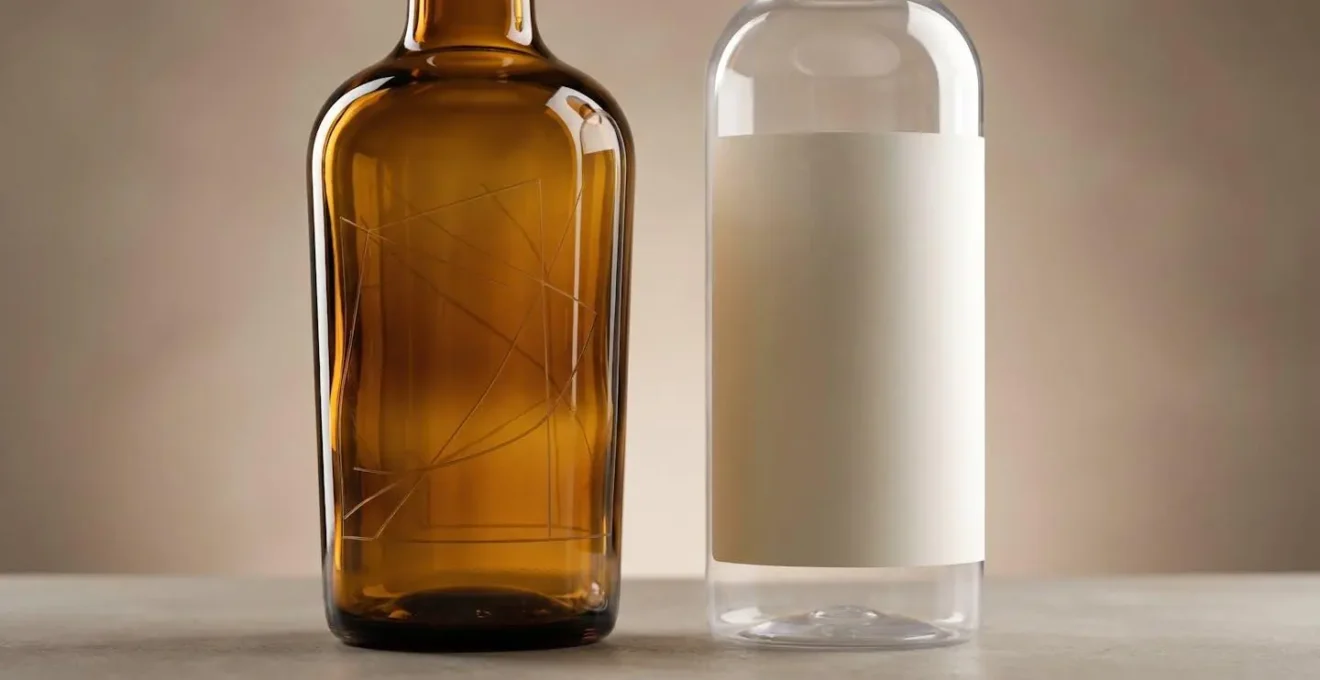
As the image above illustrates, the liquid itself can change, becoming darker and losing its clarity as the compounds within degrade. A £3 liquid kept in a cool, dark drawer will retain its flavour far better than a £10 liquid abused by heat and sunlight. This is one of the most common reasons vapers experience inconsistent taste and wrongly blame the product. Proper storage is a non-negotiable part of preserving quality, regardless of the initial cost of the bottle.
For long-term preservation, especially if you’re stocking up, consider these best practices:
- Store all e-liquids in a cool, dark place like a cupboard or drawer, away from direct sunlight and heat sources.
- For long-term storage (over 3 months), you can use a refrigerator. Place bottles in a sealed, airtight container to prevent condensation.
- Always allow refrigerated liquid to return to room temperature for about an hour before opening to avoid moisture getting inside the bottle.
- Keep caps tightly sealed to minimise exposure to oxygen, which also contributes to oxidation.
When to Stock Up on E-Liquid Without Wasting Money on Expired Bottles?
Bulk-buying e-liquid during a sale can feel like a smart financial move, but it can quickly turn into a waste if you don’t understand the product’s shelf life. E-liquid doesn’t “spoil” like milk, but its quality degrades over time, particularly the nicotine and more volatile flavour notes. So, when does a good deal become a ticking clock on wasted money?
As a general rule, unopened, properly stored e-liquid has a shelf life of about one to two years from the date of manufacture. However, the degradation process, especially for nicotine and delicate fruit flavours, can begin to be noticeable after just 6 to 12 months. The liquid may darken, and the flavour profile will start to fade or change. This means that buying a two-year supply of your favourite 10ml nicotine-based liquid is a risky strategy; the last few months of that supply will likely be a disappointing experience.
This is where understanding advanced vaping strategies, particularly in the face of potential UK flavour restrictions, becomes valuable. The smartest approach to bulk-buying isn’t about hoarding 10ml bottles, but about separating the components.
Case Study: The Smart Stockpiling Strategy for UK Vapers
Faced with potential flavour bans from the UK’s proposed Tobacco and Vapes Bill, experienced vapers use a component-based stockpiling method. The strategy involves buying large bottles of 0mg “shortfills” (nicotine-free e-liquid) and separate 10ml “nicotine shots”. This works because the base liquid (PG, VG, and flavourings) is much more chemically stable and has a longer shelf life than nicotine. The nicotine shots, which are the most volatile component, are stored separately in cool, dark conditions, often in amber glass bottles to block light. Vapers then mix a fresh bottle as needed. This approach maximises freshness and extends the viable life of a bulk purchase well beyond 12-18 months, making a 30% bulk discount a truly effective saving rather than a race against flavour fade.
Why 35mg Nicotine Salt Feels Smoother Than 6mg Freebase Nicotine?
One of the most significant innovations in e-liquid formulation has been the widespread adoption of nicotine salts. To a new vaper, it’s confusing: how can a 20mg nicotine salt liquid feel smoother and less harsh on the throat than a 6mg freebase liquid? The answer isn’t in the amount of nicotine, but in its chemical form and pH level.
Traditional “freebase” nicotine, used for years in e-liquids and tobacco products, is alkaline. This high pH level is what causes the signature “throat hit” that many vapers and former smokers enjoy. However, as the concentration increases, this throat hit can become unpleasantly harsh for many users, making it difficult to vape strengths above 12-18mg. A 35mg freebase liquid would be virtually un-vapable for most people.
Nicotine salts solve this problem. They are created by taking freebase nicotine and adding an acid (commonly benzoic acid). This process lowers the pH of the nicotine, making it significantly less alkaline. While freebase nicotine has a pH around 8-9, nicotine salts are closer to a neutral pH of 5-6. This chemical change is the secret to their smoothness. The reduced alkalinity allows for a much higher concentration of nicotine to be vaped comfortably, without the harsh throat hit. This is why a 20mg (the legal UK limit) or even a 35mg (in other markets) salt nicotine liquid can feel incredibly smooth, while a 6mg freebase liquid has a noticeable kick.
Furthermore, the body absorbs nicotine salts more quickly and efficiently than freebase nicotine, more closely mimicking the rapid nicotine delivery of a cigarette. This provides a more immediate and satisfying rush, which is particularly beneficial for heavy smokers looking to switch. A cheap liquid using nicotine salts may provide a far more satisfying experience for a former smoker than an expensive liquid that uses freebase nicotine, purely because the delivery mechanism is better suited to their needs.
Key Takeaways
- Price is not a reliable indicator of safety in the UK market; TPD compliance is the only guarantee, and it applies to all legal products regardless of cost.
- The ideal nicotine experience depends on matching the nicotine type (freebase for throat hit, salts for smoothness) and strength to your specific vaping device (MTL vs. DTL).
- Flavour quality is perishable. E-liquid must be stored in a cool, dark place away from heat and sunlight to prevent the degradation of flavour compounds and nicotine.
What Testing Does an E-Liquid Need to Pass Before Legal UK Sale?
The price on a bottle of e-liquid doesn’t just reflect the cost of its physical ingredients; it also absorbs the significant, often hidden, costs of regulatory compliance. The journey from a formulation idea to a legally sellable product in the UK is a multi-stage gauntlet of rigorous scientific testing, and it is anything but cheap.
Before an e-liquid can even be considered for the market, it must undergo a full suite of third-party laboratory tests. This isn’t a simple quality check. The process involves heating the liquid to create vapour and then using sophisticated equipment to analyse the resulting emissions for a list of specific harmful and potentially harmful compounds, such as formaldehyde, acetaldehyde, and heavy metals. Every single ingredient in the formula, down to the smallest percentage, must also undergo a full toxicological assessment to ensure it is not carcinogenic, mutagenic, or toxic to reproduction (CMR).
This mountain of data is then compiled into a comprehensive dossier and submitted to the MHRA for review, a process that must be completed at least six months before the product can be sold. This entire notification and testing process costs thousands of pounds per individual product variant. That means a single flavour offered in three different nicotine strengths requires three separate, costly notifications. These costs are a major factor in the final retail price. A brand with a vast portfolio of hundreds of flavours and strengths has invested a small fortune in regulatory compliance before a single bottle is even sold.
Here are the key hurdles every legal e-liquid must clear:
- Emissions Testing: The liquid is vaporised, and the aerosol is analysed by a third-party lab for specific harmful compounds like carbonyls and heavy metals.
- Toxicological Analysis: Every ingredient is assessed in both its heated and unheated state for any CMR properties.
- MHRA Notification Dossier: A comprehensive file is compiled, including all toxicology reports, emissions data, ingredient concentrations, and manufacturing details.
- Submission and Review: The complete dossier is submitted to the MHRA portal at least six months before the intended launch, accompanied by a notification fee.
- Publication: Only after the MHRA has reviewed the submission and published the product in its official database can the e-liquid be legally sold in Great Britain and Northern Ireland.
Why Do Two E-Liquids With Identical Flavour Names Taste Completely Different?
This is the ultimate question for many vapers and the final piece of our puzzle. You buy two different “Blue Raspberry” liquids, and one tastes like a sweet, authentic berry, while the other is a sour, chemical mess. The reason lies in the fact that e-liquid manufacturers are, for the most part, master chefs, not farmers.
They don’t create “strawberry” or “custard” flavour from scratch. Instead, they curate and blend pre-made flavour concentrates from a handful of large, specialised chemical companies. This reality is the core of flavour formulation.
Most e-liquid brands are ‘chefs’, not ‘farmers’. They don’t create flavours from scratch; they buy pre-made flavour concentrates from a handful of major suppliers like Capella, The Flavour Apprentice, and FlavourArt. The ‘Strawberry’ from one supplier is vastly different from another’s.
– E-Liquid Manufacturing Industry Analysis, DIY E-Liquid Manufacturing Guide
A single flavour profile, like a dessert, might be a complex recipe of 5 to 15 different concentrates, each added in precise percentages. A cheap, simple liquid might use a single “strawberry” concentrate at 10%. A premium liquid might use three different strawberry concentrates from two different suppliers, plus a hint of vanilla and a touch of cream, to create a more layered, complex flavour. The £3 bottle that tastes great might simply be using a single, high-quality concentrate that works perfectly on its own. The £10 bottle that tastes “off” could be a poorly balanced, overly complex recipe.
But the recipe is only half the story. The final variable is you—or rather, your device. The heat generated by your vape coil fundamentally changes how flavour molecules are perceived.
Case Study: How Wattage Transforms Taste
Take a complex, multi-layered custard e-liquid. In a low-wattage MTL pod device (12-15W), the lower heat preserves the delicate flavour molecules, allowing you to taste distinct notes of vanilla, cream, and caramel. The experience is nuanced and layered. Put that same exact liquid in a high-power sub-ohm tank (60-80W), and the intense heat caramelises the sweeteners and cooks the delicate notes, resulting in a muddled, overly sweet taste where individual flavours are lost. In this scenario, the “premium” liquid tastes bad precisely because of the high-end hardware. The flavour is co-created by the interaction between the liquid’s formulation and the device’s heat output, a sensory mismatch where more power leads to a worse experience.
Armed with this knowledge, you can evolve from a passive consumer into an educated vaper. Stop judging a liquid by its price tag and start evaluating it based on its compliance, its formulation, and its suitability for your hardware. Your next step is to use the MHRA database to check your current favourite e-liquid and consciously choose your next bottle based on science, not marketing hype.