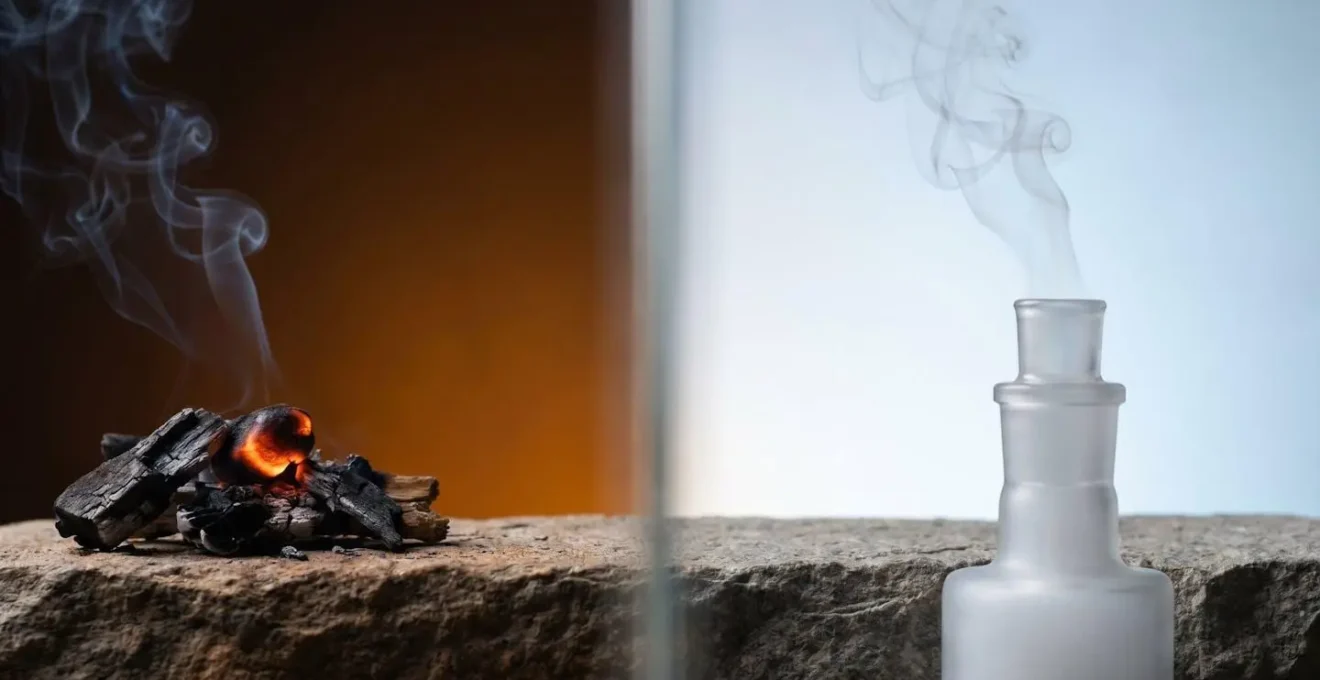
The “95% less harmful” figure is not a guess, but a direct toxicological result of one critical change: substituting combustion with vaporization.
- Burning tobacco creates over 7,000 chemicals through a high-temperature reaction called pyrolysis; vaping gently heats a simple liquid and does not.
- This fundamental difference eliminates the two primary agents of harm in smoke—tar and carbon monoxide—allowing your body to begin healing almost immediately.
Recommendation: Understanding this scientific distinction between combustion and vaporization is the crucial first step to making an informed decision about your health and harm reduction.
For any smoker in the UK, the “95% less harmful” statistic from Public Health England is a familiar, yet often misunderstood, headline. It can sound too good to be true, leading to skepticism. Is it a marketing ploy, or is there a concrete, scientific reason behind it? The truth lies not in complex pharmacology, but in a simple, fundamental principle of chemistry: the profound difference between setting something on fire and gently heating it to create a vapour.
The vast majority of harm from smoking does not come from nicotine, but from the toxic soup of chemicals created by the act of combustion itself. When you burn tobacco at temperatures exceeding 600°C, you initiate a violent chemical transformation called pyrolysis, which generates thousands of new, often carcinogenic, compounds that were not present in the original leaf. This is the source of tar and carbon monoxide, the primary vectors of smoking-related disease. Vaping, by contrast, operates at a much lower temperature to turn a purified liquid into an aerosol, a process that is fundamentally a physical change, not a chemical one.
This article, from the perspective of a combustion toxicologist, will deconstruct the “95% safer” claim by examining the evidence. We will begin by exploring the tangible, physiological changes that occur when you switch from smoke to vapour—the toxins you avoid and the immediate improvements to your body. We will then dissect the core scientific principles that make these benefits possible, explaining exactly why eliminating fire is the single most important factor in reducing harm. By the end, you will not just accept the statistic; you will understand the irrefutable science behind it.
To navigate this detailed analysis, the following summary outlines the key areas we will cover, moving from the specific health effects to the foundational science that underpins them.
Summary: Why Eliminating Combustion Is the Key to Harm Reduction
- Which 10 Deadly Chemicals Are in Cigarette Smoke but Not in Vapour?
- Why Your Blood Oxygen Levels Improve Within 24 Hours of Switching to Vaping?
- How Eliminating Tar Allows Your Lung Cilia to Recover in 2 Weeks?
- Why Heat-Not-Burn Devices Like IQOS Aren’t as Clean as True Vaping?
- Which 3 Body Changes Prove You’ve Successfully Eliminated Combustion?
- Why Eliminating Combustion Removes 7,000 Chemicals From Your Lungs?
- Why Burning Tobacco Creates 7,000 Chemicals While Vaping Creates Fewer Than 100?
- Why Public Health England States Vaping Is 95% Less Harmful Than Smoking?
Which 10 Deadly Chemicals Are in Cigarette Smoke but Not in Vapour?
The core difference in harm lies in the chemical inventory of what you inhale. When tobacco burns, it becomes a chemical factory. Research confirms that tobacco smoke contains a staggering cocktail of over 7,000 chemicals, including at least 70 known carcinogens. In stark contrast, the aerosol from an e-cigarette contains a vastly smaller list of constituents, typically numbering fewer than 100.
While it is impossible to list every single chemical absent from vapour, the most critical story is the near-total elimination of the most notorious toxins produced by combustion. These include:
- Tar: A sticky, black residue containing numerous carcinogens that coats the lungs. It is completely absent in vapour.
- Carbon Monoxide (CO): A poisonous gas that displaces oxygen in the blood. It is a direct product of incomplete combustion and is not present in vapour.
- Benzene: A known carcinogen found in petrochemicals and cigarette smoke.
- Arsenic: A heavy metal and poison.
- Formaldehyde & Acetaldehyde: Carcinogenic compounds created during high-temperature combustion. While trace amounts can be detected in vapour under certain “dry puff” conditions, the levels are orders of magnitude lower than in smoke.
- Hydrogen Cyanide: A chemical that damages the cilia, the lung’s cleaning system.
- Aromatic Amines & N-Nitrosamines: Potent carcinogens formed during the curing and burning of tobacco.
The key takeaway is that the most dangerous agents in cigarette smoke are not ingredients in tobacco; they are by-products of burning it. By switching to a system that heats a liquid without burning, you are not just reducing the quantity of chemicals, you are fundamentally removing the entire class of combustion-related toxicants responsible for cancer, lung disease, and heart disease.
Why Your Blood Oxygen Levels Improve Within 24 Hours of Switching to Vaping?
One of the most immediate and profound health benefits of ceasing smoking is something you can’t see but can certainly feel: a rapid improvement in your body’s ability to transport oxygen. This is almost entirely due to the elimination of one specific poison from cigarette smoke: carbon monoxide (CO). This gas, also found in car exhaust fumes, has a much higher affinity for hemoglobin—the protein in your red blood cells that carries oxygen—than oxygen itself.
When you inhale smoke, CO molecules flood your bloodstream and effectively hijack your hemoglobin, forming a stable compound called carboxyhemoglobin (COHb). This reduces the amount of hemoglobin available to transport vital oxygen to your organs and tissues. Clinical data reveals that chronic smokers can have carboxyhemoglobin levels of 10-15%, essentially starving their body of up to a seventh of its oxygen supply. This is why smokers often feel breathless and fatigued. Non-smokers, by contrast, have COHb levels of only 1-3%.
The moment you stop inhaling smoke and switch to vapour—which contains no carbon monoxide—your body begins to purge the CO. The half-life of CO in the blood is only about 4-6 hours. This means that within 8-12 hours of your last cigarette, your COHb levels can halve, and within just 24 hours, they can return to near-normal levels. Your blood’s full oxygen-carrying capacity is restored, allowing your heart, brain, and muscles to function more efficiently. This rapid physiological reset is one of the most powerful proofs that the harm comes from combustion, not nicotine.
How Eliminating Tar Allows Your Lung Cilia to Recover in 2 Weeks?
Beyond the invisible war for oxygen in your blood, a visible and crucial battle takes place on the surface of your airways. Your lungs are lined with microscopic, hair-like structures called cilia, which are constantly in motion. They work together as a “mucociliary escalator,” beating in a coordinated wave to move mucus, trapped dust, and pathogens up and out of the lungs, where they can be coughed out or swallowed. This is your body’s essential, built-in cleaning and defence system.
Cigarette smoke, and specifically the tar it contains, is a paralytic agent for these cilia. The thick, sticky tar coats the airways and immobilizes them, shutting down the cleaning system. This allows toxins and mucus to build up, leading to the infamous “smoker’s cough,” chronic bronchitis, and an increased risk of infection. When you switch to vaping, you eliminate the daily onslaught of tar. The effect is almost immediate. According to respiratory health information, cilia begin to reactivate within just one to two days of quitting smoking.
This “reawakening” is often what causes a temporary increase in coughing for new vapers who have just quit smoking. This isn’t a sign of harm from vaping; it is a positive sign of healing. The cilia are working again, clearing out months or years of accumulated tar and debris. This clearing process can take several weeks, but within 1-3 months, lung function can increase significantly as the mucociliary escalator is restored. This renewed ability to self-clean is a cornerstone of lung recovery and a direct result of no longer inhaling the products of combustion.
Why Heat-Not-Burn Devices Like IQOS Aren’t as Clean as True Vaping?
The principle of harm reduction is to move as far away from combustion as possible. This brings up an important distinction often lost on consumers: the difference between true vaporization (vaping) and heat-not-burn (HnB) systems like IQOS. While both are considered less harmful than smoking, they are not equivalent. The key difference lies in the material being heated.
Vaping involves heating a simple, purified liquid (e-liquid) typically composed of propylene glycol, vegetable glycerin, nicotine, and food-grade flavourings. The temperature is just enough (around 180-220°C) to turn this liquid into an aerosol. As one scientific review in the CHEST Journal notes, in this process, “there is no combustion involved; therefore, there are no products of combustion to inhale.” This is the cleanest approach because the starting ingredients are simple and known.
Heat-not-burn devices, however, still use processed tobacco. They heat a tobacco stick to a high temperature (around 350°C), which is below the point of ignition but high enough to cause pyrolysis—the same chemical breakdown reaction that happens during combustion, albeit at a lower intensity. Because the starting material is still complex plant matter containing thousands of compounds, the resulting aerosol, while containing far fewer toxicants than smoke, is still more chemically complex and “dirty” than the aerosol from an e-cigarette. They still produce some of the harmful and potentially harmful constituents found in cigarette smoke, just at lower levels. True vaping, by starting with a purified liquid, sidesteps the pyrolysis of tobacco entirely, representing a more complete step away from the harms of combustion.
Which 3 Body Changes Prove You’ve Successfully Eliminated Combustion?
While the science is compelling, the most powerful evidence for a smoker making the switch is what they experience in their own body. The elimination of combustion triggers a cascade of noticeable, positive changes that serve as proof of the body’s recovery. Beyond the general feeling of improved health, three specific milestones stand out.
The first is the return of taste and smell. Smoking dulls these senses by damaging the nerve endings and taste buds in your mouth and nose. Within just 48 to 72 hours of stopping combustion, these delicate nerve endings begin to regenerate. Food starts to have more flavour, and you become more attuned to scents in your environment. It’s a subtle but profound reawakening that connects you back to the sensory world.
The second is the improvement in breathing and physical stamina. As discussed, your blood’s oxygen-carrying capacity is restored within a day. This, combined with the gradual clearing of your lungs by recovering cilia, means physical activities like climbing stairs or walking briskly become significantly easier. The chronic shortness of breath that plagues many smokers begins to recede, often within the first few weeks.
Finally, the third sign is the evolution of your cough. Initially, you may experience a productive “clearing” cough as your cilia work to expel trapped tar. After several weeks, however, this healing cough subsides, and the chronic, rattling “smoker’s cough” disappears. For many, waking up without an immediate coughing fit is one of the most liberating proofs that they have left the damage of combustion behind.
Your Personal Health Audit: 5 Milestones of Eliminating Combustion
- 24-Hour Check: Assess your breathing. Notice if deep breaths feel slightly easier or if your stamina for a short walk has improved. This is the first sign of carbon monoxide leaving your system.
- 72-Hour Sensory Log: Actively taste and smell something familiar (e.g., coffee, a specific spice). Keep a simple log to note any changes in the intensity or complexity of the flavour and aroma.
- 2-Week Cough Analysis: Monitor the nature of your cough. Is it becoming more productive (clearing phlegm)? This is a positive sign of ciliary reactivation. Distinguish it from a dry, irritated cough.
- 1-Month Lung Function Test: Perform a simple physical test you struggled with as a smoker (e.g., climbing a specific flight of stairs). Time yourself or note your level of breathlessness. Compare it to your baseline.
- 3-Month Symptom Review: Take stock of chronic smoking-related symptoms. Has morning coughing ceased? Has shortness of breath during daily activities dramatically reduced? This marks significant ciliary recovery.
Why Eliminating Combustion Removes 7,000 Chemicals From Your Lungs?
To truly grasp the scale of harm reduction, we must move from specific benefits back to the source of the problem. The figure of 7,000 chemicals is not an exaggeration; it is a well-documented scientific reality. A comprehensive, peer-reviewed study documents that more than 7,000 chemical compounds have been identified in cigarettes and their smoke. The critical point is that most of these are not naturally present in the tobacco leaf itself but are generated by the extreme heat of combustion.
Burning is a chaotic and destructive process. When you light a cigarette, the tip reaches temperatures of up to 900°C. This intense heat triggers a chain reaction of chemical changes known as pyrolysis and pyrosynthesis. Pyrolysis breaks down the complex organic matter of the tobacco into smaller, often unstable and highly reactive chemical fragments. These fragments then recombine in the heat (pyrosynthesis) to form thousands of new compounds, many of which are toxic and carcinogenic.
This is why a leading medical review in the CHEST Journal makes the definitive statement:
Almost all the harm caused by tobacco use arises from inhaling the products of combustion (smoke) of dried cured tobacco leaf.
– CHEST Journal Medical Review, Point: e-Cigarette Use for Harm Reduction
By eliminating combustion, you are not merely filtering the bad parts; you are shutting down the very factory that produces them. The process of vaporization used in e-cigarettes is fundamentally different. It is a clean, physical state change, not a destructive chemical transformation. This is why the toxicological load is so dramatically reduced. You are removing the fire, and in doing so, you are removing the source of nearly all the poison.
Why Burning Tobacco Creates 7,000 Chemicals While Vaping Creates Fewer Than 100?
The massive disparity in chemical output between smoking and vaping—7,000 versus fewer than 100—is a direct consequence of three factors: temperature, reaction type, and starting material. Understanding this is key to understanding the entire harm reduction equation. The process of burning tobacco is a perfect storm for creating a complex toxic mixture.
First, as previously mentioned, is the extreme temperature. Combustion operates at 600-900°C, while vaping operates at a much cooler 180-220°C. This lower temperature is insufficient to trigger the widespread chemical breakdown and synthesis (pyrolysis) that defines burning. Second is the reaction type. Burning is a chemical reaction that transforms matter, creating new substances. Vaping is primarily a physical process that changes the state of a liquid to an aerosol, much like boiling water creates steam. The core ingredients are largely unchanged.
Finally, and perhaps most importantly, is the starting material. Tobacco is a complex biological plant, containing thousands of its own chemical compounds, including proteins, sugars, and cellulose. When you subject this complex mixture to extreme heat, the potential for creating new, harmful compounds is almost limitless. E-liquid, in contrast, is a simple, man-made mixture of just a few purified, well-understood ingredients. Heating a simple, clean starting material produces a simple, clean aerosol.
This following table clearly outlines the fundamental differences between the two processes, showing why their chemical outputs are so drastically different. This analysis, based on established science, reveals that the chemical processes are worlds apart.
| Process Characteristic | Combustion (Smoking) | Vaporization (Vaping) |
|---|---|---|
| Temperature Range | 600-900°C | 180-220°C |
| Chemical Reaction Type | Pyrolysis + Pyrosynthesis (chemical transformation) | Physical state change (liquid to aerosol) |
| Starting Material | Complex biological plant matter (thousands of compounds) | Purified liquid mixture (3-4 primary ingredients: PG, VG, nicotine, flavorings) |
| Total Chemical Output | 7,000+ chemicals | Fewer than 100 chemicals |
| Known Carcinogens | At least 69 confirmed carcinogens | Significantly reduced or absent at detectable levels |
| Combustion Products | Tar, carbon monoxide, benzene, formaldehyde (high concentrations) | Not present or present at trace levels |
Key takeaways
- The overwhelming majority of smoking’s harm comes from combustion (burning), not nicotine.
- Switching to vaping eliminates tar and carbon monoxide, allowing the body’s oxygen levels and lung cleaning systems to recover quickly.
- The chemical difference is stark: over 7,000 chemicals in smoke versus fewer than 100 in vapour, because vaping avoids the high-temperature reaction (pyrolysis) that creates toxins.
Why Public Health England States Vaping Is 95% Less Harmful Than Smoking?
We now arrive at the origin of the headline figure that anchors the UK’s approach to tobacco harm reduction. The statement that vaping is “around 95% less harmful than smoking” is not a casual estimate. It is the conclusion of a landmark, independent evidence review first commissioned and published by Public Health England (PHE), an agency of the UK government, in 2015. This was a pivotal moment, providing an official quantitative estimate of the relative risk.
As Professor Ann McNeill of King’s College London, a lead author of the review, stated, this conclusion is rooted in the fundamental science we’ve discussed. She clarified:
While vaping may not be 100% safe, most of the chemicals causing smoking-related disease are absent.
– Professor Ann McNeill, King’s College London, PHE Evidence Update on E-cigarettes
The 95% figure itself originated from a 2014 study where a panel of international experts used a formal methodology called Multi-Criteria Decision Analysis (MCDA). They scored various nicotine products across 14 different harm criteria, including mortality, morbidity, and social costs. In this rigorous analysis, combustible cigarettes were ranked as the most harmful product by a wide margin, with a score of 99.6 out of 100. Electronic cigarettes, in contrast, were estimated to have only 4% of the maximum relative harm. The calculation (100 – 4 = 96) is what underpins the “at least 95% less harmful” conclusion that Public Health England’s landmark 2015 evidence review concluded.
This figure, consistently reaffirmed in subsequent annual reviews, is based on a simple toxicological truth: the known harms of smoking are catastrophic and well-documented, while the identified risks from vaping are comparatively minuscule because the mechanism of harm—combustion—has been removed. It is an evidence-based consensus designed to give UK smokers a clear and accurate perspective on the massive potential for harm reduction.
Understanding this science empowers you to see past the headlines and make a genuinely informed decision based on the principles of combustion toxicology. The next logical step is to apply this knowledge to your own personal health journey.