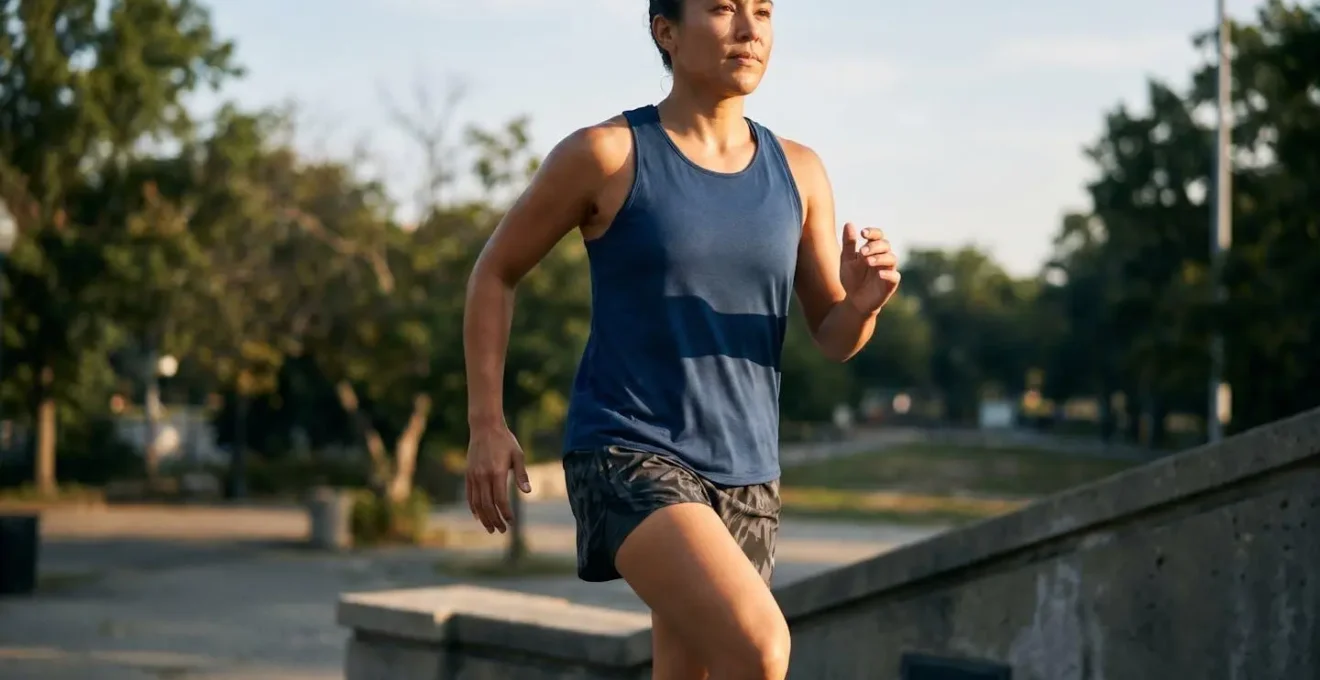
The remarkable speed of your respiratory recovery after switching to vaping is a direct result of your lungs’ cilia reawakening once they are freed from toxic tar.
- Your body begins healing almost immediately, with carbon monoxide levels dropping within 12 hours.
- An initial increase in coughing around week two is a positive sign that your lungs’ cleaning system is restarting.
- Tangible improvements in lung capacity, enough to make running easier, can be measured in as little as 2 to 3 weeks.
Recommendation: Begin tracking your progress with a simple peak flow meter. Seeing the numbers improve is the best motivation to stay smoke-free.
That first flight of stairs you conquer without feeling a familiar tightness in your chest is a powerful moment. For years, smoking made even minor physical exertion a challenge, leaving you breathless and frustrated. Now, just a few weeks after switching to vaping, you’re noticing these small but significant victories. You’re not imagining it. This rapid improvement in your breathing isn’t a placebo effect; it’s the result of a remarkable and measurable biological healing process.
Many resources will simply state that vaping is safer than smoking, but they rarely explain the ‘why’ and ‘how’ of the recovery you’re feeling. They don’t prepare you for the temporary, yet positive, side effects like a productive cough, or give you the tools to quantify your progress. This isn’t just about avoiding harm; it’s about actively reclaiming your health. The journey from smoker to vaper is one of profound physiological change, and understanding it can be the key to your long-term success.
This guide moves beyond generic advice. We will break down the science of why removing combustion is the critical first step. We will then walk through the precise, week-by-week timeline of your lungs’ recovery, explaining the mechanisms behind each milestone. You’ll learn not only to expect these changes but also how to measure them, turning abstract feelings of “breathing better” into concrete data that proves you’re on the right path. Finally, we’ll set a tangible goal: returning to activities like running a 5K, free from the constraints smoking once imposed.
To help you navigate this journey of respiratory recovery, this article provides a structured look at the key stages and questions you might have. The following summary outlines the path we will explore, from the fundamental science to your personal health timeline.
Summary: A Switcher’s Guide to Respiratory Recovery
- Why Does Removing Fire From Nicotine Delivery Eliminate 95% of Smoking’s Harm?
- How Eliminating Tar Allows Your Lung Cilia to Recover in 2 Weeks?
- Why You Cough More in Week 2 After Switching: The Lung Cleaning Process?
- When Will You Notice Health Improvements After Switching: A Week-by-Week Timeline
- How to Measure Your Lung Capacity Improvement With a £10 Peak Flow Meter?
- Do Vapers Recover Lung Function at the Same Rate as Complete Nicotine Quitters?
- Which 3 Habits Accelerate Lung Recovery Alongside Vaping Instead of Smoking?
- When Can You Return to Running 5K Without Breathing Difficulty After Switching?
Why Does Removing Fire From Nicotine Delivery Eliminate 95% of Smoking’s Harm?
The single most important concept to grasp is the difference between vaporisation and combustion. When you light a cigarette, you are burning tobacco at over 600°C. This process of combustion creates a toxic cocktail of more than 7,000 chemicals, including tar and carbon monoxide, which are the primary culprits behind smoking-related diseases. Vaping, on the other hand, heats a liquid to create an aerosol, or vapor. It completely removes the element of fire from the equation.
This distinction is not trivial; it is the entire basis of tobacco harm reduction. By eliminating combustion, you eliminate the vast majority of harmful byproducts. It’s why leading health bodies have confidently made their assessments. For instance, Public Health England has stated that vaping is around 95% less harmful than smoking. This isn’t a guess; it’s a conclusion based on the fundamental chemistry of what you are inhaling. You are still consuming nicotine, but you are avoiding the thousands of other toxins generated by burning organic matter.
The table below starkly illustrates this difference, comparing the presence of major toxicants in tobacco smoke versus their near-complete absence in e-cigarette vapor. Seeing this data makes it clear that the harm comes not from the nicotine, but from the smoke created by fire.
| Toxic Component | Status in Tobacco Smoke | Status in E-cigarette Vapor |
|---|---|---|
| Tar | Present (major carcinogen) | Absent |
| Carbon Monoxide | Present (causes oxygen deprivation) | Reduced by >95% (almost 100% less) |
| Formaldehyde | Present (carcinogenic aldehyde) | Reduced by >95% |
| Acetaldehyde | Present (toxic carbonyl) | Reduced by >95% |
| Acrolein | Present (major respiratory irritant) | Reduced by >95% |
How Eliminating Tar Allows Your Lung Cilia to Recover in 2 Weeks?
Inside your airways are microscopic, hair-like structures called cilia. Their job is to constantly beat in a coordinated wave, moving a thin layer of mucus—and any trapped dust, pollen, and pollutants—up and out of your lungs. This is your respiratory system’s essential self-cleaning mechanism. However, the tar in cigarette smoke is a paralyzing agent for cilia. With every cigarette, you temporarily stun these delicate structures, and with long-term smoking, you effectively flatten them, disabling the cleaning process.
The moment you stop introducing tar into your system, this paralysis ends. Your cilia begin to stir and function again with remarkable speed. They start to repair and regrow, and their coordinated sweeping motion resumes. This “reawakening” is the first and most critical step in your lungs healing themselves. The thick, toxic sludge that has been accumulating for years finally has a way to be cleared out. This is not a process that takes years; it begins within days of your last cigarette.
As Baptist Health Respiratory Care notes, this recovery process can lead to a seemingly counterintuitive symptom, which is actually a sign of healing. They explain this phenomenon clearly:
As the cilia recover, a former smoker might experience more coughing than when they were smoking. This is a positive sign that the lungs are actively cleaning themselves.
– Baptist Health Respiratory Care, Baptist Health lung recovery guide
While the initial reawakening is fast, the journey to full function has its own timeline. Encouragingly, clinical data shows that between 1 to 3 months, the cilia have typically regained near-normal function, significantly improving your ability to clear mucus and resist infections. This rapid initial response is why so many switchers feel a profound difference so quickly.
Why You Cough More in Week 2 After Switching: The Lung Cleaning Process?
Around the second week after you switch to vaping, you might experience something alarming: you’re coughing more than you did as a smoker. It’s natural to worry that vaping is making things worse, but in reality, you are experiencing the most tangible proof that your lungs are healing. This is what we call the “recovery paradox,” and it’s driven by the reawakening of your cilia.
When you were a smoker, your cilia were paralyzed by tar, so they couldn’t effectively clear debris. Your body’s only recourse was the “smoker’s cough,” a forced, inefficient attempt to move thick mucus. Now that you’ve stopped smoking, the cilia are back online. Within just 1 to 2 days, research shows that these tiny sweepers start their work again, pushing up years of accumulated tar and debris that were trapped deep in your lungs. This process is highly effective but can be irritating to your airways, resulting in a productive cough—one that actually clears things out.
This visual represents the delicate, hair-like cilia, now free from tar, beginning their vital work of cleaning your airways. They are no longer flattened and paralyzed but are actively moving to restore your lung health.
Think of it as your lungs finally doing a deep clean after years of neglect. This cough is a temporary, positive, and necessary phase. It’s a sign that your body’s natural defense mechanisms are functioning properly once again. Instead of being a source of concern, you can reframe this cough as a milestone. Each time it happens, your body is expelling the toxic legacy of smoking, making way for healthier lung tissue and clearer airways.
When Will You Notice Health Improvements After Switching: A Week-by-Week Timeline
The journey of recovery after switching from smoking is a cascade of positive changes, some subtle and some dramatic. While every individual’s experience is unique, a general timeline of improvements has been well-documented. It’s a multi-faceted process involving physical sensations, sensory recovery, and psychological adjustments. Knowing what to expect can be incredibly motivating and help you recognise and celebrate each milestone along the way.
This isn’t just about breathing. Your sense of smell and taste, dulled for years by smoke, will begin to return with surprising intensity. Foods will taste richer, and the aroma of coffee might feel like a brand new experience. Psychologically, you will move from the initial commitment phase to navigating the replacement of a deep-seated hand-to-mouth habit. The ‘Aha!’ moment often comes around week three, when a tangible physical proof—like climbing stairs without gasping—cements your decision.
The following table provides a week-by-week guide to the improvements you can anticipate. It serves as a roadmap, helping you understand the changes you’re feeling and what’s coming next on your path to better health.
| Timeline | Physical Changes | Sensory Recovery | Psychological Phase |
|---|---|---|---|
| 12-48 Hours | Carbon monoxide eliminated from blood; oxygen levels normalize | Smell and taste nerve endings begin regeneration | Excitement & commitment |
| Day 3-7 | Bronchial tubes relax; breathing becomes easier | Salt in food tastes stronger; coffee aroma richer | Hand-to-mouth habit replacement phase |
| Week 2 (Day 8-14) | Cilia reactivate; productive cough increases | Throat tickle evolves into mucus clearing sensation | Anxiety & ‘Is this working?’ doubt |
| Week 3 (Day 15-21) | Lung capacity shows measurable improvement; stairs become easier | Morning taste in mouth is clean; full flavor profiles return | ‘Aha!’ moment of physical proof |
| 1-3 Months | Lung function increases up to 30%; cilia nearly fully restored | Chronic cough decreases significantly | Challenge of breaking social triggers |
How to Measure Your Lung Capacity Improvement With a £10 Peak Flow Meter?
Feeling your breathing improve is encouraging, but being able to measure it provides undeniable proof and powerful motivation. One of the simplest, cheapest, and most effective ways to do this is with a peak flow meter. This small, handheld device, available from most chemists for around £10, measures your Peak Expiratory Flow Rate (PEFR). In simple terms, it measures how fast you can blow air out of your lungs.
As your bronchial tubes relax and inflammation decreases after you stop smoking, your ability to expel air forcefully will increase. By taking regular readings, you can create a personal chart of your lung function improvement. This turns a subjective feeling into objective data. Witnessing your PEFR score climb week by week is a concrete reward for your efforts. Within the first few months of quitting smoking, studies indicate that lung function can increase by up to 30%, a significant improvement that a peak flow meter will clearly capture.
Using the device is straightforward, but consistency is key to getting meaningful results. Following a simple routine will ensure your measurements are accurate and comparable over time, providing a clear picture of your healing lungs.
Your Action Plan: Tracking Lung Recovery with a Peak Flow Meter
- Establish Your Baseline: As soon as you get your meter, take three readings and record the highest number. This is your starting point, the benchmark against which all future progress will be measured.
- Perfect Your Technique: Stand up straight. Take the deepest breath you can. Seal your lips tightly around the mouthpiece. Blow out as hard and as fast as you can in a single ‘huff’. Ensure the reading is from one sharp burst, not a long exhale.
- Log Your Readings Daily: Consistency is crucial. Take your reading at the same time each day, for example, every morning before using your vape. Record the highest of three consecutive blows in a notebook or a tracking app.
- Identify Your Personal Best: After 2-3 weeks of daily tracking, you will identify your ‘personal best’ peak flow reading. This new number becomes your goal to maintain or exceed, showing how much your lung function has already improved.
- Review and Celebrate Progress: At the end of each week, look back at your log. Draw a simple line graph to visualise the upward trend. This tangible evidence of your lungs getting stronger is a powerful motivator to remain smoke-free.
Do Vapers Recover Lung Function at the Same Rate as Complete Nicotine Quitters?
This is a crucial question for anyone considering the switch. The encouraging answer is that in the initial, most impactful phase of respiratory recovery, the trajectories are remarkably similar. This is because the primary driver of early lung healing is the cessation of exposure to combustion byproducts, namely tar and carbon monoxide, not the cessation of nicotine itself.
Whether you quit all nicotine or switch to vaping, you have done the single most important thing for your lungs: you have stopped inhaling smoke. As a consensus of lung recovery research states, initial respiratory recovery (cilia function, reduced inflammation) is primarily driven by the elimination of tar and combustion byproducts. Both quitters and switchers benefit from this immediately. For example, carbon monoxide, the gas in cigarette smoke that robs your blood of oxygen, is almost completely eliminated in vapers. One study found the level of carbon monoxide in the body of a vaper is about 80% less than that of a smoker, putting them at levels comparable to non-smokers.
This means the key mechanisms of healing—cilia reawakening, bronchial tubes relaxing, and oxygen levels normalising—occur at a similar pace for both groups in the first few weeks and months. The immediate, noticeable improvements like easier breathing during exercise, reduced coughing (after the initial clearing phase), and enhanced sense of smell are largely shared experiences. While the long-term effects of nicotine on the vascular system are a separate consideration, the acute damage to the respiratory system is so overwhelmingly caused by smoke that its removal is the paramount factor for recovery.
Key takeaways
- The primary harm from smoking comes from combustion (fire), which creates tar and carbon monoxide; vaping eliminates this.
- An initial increase in coughing is a positive sign that your lungs’ self-cleaning cilia are reactivating to clear out tar.
- You can objectively measure your lung function improvement at home with a simple, inexpensive peak flow meter.
Which 3 Habits Accelerate Lung Recovery Alongside Vaping Instead of Smoking?
Switching to vaping is the single biggest step you can take to allow your lungs to heal, but it doesn’t have to be a passive process. You can actively support and even accelerate your body’s natural recovery by adopting a few simple, powerful habits. These practices work in synergy with your smoke-free life, helping to clear your airways, strengthen your respiratory muscles, and improve overall wellness. Think of them as catalysts, enhancing the positive changes already underway.
Your body is already working hard to repair itself, a journey that medical research indicates can see cilia function normalize within 1 to 9 months. By integrating these habits into your daily routine, you provide the optimal conditions for this healing to be as efficient and effective as possible. They don’t require drastic lifestyle changes but can make a significant difference in how quickly you feel the full benefits of being smoke-free.
Here are three key habits to adopt to give your lung recovery an extra boost:
- Practice Deep Breathing Exercises: After years of shallow, smoke-damaged breathing, you need to retrain your lungs. Simple diaphragmatic breathing (or ‘belly breathing’) helps to fully engage your lungs, strengthen your diaphragm, and improve their elasticity. Spend five minutes, twice a day: inhale slowly through your nose for four seconds, feeling your belly expand, and then exhale slowly through your mouth for six seconds. This simple action helps to open up air sacs and increase your vital capacity.
- Stay Thoroughly Hydrated: Water is your lungs’ best friend during this recovery phase. The mucus being cleared by your cilia can be thick and difficult to expel. Drinking plenty of water (around 2 litres a day) helps to thin this mucus, making it easier for your body to cough it up and out. This makes the “lung cleaning” phase more efficient and less uncomfortable.
- Incorporate Light Cardiovascular Exercise: You don’t need to run a marathon. Start with brisk walking for 20-30 minutes a day. This type of exercise increases blood flow to the lungs, helping to nourish and repair damaged tissue. It also trains your body to use oxygen more efficiently, which means your heart and lungs don’t have to work as hard during daily activities. It’s the perfect way to test and appreciate your improving lung function.
These habits are not just about recovery; they are about building a new, healthier relationship with your body and your breath. They empower you to take an active role in your healing, transforming you from a passive recipient of benefits into the architect of your own wellness.
When Can You Return to Running 5K Without Breathing Difficulty After Switching?
For many former smokers, the idea of running a 5K seems like an impossible dream, a feat reserved for those with healthy, undamaged lungs. But one of the most rewarding outcomes of switching to vaping is seeing that dream become an achievable reality, often much sooner than you’d expect. The ability to engage in sustained cardiovascular exercise without a constant, painful struggle for breath is perhaps the ultimate benchmark of respiratory recovery.
The timeline for this achievement is encouragingly short. Once you eliminate the intake of carbon monoxide, your blood’s oxygen-carrying capacity returns to normal within days. As your bronchial tubes relax and your cilia clear out debris, your functional lung capacity increases. For many people, the point at which they can comfortably tackle a run without debilitating breathlessness arrives with remarkable speed. According to the American Heart Association, a significant regeneration of lung capacity enabling more intense physical activities can occur anywhere between 2 weeks to 3 months after quitting smoking.
This image represents that ultimate goal: your feet on the path, moving forward under your own power, with lungs that can support your ambition. It’s a symbol of freedom from the limitations that smoking imposed.
Reaching this milestone is a journey, not a race. You must listen to your body, starting with brisk walking and gradually progressing to jogging as your stamina improves. The key is that for the first time in a long time, progress is possible. You are no longer held back by lungs crippled by smoke. You are now on a path of continuous improvement, where your physical limits are defined by your fitness, not by your former habit.
Your journey to reclaiming your breath and your health is well underway. By understanding the science and tracking your progress, you are taking control. The next logical step is to continue building on this momentum, integrating healthy habits and setting new goals for what your smoke-free life can be.